I feel like there's some credibility to 'this time it's different'
The US economy depends on the country's position of world hegemon - the US dollar is the world's main reserve currency, the US enforces international order and trade rules via its military strength, it dominates technology and culture through 'US defaultism'.
I dont think AI even factors in to this.
The US economy is priced for global reach - if it manages to lose that through a combination of credible competitors, and loss of goodwill - it's going to be in heaps of trouble.
The looming US debt is also a great question - a lot of economists have argued that since most US debt is good. It's mostly in forms of treasuries purchased in USD that pay in USD - this means the indebtedness creates a huge amount of dollars abroad that foreigners have to then spend on US services, driving demand.
Should the US become an unfriendly power to the rest of the western world, it will find the demand for its currency plummeting, which I don't want to outline is a big issue.
All said, I think if the US continues down the political path it currently seems to be pursuing, 'this time it's different' actually will be.
> It's mostly in forms of treasuries purchased in USD that pay in USD - this means the indebtedness creates a huge amount of dollars abroad that foreigners have to then spend on US services, driving demand.
Strangely enough, this is exactly the opposite of how it works. The dollars abroad tend to stay abroad, as either a more stable alternative to local currencies, or a reserve currency. Likewise, treasuries held abroad tend to stay there as reserves. This is how the US is able to run both a huge debt, and a huge trade deficit. If the dollars were being repatriated, the trade deficit would close, and the influx of money would cause hotter inflation. Same with treasuries, yields would spike as demand fell.
There are lots of second order effects there, good and bad, but, basically, those dollars not coming home has funded America for quite some time.
I, a foreign entity, have sold something to an american and now have 10 dollars and zero treasuries.
I purchase a treasury. I have zero product, zero dollars and one treasury.
At some point in future i have zero product, maybe 12 dollars and zero treasuries. Presumably i now either repeat the cycle or use my winnings to spend on us output.
GP’s version checks out, your assertion about dollars staying abroad doesnt track? What am i misunderstanding - How did these dollars get abroad, how did they repatriate to buy treasuries, how did a treasury become a reserve, how did the dollars still exist abroad after being exchanged for treasuries?
> Presumably i now either repeat the cycle or use my winnings to spend on us output.
What you are missing is that these dollars can be circulated indefinitely in the global economy without ever repatriating, because they are valuable and useful as actual currency. They may never come back to the US.
> I, a foreign entity, have sold something to an american and now have 10 dollars and zero treasuries.
Or you sold something to a non-American entity in a dollar-based market, eg. oil. The dollars do come from America to begin with, but once they get "out there" they work as a medium of exchange for whoever wants to use them for that purpose.
Interesting - The petroyuan was not on my radar at all.
https://ipr.blogs.ie.edu/2025/06/27/geopolitics-of-oil-how-c...: This article explores case studies such as Russia, Iran, and Venezuela, illustrating how the petroyuan has been implemented to bypass sanctions and reduce dependence on US financial systems.
Most of the time this is exactly (foreign or not) institutions do.
Think about it, if the 10-dollar treasury is due and you got your money back, the US debt will go down by 10 dollars. However, in our reality, the total amount of US debt almost never goes down.
Of course some interest will be used in other ways, like spending on the US goods or staying as cash to provide liquidity. But at the end of the day, the most popular way to spend the money got from due treasuries is... to buy more treasuries.
Because the world trades using US dollars. Country A needs to buy something from Country B. Country A needs to buy/get dollars to buy stuff from Country B. Country B will not accept anything but dollars or gold for its products because it also needs to buy other stuff like oil in dollars from other countries.
It could accept any credible currency if it was connected enough. Euros, yuan, rupees and yen aren't going anywhere for at least 20 years. Each one is a separate system and countries mostly connect to just one, which is USD, but that doesn't have to be the case forever.
India won't accept euros because it's not part of the ECB, not because it doesn't believe in their value. But India has accounts at US banks in dollars.
Banks do this, not countries. Most banks in the world have accounts at US banks to accept dollars with, they don't have accounts at eurozone banks to accept euros with, or Japanese banks to accept yen with. It doesn't matter in everyday practice because it's easy to exchange euros in eurozone banks or yen in yenzone banks with dollars in dollarzone banks. There's plenty of infrastructure for that. It matters in long–term economic trajectories because all those banks are holding US dollars and the US exports inflation to them and they're not holding euros and then ECB can't.
If dollars were being repatriated, but as investment into financial instruments and real estate instead of purchases of goods and services, then that would not affect the trade deficit, right?
> Strangely enough, this is exactly the opposite of how it works. The dollars abroad tend to stay abroad, as either a more stable alternative to local currencies, or a reserve currency.
I think you have it backwards. The US dollar can be handled as a more stable alternative only if it's actually stable. As soon as the US government starts to deteriorate goodwill and outright be hostile towards the world, not only does the US dolar lose its value as a stable alternative but foreign governments start to be motivated to dump their assets, which further tanks its value. In the past couple of weeks we started seeing countries outright dump their investments in US dolar to derisk their portfolio, and they did it at the tune of billions of dollars. You also started to see political pressure for foreign governments to demand their gold reserves are pulled out of the US, which means this pressure goes way beyond US dollars.
> The looming US debt is also a great question - a lot of economists have argued that since most US debt is good. It's mostly in forms of treasuries purchased in USD that pay in USD - this means the indebtedness creates a huge amount of dollars abroad that foreigners have to then spend on US services, driving demand.
You got it wrong (I'm sure most economists don't get it wrong and you just misread/misquote). USD is the default reserve and settlement medium for many countries. They buy US treasuries mainly to satisfy the demand of USD itself, not to buy goods and services from the US. That's why the US has such a huge trade deficit. The US doesn't point a gunpoint at other countries to force them buy treasuries[0]. It can lend so much money because the other countries want treasuries.
[0]: Ironically the US tends to do the opposite - forcing other countries to buy US goods and close trade gap.
He's not wrong in his conclusion, just not accurate in why. If countries start moving away from depending on the trade imbalance with the US, the demand for USD will dry up. And they are trying to move away from it because of politics, specifically because of US bullying. But more importantly, the US is increasing trade barriers in a naive attempt to reduce that trade imbalance, which is the biggest reason everybody holds so many dollars--they're paid in dollars when exporting to the US, but don't buy enough US imports (individually or collectively) to spend & exchange all those dollars, which is why they park them in treasuries and other US investments. And it won't be long before oil begins receding from the picture (at least relative to total global trade, if not absolute dollars), displaced by renewables. Though oil is odd in that while creating demand for USD to settle transactions even for non-US oil, it's also a significant US export and has the effect of repatriating dollars.
The importance of USD globally was always on borrowed time. Global GDP has exploded in the 21st century, and the size of the US economy relative to the global economy is shrinking, albeit slowly. The US share of global GDP was like 35% in 1985. By 2030 it's projected to be as low as 12%. It doesn't necessarily follow that this would change the dynamic of strong dollar demand supporting US investments and debt, but it makes it much easier for this dynamic to change as countries become increasingly less reliant in relative terms on exporting to the US. In fact, it's kinda idiotic to rock this boat unless/until we're prepared for some serious fiscal belt tightening. As global GDP increases relative to the US, in theory the rest of the world could support profligate US debt in perpetuity.
> the size of the US economy relative to the global economy is shrinking
This is not true, not at all, it dipped as China grew initially, but looking at the past few years this trend had reversed and the US was again growing as a percentage of the global economy, going from a low of about 21% in 2011 to nearly 27% today. It seems certain now that Trump has put a bullet in this growth, but it was hardly inevitable. In 2024 the US was in an incredibly strong position relative to the rest of the world.
> In 2024 the US was in an incredibly strong position relative to the rest of the world.
The GOP did a fantastic job of blaming all the shockwaves from Covid on Biden. Don’t get me wrong, his admin made some pretty poor choices, but he did inherit the Covid economy and basically got blamed for it. Whereas Obama inherited the recession and wasn’t blamed for it in the same way.
They also did a good job of making it look like all of these problems were only happening here and hiding the fact that other countries were actually in far worse shape. Relatively speaking, as bad as it all was, we did better than most economically speaking.
The US has pointed and fired guns at other countries for moving away from US treasuries, but alternative justifications are produced to reassure our domestic population that it’s really because the foreign leader is a very bad guy.
> Should the US become an unfriendly power to the rest of the western world, it will find the demand for its currency plummeting, which I don't want to outline is a big issue.
Right now this is much more of a maybe, possibly, eventually, over a long enough time horizon.
As of the end of 2025, USD still made up 57% of foreign reserves vs 20% for the Euro and 3% for the Chinese renminbi. Nearly all commodities are still priced in USD and about 50% of trade invoicing is done in dollars, closer to 60% if you exclude the Eurozone. USD also makes up about 60% of SWIFT transactions.
So the demand is still there today and de-dollarization is not really a thing in aggregate as of January 2026, despite all of the events of the past year or so.
So if this time is different, I’m not seeing it yet.
The international "rules-based order" is a good idea when most nations play by the rules most of the time, and when the most powerful at least pretend to follow the same rules as everyone else.
A world order based on rules makes it possible to live at a much higher level of abstraction.
Abstractions like rule of law, democracy, government currencies and stock exchanges are intangible and imaginary. They're mostly just figments of collective belief. But these wispy and unreal ideas that everyone believes in make it possible for most people to live longer, healthier and less difficult lives.
The "rules-based order" was always partly mythical, but as long as everyone kept pretending, it mostly continued to function.
But when we devolve from the rules-based order to the old order of pure power and might-makes-right, kings and dictators, when there's no more collective belief that the rules apply to the rich and powerful, then the tower of abstractions collapses, and we're back to the cold, hard, brutal and difficult real world.
People will find out that life in the real world is a lot poorer and more miserable than life at the top of the tower of abstractions, even if your brokerage account appears to double.
I generally agree with your comment except the 'back to the real world' part. This is just the difference between a world with the gains that cooperation give verses a world with just the maximized minimum return that distrust leads to. A trusting world is the real world we have seen for decades. It is a real world we can choose to keep pushing for.
Neither is 'real'. The power of might depends on belief just as much as the power of rules. You need a whole lot of compliance, even when forced by fear and terror, to just keep up a police state. The belief consists of where people think other people assign authority to, at large. But that can be just as brittle as a meme stock if the time is right.
Social reality is always constructed. No single construction is more real than any other.
A system that is closer to physical, tangible reality is more "real" than one built on many layers of concepts, beliefs and ideas.
Just as "real assets" like buildings, machinery and metals are more "real" than abstract assets.
Abstract assets like shares of a corporation, intellectual property, cash in a bank account, promises to deliver a commodity in the future, and other intangible concepts only exist because we collectively believe they exist and trust each other to follow rules.
There are real weapons and prisons at the bottom of this stack of abstractions to force people to comply, but it's mostly collective belief, trust, culture and tradition.
When we devolve from a rules-based order to might-makes-right, those layers of abstraction between us and the weapons evaporate, and ordinary people like moms and ER nurses get gunned down in broad daylight by agents of the state asserting raw power.
Abstractions like law and due process evaporate, and the "real world" underneath is nasty, brutish and short.
The rules based order is mostly a fabrication of recent history. Perhaps between the fall of the Soviet Union, China becoming more open, and the general peace and prosperity it seemed like it existed.
Politics between countries has always been around interests. Countries have no interest in giving up their sovereignty. They may pretend to respect these "rules" when it suits them and then ignore them when it doesn't. Everyone is focused on how "bad" the US is but a) the US has always more or less done whatever it wants b) Russia and China (and many others) have never even pretended to play or accept these "rules".
Canada's Carney whines about "international order" when just a few years ago China simply abducted Canadians in response to the supposed "orderly" arrest of the Huawei CFO to be extradited to the US. So Canada basically abducts the CFO of a major Chinese company and China abducts Canadians in retaliation and that's a rules based order to who exactly? And we can put together an endless list of an endless number of countries. So when exactly was there ever a rules based order except as a tool for countries to bully each other and for the poorer dictator led countries to try and get a seat at the table because they can vote in the UN general assembly.
> Russia and China (and many others) have never even pretended to play or accept these "rules".
This false. They have pretended to play by the rules, and when breaking them, to at least manufacture some pretext, or to deny it was a state activity at all.
One example I can give you is that when invading Czechoslovakia in 1968, the Soviet Union convinced a few Czechoslovak politicians to write a letter inviting the forces for "brotherly help", thus manufacturing a case that it's not really an invasion. They didn't have to do it, the force differential was overwhelming, but they did it because they could point at the letter on international stage.
All this may seem a bit pointless but binding them in international structures brought interesting fruit in the wake of Helsinki conference on human rights. After that they were forced to at least somewhat follow the signed documents which lead to significantly better conditions to dissidents behind the Iron Curtain. And there are many examples like this, when pointing at international rules actually made things better. So let's not throw that away.
>> Canada's Carney whines about "international order" when just a few years ago ...
> They have pretended to play by the rules
@YZF is unwittingly agreeing with Carney. The rules-based order is partially a fiction. Relevant snips from Carney's Davos speech.
"The system's power comes not from its truth, but from everyone's willingness to perform as if it were true, and its fragility comes from the same source."
"For decades, countries like Canada prospered under what we called the rules-based international order. We joined its institutions, we praised its principles, we benefited from its predictability. And because of that, we could pursue values-based foreign policies under its protection."
"We knew the story of the international rules-based order was partially false ..."
"This fiction was useful, and American hegemony, in particular, helped provide public goods, open sea lanes, a stable financial system, collective security and support for frameworks for resolving disputes."
When the US invaded Iraq, it at least pretended it was following the rules. It appealed to the UN for approval, it justified the invasion in the name of freedom and democracy.
It was all bullshit, but at least the US sustained the myth of a system of rules and a moral order.
But the US no longer pretends. It invades Venezuela and publicly states it was all about oil.
So even the pretense is gone now, and the benefits that came from pretending are gone. That's the "rupture" Carney is talking about, that sustaining the myths is not longer useful, so it's time to stop pretending.
I'm well aware Carney also says it never really existed. So I don't think there's an "unwittingly" here. My issue with Carney is that he's whining about it.
He's the first world leader I've seen who publicly tells other leaders to stop complaining that the false thing is false, that pretending the false thing is true hurts everyone except the hegemon at the top. Taking concrete action to build a replacement system it is kinda the opposite of whining.
He is simply negotiating with the US. That's it pretty much. He's trying to get the best deal for Canada. That's always been how things work. It's just politics. There is really nothing new here other than perhaps the more aggressive and public approach of the Americans. What used to happen in closed rooms is just getting a bit more light and the current US administration thinks that it can/deserves to get a larger share of the pie.
Incorrect. The rules based order was first attempted after the first world war and then created after the second one. These are lessen that have been bought with blood. Lots of blood. Megaliters of it. The incredible stupidity of throwing that away is absolutely disgusting.
Whether or not a 'LIO' exists is not that interesting to me. What is interesting is what actually exists and what has happened in history. What actually exists is an enormous shock after, for instance, world war one where the question arose how it is possible that basically an entire generation of young men was slaughtered. E.g., every small village in France has a memorial of the fallen soldiers during world war one. For many decades after the war commemoration were/are still being held. It used to be that competing for territory was just the normal thing countries did. Then, it became clear that this has a potentially enormous cost in human lives. The obvious conclusion for people who are not sleepwalking through life and through history, is that any political leader who advocates for a change in country borders and does so much as hint to violent means of doing so is totally deranged and immoral. A similar shock has gone through the world after world war two, which, for instance, lead to the creation of the declaration of universal human rights. Among the decent public, it is also concluded that a violation of human rights is deranged in immoral.
I agree most countries, certainly western countries, have realized that waging the kind of wars like WW-I and WW-II is not a good idea. But there have been a lot of war and killing anyways since the world wars and there have been a lot of new borders redrawn and countries formed. In more recent times we have Putin invading Ukraine and the general instability of the post cold war Eastern Europe.
So the calculus has changed for many reasons. But "new order" is not one of them. The so called new order was a result of the calculus changing, not the other way around. Countries fight for power in other ways and other societal changes also influence their decisions. I.e. you are confusing cause and effect. Now we have different dynamics, not a collapse of world order, things have shifted very slightly. "The end of the world as we know it" gets a lot of clicks on social media but it's not like we're suddenly having WW-I all over again and it's not like that order you thought was absolute really was. It's just that's how the alignment of interests landed.
I acknowledge that the 20th century was marked by much bloodshed, but this wasn't limited to the world wars and it continues violently into the 21st century.
If the world is governed by rules, why does the United States maintain a considerable number of military bases around the world, far exceeding the total number of military bases of all other countries combined?
Why is the American military budget so much higher than the combined military budgets of all other countries?
> If the world is governed by rules, why does the United States maintain a considerable number of military bases around the world, far exceeding the total number of military bases of all other countries combined?
It's the other way around. Rules are tools of peace. No peace, no rules. But if you want peace then you have to be ready to wage war. It's called deterrence and the EU is learning this just now, again. That's also one reason why the USA has been called the world police... because it was true.*
If nobody enforces the rules any more, things break down and we close in on violence. It is plain to see on the global scale, e.g. Russia's war against Ukraine, and also the domestic scale, e.g. ICE's violence against their own citizens in the USA.
> Why is the American military budget so much higher than the combined military budgets of all other countries?
The US military budget is about three times that of the EU or China's, or about a third of all military spending on the globe. Obviously, this is much higher than any single entity, but not all other countries combined.
* Frankly, being the world police has had a lot of benefits for the USA. Why they are abdicating this position to run a protection racket instead is for wiser people than me to answer.
You're confusing rules with treaties, agreements, and balance of power.
Yes- When there is one super power in the world and it says if you don't behave a certain way we're gonna bomb the heck out of you, or boycott you, you get a certain behavior. Even then you might get some actors (like North Korea, or Iran, Yemen, Russia, China and more) that have no problem openly defying and challenging the super power to some extent.
When the balance shifts and you have other blocks with more power that feel comfortable in defying that super power (like China or Russia today) then you see that changing.
There are no "absolute" rules. There are power dynamics, countries, interests, politics. Rules can exist only within a structure that can enforce them, like a country.
The "rules-based international order" was a fiction popularized by US policy makers who wanted to quietly substitute it for international law, so they could violate said laws, while still vaguely gesturing at moral authority.
"In the 1940s through the 1970s, the dissolution of the Soviet bloc and decolonisation across the world resulted in the establishment of scores of newly independent states.[67] As these former colonies became their own states, they adopted European views of international law.[68] A flurry of institutions, ranging from the International Monetary Fund (IMF) and the International Bank for Reconstruction and Development (World Bank) to the World Health Organization furthered the development of a multilateralist approach as states chose to compromise on sovereignty to benefit from international cooperation.[69] Since the 1980s, there has been an increasing focus on the phenomenon of globalisation and on protecting human rights on the global scale, particularly when minorities or indigenous communities are involved, as concerns are raised that globalisation may be increasing inequality in the international legal system.[70]"
Laws aren't fictitious just because people/countries break them. No one writes a law thinking "that settles that, no more embezzling." Laws simply tell you how that system works: you embezzle, FBI arrests you, you get tried, etc.
Also the US always made a big deal about not joining various treaties, with their reasoning explicitly being "we actually plan to do a lot of things that would violate that treaty." In that sense, that shows the US actually had respect for those institutions.
Also, the west benefited from this arrangement. Most western countries could benefit from the rules based order, and when they needed a little pump, the US broke some rules and brought home a treat for the home team. You might argue this undermines the whole enterprise, but my counterargument is this is the longest period of relative peace and prosperity humankind has ever experienced, so although it wasn't perfect, it was a huge improvement.
Laws are enforced by sovereign countries that have police and courts etc. "International law" has "laws" (well very few if any) with no sovereignty. That's what makes it fiction. It's just newspeak to make people think that there are laws that exist outside the system of countries, and there aren't, at least no binding ones that countries can't and don't override. That's not a law.
Ofcourse laws, like any other human constructs, are invented by us and don't have independent existence.
When I drive to work here in Canada the "international police" stopping me for violating the "international traffic laws" is really not a concern.
> Abstractions like rule of law, democracy, government currencies and stock exchanges are intangible and imaginary. They're mostly just figments of collective belief.
> But when we devolve from the rules-based order to the old order of pure power and might-makes-right, kings and dictators, when there's no more collective belief that the rules apply to the rich and powerful, then the tower of abstractions collapses, and we're back to the cold, hard, brutal and difficult real world.
Many have absorbed and believe the argument of the might-makes-right crowd that their vision is 'real' and their enemies' vision is 'imaginary'. Unless people believe in what they seek, they are lost.
There's nothing imaginary about it; that theory is paper thin and doesn't survive simple examination. Obviously, humans are social animals that live in groups, have powerful intellects, and therefore have tremendous ability to cooperate and work together toward greater good; we've done it many, many times. Freedom and democracy have appealed powerfully to people worldwide, in a tremendously wide variety of cultures. That model was created by people who had experienced WWI and WWII; they knew more of your 'reality' than probably you or I ever will, and with that knowledge and experience they created this order.
And the greater good long predates that; religions and similar ethical codes based on the greater good long predate modern democracy and the rules-based order. Rules-based orders predate it. The Gospels in the New Testament are an easy, very familiar example, from 2,000 years ago (and a significant basis of modern freedom and democracy). Similar is true for abstractions like law, government, justice, etc.
We all are biologically the same, essentially, as the best of humanity and the worst - both are in all of us. It's our choice, our moral choice, what we do. That is also a fundamental that long predates the post-war order, democracy, the Englightenment, etc. Inevitability is a cheap tactic long used by those whose ideas are undesireable and don't withstand scrutiny.
Our choice is easier than those who survived WWII, and their predecessors. Our ancestors gave us the tools, the institutions, etc. They had to build them from nothing for a skeptical world.
The source of truth in fascism is not popular support or inquiry, thus they always need to channel some privileged connection to reality, or claim to voice the true will of the people and authentically represents the pure will of the nation.
Its a farce, of course, but one that can sometimes muster enough support to keep the signs in the shop with just a bit of intimidation and violence to back it up.
In practice the US could already do whatever it wanted in Greenland/Canada etc. The options for the motivation behind the theatrics I see.
1. Instill fear in the vassals->support for militarization rises there->they become more useable as proxies against RF/China
2. Just another Trump silliness
I dislike the saying "the devil's in the details". It is the inverse of where the devil actually thrives - in the clever abstractions.
The beasts who rule this world are the banksters and their vast bureaucratic thrall. Their failing is these rulers have huffed their own degenerate anti-human messages for the past 75 years, have become deranged themselves, and now they've lost their attractiveness and persuasive power.
See what's gone almost completely by the wayside in their green agenda and lgbtqia+4g message as they struggle to cope and maintain their grip. Public, centralized AI is their great hope for control, but it won't survive the lawsuits and consumer protections that are coming. The banksters are 100% parasitical and headed for ruination.
The rules-based liberal order (liberal democracy) is quite real and has replaced any meaningful investments with speculative bubbles and rugpulls, put human life itself up for sale, and waged endless wars, psychological and kinetic. That's the brutal facts rather than beautiful abstractions.
Buddy if you think financial crashes were bad today, you should see what happens when banking is not regulated (great depression). Or, if you think war is bad today, you should see what happens when the world becomes multipolar and countries start carving up the world for territory (WWII).
Like please, read a history book.
I'm sure I agree with you that there are many problems with this system but life without it can get so much worse. The green agenda? 4G? That's the worst thing you can imagine?
Actually, what you're listing above is just another set of beautiful (to you) abstractions. No, "banksters" are not "100% parasitical". The percent is definitely less than 100. But, you know, as they say: the devil is in the details.
Definitely less than 100? What do you know about it? How is what they've accomplished not monstrous crime so total, and we haven't even properly named it? It's systematized, bureaucratized, anti-human. "Clown World" is the meme, but that is not sufficient.
Not all demand the same. There are broadly 2 types of USD buyers
1. price insensitive: sovereign banks, who buys for liquidity/storage
2. price sensitive: hedge funds, private buyer who buys returns
Type 1 buyers are bailing out of treasury. Type 1 are marginal buyers, the close auction regardless or rate, this keeps rates low -> debt servicing low. They artificially depress yield to non market rates, without them rate go up because you have more price sensitive buyers who buy for returns. This increases borrowing costs, hence US debt repayment rising massively.
Type 1 buyers, i.e. US allies (and historically even adversaries) soaked up treasuries are now de-dollarizing / buying gold in lieu of _more_ USD. Type 1s underpin the "privilege" part of exorbitant privilege. The more they de-dollarize the more dollars become exorbitant, aka debt like everyone else. Type1, sovereign held 60% of USD to 40% in last 5 years. This large part of why interest tripled and debt servicing went from 350B to 1T in 5 years. Type1s exit to 20% in another 5 years and maybe interest goes to 5%, debt servicing 2T+. It's the difference between 10%/20%/30% debt servicing as % of federal revenue.
This not to mention USD reserve ticking down at 1% per year means meaningful changes in our lifetimes, and velocity may increase with developments like Saudi no longer locking oil to dollar. Less USD as % of global reserve = more network effects of alternate payment = increased potential velocity of USD reserve drop. This doesn't mean other currencies pickup all slack, i.e. central banks seem to be going in gold / commodities with no counter party risk for new storage. The net result is USD will still be around, in large volumes, but the cost/debt to sustain the system will be "normalized" while US budget is historically is built around USD debt being privileged. AKA difference between borrowing money from family vs payday loans.
>Nearly all commodities are still priced in USD
PRICED as in benchmarked in USD, but =/= USD is being spent to settle them. There's a fuckload of commodities where PRC alone buys 30/40/50%+ of global production, and while quoted in USD, increasingly settled in rmb/CIPS, bilateral currencies, BRI infra or other swaps mechanisms that bypasses USD. This one of the largest source of dedollarization - PRC went from single digit % to plurality of cross-border settlements in RMB/non USD. Though this is just very recent leading indicator that USD is functionally circumventable.
There is another type of demand that I rarely see mentioned. Not only does the United States owe trillions of US dollars, other nations do, as well. They hold many trillions worth of loans denominated in US dollars. They must be repaid in US dollars and not in any other currency.
And not just to the United States but to other nations, as well. South Africa owes US dollars to Australia, Australia owes US dollars to Brazil, Brazil owes US dollars to Argentina, etc.
These nations are hungry for every dollar we print. Even if every trading partner dropped the dollar for trade tomorrow, and if everyone who owned Treasuries all sold them at once, there would still be demand for US dollars to repay their loans.
The IMF made them an offer they couldn’t refuse, and spun a sticky web of a debt trap as a result.
IMO this one of those cases where dollars is ultimately benchmark than requirement, IOU/settlement forms can always be restructured/renegotiated if USD is no longer lender of last resort, i.e. alternative payment systems enables take it or leave it deals in medium/long term.
USD/reserve status snowballed because US controlled techstack postwar which US leveraged (along with military hegemony) to USD controlling primary energy (petrodollar). Civilization/modernity was locked behind USD. Money followed existential goods provider, that's the real USD / unipolarity moat. There's no take it / leave it from US company scrip because leaving eurodollar system = technical default (most usd loans hardcoded on newyork/english law) from eurodollar western financial system = death sentence. Once that lock/dependency erodes all kinds of force majeure geopolitics can rationalize breaking dollar contracts. AKA multipolarity.
If alternate techstack/payment systems pops up and reach tipping point, country A can just say to country B who only wants USD (due to alignment or whatever), I don't have enough USD, here's RMB & cips/Brics+ & mbridge basket of equivalent value. This geopolitical layer, if BRIC+ can offer fossil, food without US and PRC can offer renewable energy, capital goods, consumer goods, technology, including 80% as good semi and civil aviation... etc if chokepoint goods are no longer exclusively under USD perview, then USD enforcement mechanism simply dies.
If we're talking about loans/aid, IMF is really pittance, low hundreds of billions. It's why PRC is now using their 3T USD surplus to basically do their own shadow USD lending without IMF conditionalities... countries now don't need to buy USD from US. And somehow PRC currently lending / providing swaplines with their USD at lower rates than US treasury. Incidentally, this dollar recycling also lowers demand for new USD bonds, further reduce type1 margin buyers. This circles back to other nations own trillions of USD to each other... when you remove type1s, you're left with type2 private sector / non bank financial institutions - these are the buys where each USD bought increases triffin burden, i.e. they are the exorbitant curse / payday loans traps that makes USD reserve more expensive to maintain. Their demand is a trap, not a benefit.
> If alternate techstack/payment systems pops up and reach tipping point, country A can just say to country B who only wants USD (due to alignment or whatever), I don't have enough USD, here's RMB & cips/Brics+ & mbridge basket of equivalent value.
Alternate payment systems aren't even required for this. If other countries are trying to divest US dollars and country B is owed "US dollars" and country A wants to pay in something else, country B would want to accept the something else of equivalent value because it's trying to reduce its US dollar holdings and would just be immediately turning around to resell them anyway.
Conversely, if country B is insisting on US dollars for alignment reasons while other countries don't want them then that's only providing country A with the opportunity to divest its US dollars by using them to pay the debt. Then country B ends up with them, but now what is it supposed to do with them?
The real reason those sorts of debts result in stability is that all the countries owed a lot of US dollars are going to do what they can to prevent the US dollar's value from declining.
> The real reason those sorts of debts result in stability is that all the countries owed a lot of US dollars are going to do what they can to prevent the US dollar's value from declining.
That’s the crux of it. Nations can proclaim they are ready to dump the dollar—and indeed, it is happening slowly—but politicians still have a strong appetite for USD-denominated loans.
I am not optimistic for the dollar in the long run, but I no longer fear waking up tomorrow to see hyperinflation.
> alternative payment systems enables take it or leave it deals in medium/long term.
Assuming of course that the lender is interested in the alternative payment currency. Or that the borrower is willing to accept the consequences of default.
I don’t see accepting other forms of currency to be relevant in the short term—there is little use for the Yuan outside of China, for example. I suppose creditors can use them to buy more trinkets, or trade for dollars with people who want more trinkets.
And defaults can happen at any time, but the credit rating system is still widely respected.
Things can certainly change, but I doubt overnight.
> It's why PRC is now using their 3T USD surplus to basically do their own shadow USD lending without IMF conditionalities... countries now don't need to buy USD from US.
So they’re using US dollars, not Yuan.
That trend is changing; before 2021, most of China’s loans were in USD. After COVID, loans denominated in RMB have grown to 20%.
Again, I can see how that would change conditions in the long term, but not overnight.
I am not optimistic for the dollar in the long term but I used to fear waking up one morning to hyperinflation. Not anymore.
Yes, hence "medium/long term", though for me that's potential 10-20 year horizon.
> buy more trinkets
RMB buys capita goods, energy goods... and as PRC domestically moves way from oil, it still has massive refining/petchem infra generating surplus, so they'll likely be net hydrocarbon seller (refined products), as in RMB can even buy oil / oil products. This part important, 2025 PRC has parity/exceeded the US as worlds largest crude refiner by capacity. Together with massive, massive SPR for storage... aka they have like 1B+ barrels of oil in storage which gives them pricing power (as in they have artifical oil field to influences oil prices). They will not be retiring all the oil infra as they electrify, they'll use freed up surplus for reselling hydrocarbon in rmb. Right now, outside of high end commercial aviation and semi conductor, PRC can underwrite 99% of development goods for affordable prices. This not 10/20 years ago where countries still had to through host of western industries to get factory/city off ground, PRC more or less one stop shop now. The TLDR is rmb buys entire physical layer that enables modernity.
> credit rating system is still widely respected.
Respecting western credit rating =/= fear of being locked western credit rating. People don't default from eurodollar because they fear losing access to energy, food, commodities. Things already changed in the sense RU has demonstrated BRICS makes surviving outside of western finance system feasible. Fear is what enforces/maintains system. Respecting is about keeping options open not avoiding death sentence anymore.
>US dollars, not Yuan.
They're doing both, refinancing or inking new contracts in RMB. But main point is PRC shadow dollar lending is part of their dedollarization effort = getting rid of / recycling / lending their surplus USD at expense of US treasury. People may keep using USD, but US gov not getting exorbitant privilege. As long as USD is being used, and as long as PRC can maintain trade surplus, PRC can feasibly maintain pool of USD to ensure USD liquidity remains costly. It's like the oil/SPR reserve, PRC having pool of USD to reprocess/recycle gives them some pricing power to undermine oil/and USD.
>hyperinflation
IMO this more likely than not, and not really something to fear. Not end of society hyperinflation but if US debt gets too unsustainable, geopolitically much better to inflate away debt and fuck creditors than default. Like it's still reputationally technical/soft default, but less "embarassing", and more importantly, because dedollarization takes time, mechanically US can inflate debt faster than holders can ditch USD without crashing value. If things get desperate to that point, USD has the dollar is our currency but your problem nuclear option. Not saying this good for US, but least bad for US.
> So if this time is different, I’m not seeing it yet
Compare those numbers to 5 years ago. Remember, this is the timescale of a country, not a beagle. America has run on the strength of the dollar for decades, and the symptoms of that collapsing are likely to play out over decades.
The end of 2026 was remarkably different to the world of today, and it that's logical it is - checks calendar - already 31 days ago. Now imagine another year of this.
Sure, and in 1992 it was 46%, and in 2000 it was 71% and in 2013 it was 61%.
USD foreign exchange reserves have definitely declined from their peak, but by “declined” we’re talking about going from “overwhelmingly dominant” to “merely dominant” to potentially in a few years “equal to every other foreign currency reserve in the world combined”, and maybe USD foreign exchange reserves will decline even further beyond that point.
There's some major historical events here. It's not just random movement. Here is a sort of visualization of key points and the USD share of global reserves with the events attached. The number in percent is the USD share of global reserves.
1970 (85%) - Up until 1971 [1] the USD was backed by gold by the Bretton Woods system. Other countries could trade USD in for gold at a fixed rate and in exchange would peg their currencies to the USD and trade in the USD. The idea was to prevent the US from ever being able to exploit their power in this system because if we printed too many dollars other countries could just hoover those dollars up on the cheap, convert them to gold, and make a bunch of money. Nonetheless we did print excessive amounts of money and abuse the power this system was granting us. So France dutifully hoovered up those dollars and made a gold call. We said 'nah', defaulted on our debts, and withdrew from Bretton Woods. This led to the famous quote from Nixon's Secretary of the Treasury: "The dollar is our currency, but it's your problem."
1990 (47%) - Following those events, the USD began seeing rapid inflation, and other countries were rapidly dropping the dollar. This 'peaked' around 1990. But then in 1991 the USSR collapsed. This not only left the US as the undisputed and sole 'king' of the world, but also led to these former nations beginning to dollarize once the dust had settled. The USD suddenly again starts to see mass adoption.
2001 (72%) - The adoption reaches its peak in 2001. At this point not only was there the dotcom bubble, but the world order begins clearly shifting with China and Russia developing increasingly rapidly and looking to become viable world powers once again. And there's been a gradual process of de-dollarization since then declining to where it is today to less than 57% and very much trending to where we were right before the USSR collapsed.
2025 (57%) - Where we are today. We're very much trending towards 1990, only 10 points away, which is the level when everybody was dumping the USD, the US economy was shaky at best, and there was another major superpower in the world and nobody was quite sure who would 'win.' This is far more significant than 'random noise' you're implying.
---
I am leaving out plenty of relevant happenings including the transition to the petro dollar, South American economic crisis, and so on - but these only contribute to eras I think, while the above are the main drivers.
I only check the US stock markets to see the health of the US Dollar. Every time it reaches new high it means dollar devalues a tiny bit more than the last stock market peak.
The dollar is going down in value right now. Thats the plan. It makes foreign goods more expensive and exports more affordable to other countries. Meanwhile it should have less inflationary pressure on domestically produced stuff like housing.
I dont know if this is going to work or collapse. If it does work IMO they still need to reduce the debt - current actions are because we are backed into a corner, so that needs to be corrected.
> Meanwhile it should have less inflationary pressure on domestically produced stuff like housing.
This is pure fantasy. A weak dollar makes it more affordable for foreign capital to buy US assets, yes, including housing. The president himself recently admitted on video that he plans to make house prices rise.
It also increases profits for multi-national US companies since they get paid in other currencies, which they then convert to dollars locally. Basically, they have favorable FX tailwinds.
Who is that "we" backed into corner? USA as such certainly not.
Maybe you mean "pro-democracy anti abuse" people? Those yes. But administration and far right are not in corner. They are in full active act achieving exactly what they wanted.
It's a flimsy back-filled rationale thrown on top the mercurial (and often sadistic) whims of an American Caligula, so the elite enablers can pretend there's something rational - or even good - about the chaos and destruction they are supporting.
> The US economy depends on the country's position of world hegemon
Unfortunately, the data doesn't back this up. The US economy is actually one of the least trade-dependent nations in the world.
27% of GDP is trade-oriented (The value of imports and exports as a function of GDP), while the global average is 63%. The US is so developed, that even if the country was completely cut off from the world and operated as an internal economy it would still remain the world's largest.
That's mostly a result of you using percentages rather than dollars and the US being one of the largest countries. 27% of US GDP is 165% of Germany's GDP and Germany is the third largest economy in the world after the US and China.
At a certain point we have to ask: what is the point of politics? Who are we doing all this civilisation stuff for? Is a nation an engine of prosperity to enrich the lives of its people, or a life support system for the Dear Leader?
>The US is so developed, that even if the country was completely cut off from the world and operated as an internal economy it would still remain the world's largest.
That's a pretty enormous assumption. The US economy tends to crash into a smouldering ruin on the tiniest fluctuation in the inputs. The notion that you could abolish 27% of the real GDP and everything else just continues is not reality based. The US is barrelling towards a natural debt limit and that alone is going to be utter catastrophe for an economy that is fuelled by an insane amount of debt spending. The fact that some of the cons, like Trump and Graham, are trying to extract as much as they can as quickly as they can is telling enough.
The US economy is a tenuous mirage. Like Americans constantly love showing the fun charts demonstrating that various backwater, poor, Methville states with negligible business or industry have a higher GDP / capita than most developed nations. Sure they do.
Economic crashes are hard to predict. In the end stock markets are a bit irrational. They don't crash just because there are good rational reasons. And then some irrational thing triggers a mass panic when you least expected and the whole thing crashes.
The circumstances and timing (it's been a while) suggest we are probably closer to a crash happening.
From a loan/interest point of view, the dollar de-valuating a bit is actually not a bad thing for the US. It stimulates exports and inflation. And at the same time that reduces the value of the debt (and that is paid in dollars). The downside is that inflation going up usually also means interest going up. And Trump resisting that because he wants to accelerate the economy might not be a good thing.
The big picture here is oil. The world is slowly moving away from oil as the key driver for economies and paying for it in dollars. China is well on its way electrifying large parts of its economy. To the point where it is starting to import less diesel. And they border on Russia with whom they trade in Yen, not dollars. A world that is going to trade less and less oil is going to be less dependent on dollars.
I'm not an economist though. But planning for some kind of crash/correction seems prudent.
Some of them are, some of them aren't. An economic crash is pretty much guaranteed if international relations break down in such a way that international partners believe trading with the US is a liability. Dollar going down won't stimulate exports if the cause for it was an aversion to buying US products in the first place.
Whether or when that will happen, and to which extent, is another story, all we can say is that the momentum created by the current US administration moves us closer to that point. Will they come to their mind before that happen? Will they be able to restore trust? Will the lingering effect from the damage already done subside? These are hard questions.
The next crash will probably be a race for assets or hard assets for the people who can afford it. It means the stock market will reach all time high, gold all time high and land prices skyrocketing as people try to escape from the dollar currency. The US President will still be proud the economy is still good because the stock market is at all time high and the people are rich because their homes are at all time high valuation but the middle class can barely afford food because there are no available jobs that pays good enough.
I wanted to add that since the last threat of Trump in Davos where he didn't even know the difference between Iceland and Greenland and accidentally threatened another sovereign country, almost all social insurances of EU countries have started to liquidate/sell their US bonds and assets.
If that is not a red sign to BlackRock, then I don't know...
I remember reading this a lot in 2000-2001 and 2007-2008
That said, overall I sort of agree with your assessment except for having any optimism that the US changes course.
The current looming problems with the US economy are almost entirely unforced errors of the Trump administration (they could have done basically nothing and taken credit for the Biden soft landing and economic growth) but they aren't going to course correct.
Trump has no ability to admit mistakes even to himself and he's now surrounded by lots of people who stand to enrich themselves from the chaos even as the average American is harmed greatly.
Admitting a mistake involves some amount of learning not to make the same mistake again.
The reason this is important practically speaking can be seen in situations like chaotic tariffs and threatening allies.
The TACO move might allow us to step back from the cliff in these situations but the fact that we keep being on the cliff on a weekly basis means every other world actor has no choice but to make plans to have us committed in the long term, and this is going to cause huge, long term problems for the US economy.
How much of America’s growth since the 40s is attributable to its hegemony, stability, and the emergence of USD as the reserve currency of the world? And where other developed, stable nations started dropping in population, the US continued growing thanks to immigration and its center as a research Mecca.
All of those are being unwound as we speak, and it’ll take decades to prove to the world that any trade policy and government agreements may be kept longer than 4 years.
Part of why Switzerland is so stable is because of its neutrality. Switzerland doesn't have to deal with Russia interfering in its elections the way the US does.
He'll be gone. The trust in the US won't come back. If your constitution and political system allow such a moron to wreak so much havoc in such a little time, why would we ever trust you again?
Trump, yes. The millions of people that voted for him multiple times despite no shortage of reports and credible allegations that he was a scumbag... Will not.
What you're missing is that America was always like that. And it's been extremely successful. For sure there have been some changes in social dynamics, not just in the US, but worldwide. But the recipe that made the US successful has not changed much. Market economy, geography, attracting talent, innovation, freedom.
The recent massive increase in the US governments direct and indirect involvement in business decisions changes things.
Trump is pushing/forcing countries and companies to invest in the US. He's added more restrictions on who they can sell their products. New significant widespread tariffs also exist that forces businesses to decide on how they can handle it while being pressured not to raise prices.
Government involvement in business decisions, even if indirect, is not a market economy. In a true market economy supply and demand should determine prices and businesses and consumers make the decisions on their respective side.
There's also background pressure on businesses to avoid angering Trump and this affects their decision making process.
>attracting talent, innovation,
Trump raised the fee for H1Bs, blocked student visas from 19 countries, and revoked 100k visas for people who were here as students, business reasons, vacation, and other. He also is removing legal status from many groups.
His inflammatory rhetoric and actions have harmed the international reputation of the US. There's also a prevalent anti-immigrant mood in the US and a much smaller
This decreases the pool of people who can choose to come here and for that smaller amount it increases the probability that smart and innovative people may look elsewhere to either study or start a company.
There are also those that had legal status, lost it, and must leave. These are another set of groups that could have contained some talented and innovative people.
Talented immigrants have done so much for our economy and standing in the world.
----
He cut government funding for many scientific research endeavors and government programs. These may or may not be replaced by private industry. It's justified to cut waste as government spending is a problem but speed and extent of the cuts makes it questionable if a proper assessment was done.
----
I'm sure you can point to similar actions in the past but I believe the quantity, speed, and intensity are significantly different than in recent times.
I'm also not arguing that some changes weren't justified. I just believe it's a clear change in the ingredients for the worse.
> Government involvement in business decisions, even if indirect, is not a market economy. In a true market economy supply and demand should determine prices and businesses and consumers make the decisions on their respective side.
This is true but not a novelty. The US has been doing all kinds of things to harm its markets for decades, e.g. artificially constraining the housing supply, using tax incentives and manipulating interest rates to goose consumer spending and in the process drive up consumer debt, and let's not even get into all the ways it molests the healthcare market.
That isn't to say that they're good -- those markets are very messed up -- but things like this are bad, not new.
> Trump raised the fee for H1Bs, blocked student visas from 19 countries, and revoked 100k visas for people who were here as students, business reasons, vacation, and other.
The H1B program has been widely abused for a while now and in general the US is in need of significant immigration reform. Many of the things Trump does are stupid, because of course they are, but the general premise of "hey wasn't this supposed to be for researchers and scientists rather than mechanic-level IT work" seems to have something to it here.
You can't say we're importing the best and brightest while also doing everything possible to make it so that someone who is a doctor in another country with a world-class medical system has to basically start over from scratch in order to be a doctor in the US.
And then people will have much to criticize about what Trump is doing. But okay then, so do something better instead of all the doing nothing that was happening before.
> It's justified to cut waste as government spending is a problem but speed and extent of the cuts makes it questionable if a proper assessment was done.
It clearly wasn't. The problem is we need some kind of structural reform -- a system that doesn't allow wasteful programs to accumulate and increase in number over time -- but that would require a functioning Congress, which has instead been doing everything it can for decades to abdicate their role to the executive branch. Which has term limits and therefore the attention span of a goldfish for those kinds of structural problems, and then we end up back in the situation where either no attempt is made to fix it or the attempt is amateur hour because it's attempting a contextual fix to a structural problem.
There are still huge incentives for doctors to go the US. They can make a lot more money and have a much higher quality of life. They also have access to the very latest equipment and technology and likely the best academic and research system as well. This is a problem in Canada where we have a shortage of doctors.
What's more likely, for a Canadian or European doctor to want to move to the US or for an American doctor to want to move to Europe or Canada? I would say that even with all the current "noise" (which certainly moves the needle a little bit) this is still very true. When we see doctors leaving the US in droves for better careers in China, Russia, Europe or Canada then I would say this is a real problem.
> There are still huge incentives for doctors to go the US. They can make a lot more money and have a much higher quality of life.
The US limits the supply of doctors by limiting the number of medical residency slots. Foreign doctors are then required to do a US medical residency even if they've already done the equivalent in their own country, which consumes one of the slots. The result is that you effectively can't increase the number of doctors in the US through immigration, you can only change the proportionality in the finite number of slots.
The way for any country to resolve a doctor shortage is to train more doctors, which is the exact thing the US prohibits.
The rest of the Republican Party is completely devoid of charisma, especially the kind that drew so many voters to Trump. There is no drop-in replacement.
Lots of money will be spent trying to manufacture a replacement, though. That will be fun to watch. If you thought the last-minute rally around Kamala was tough to watch…
Isn’t the VP generally the shoe-in nominee? Vance lacks charisma and gravitas, but he only has to be better than the Democratic candidate. For every Bill and Barack, the Democrats have also given us a Kamala, Hillary, and Al. Never underestimate their ability to pick a loser.
But what the republican party has, is a lot of isolationist voters who cannot be moved by appeals to markets or international trade. They don’t care about that stuff.
Sure, the republicans will look hilarious trying to replace Trump for a while … but those Americans aren’t going anywhere and will gladly vote for the next Trump whenever they show up, same as they voted for Reagan and Bush II.
The American attitude driving this current period is much deeper and wider than one man, and people thinking it will all go away when one old man steps down are going to be “surprised” when we’re dealing with this again in ten years or twenty years or three years.
Don’t get me wrong, I’ll be the first to jump up and say there’s a deep cultural rot in America that, if it weren’t for the fortune of incredible financial success, would have us be seen as a hellhole of antisocial maniacs.
That being said, I just don’t buy into the notion that the strategy of the party from 2016-2024 (maybe 100 Trump rallies per year?) can carry over into the late 2020s / early 2030s.
If anything, this is me saying everyone is aware that the current window for reactionary politics in America is closing as Trump loses his vigor and gets closer to being too old to do what he did between 2014 and 2024. The reactionaries in the government and behind the scenes may make one last desperate grab at maintaining power.
That's not the point: the point is America did this twice. The world is not going to deal with America radically flip flopping every policy position every 4 years, and escalating that every time.
The US has just finished (maybe?) threatening to invade a NATO allied country. The occurrence rate of that has gone from "never" to "at least once". The delta change on that is infinity: there will never be a world in several generations where that is not a strategic risk the world has to deal with every 4 years.
> That's not the point: the point is America did this twice. The world is not going to deal with America radically flip flopping every policy position every 4 years, and escalating that every time.
I’ll admit, I’m becoming confused about the point of our back-and-forth.
All I’m trying to express is that probably by the end of 2026, and definitely by 2028, the people who are trying to enact reactionary change (Stephen Miller, PayPal Mafia, Heritage Foundation, etc.) will have to adjust their strategy. They are losing their charismatic leader, if not because of constitutional limits on presidential terms, then by his very obvious reduced vigor (he will not be able to do 100 rallies in a calendar year again).
On the world stage, yes, America has stumbled. Maybe even worse, some international folks are realizing that the America that they thought existed was just a Hollywood mirage, and that we were always one recession and a few thousand votes in Florida from becoming a global pariah.
There's no law of nature that proves democracy can't be overthrown, but ICE is currently struggling against popular resistance to merely enforce immigration law in a single medium-sized city. Right now there's not much indication they have either the desire or operational capacity to pull off nationwide voter suppression. (And a number of special elections over the past year have defeated regime-backed candidates without ICE involvement.)
If they tried to merely immigration law, they would had no issue.
They were successful at creating fear and making conflict avoidant people stay home. Despite large amount of protesters, that is real effect.
And it would create real vote suppression. You would had people not voting out of fear. And the opposing side having less votes (even if they win, they win less)
Definitely an odd duck out in the context of Trump, Obama, Bush II, Clinton, Bush, Reagan.
Also remember it’s not just being charismatic, but charismatic enough to keep people distracted from increasingly unpopular reactionary politics that defy even conservative beliefs (e.g. gun control, speech policing, deficit spending, plenary executive).
Gun control (for minorities), speech policing (for liberals), deficit spending (when they are in charge), and a plenary executive (when Obama isn't president) are core conservative beliefs.
They say that they don't like those things, but you can't listen to what politicians and talking heads on TV say. Politicians and talking heads lie all the fucking time. You have to look at what people do.
They aren't stupid in not understanding the hypocrisy.
We are... for thinking that they don't know that they are hypocrites.
I agree that the Democratic party has fumbled the ball (over and over) and deserves a lot of blame for where we are now, but all of the trans talk in 2024 was driven entirely by the right.
The Democratic party wasn't talking about trans people in 2024 (if anything the Democratic campaign was conspicuously avoiding the conversation entirely). The trans "debate" that people remember from that time period was driven entirely by right-wing ads and social media.
Obviously this is a pretty successful strategy considering how many people falsely remember who was actually talking about this.
Of the three references to men I found, one was counting Trump's judicial appointments and the others were "our brave men and women of the armed forces". No acknowledgement of the college enrollment gap nor illegal competition in several predominately-male fields having driven wages way down.
No, it's because Obama disillusioned the left, and Biden just hammered it home. Those who thought the Democrats could actually represent the "big tent" have all been disappointed over and over again by sheepdogging and ignoring popular issues with bipartisan support in favor of corporate interests with only an occasional performative nod towards liberal ideals. That's why the right showed up to vote and the left stayed home.
Biden was by far the most effective and most progressive Democratic president of the post-WWII era.
What "hammered home" the disillusionment was not Biden's actions*, but rather the media narrative built around him, particularly by the newspaper most identified with the Democratic Party: the New York Times. They were angry that he didn't give them deference early on, and that, combined with the desire of their wealthy Republican owner to push his politics, led to the constant drumbeat of stories about Biden's supposed "cognitive decline", when he's still much sharper than Trump.
ETA: ...not to mention totally ignoring all his very real accomplishments, like forgiving the student debt of millions of people (yes, despite not getting as many as he wanted, he really did achieve that) and the infrastructure bill.
* His inaction, particularly on prosecuting Trump, was a separate matter.
No amount of writing could ever outweigh that debate performance he had. He should have declined to run and let a primary winner enter the race with some momentum.
Yes, and also pushing identity politics down voters’ throats, selecting an inept candidate without a primary, their desperate attempts to buy votes with debt forgiveness, and opening the border, which escalated to a full-blown crisis leading into election season.
If we extrapolate Trump’s health today compared to where he was at just a year or two ago, I think Republicans will face the same dilemma the Democrats did soon. It will be interesting to see how they handle it.
Lots of people know trans people (by which I mean people that have decided to take some visible action to transition) by now - the people in the boonies and flyover states have access to the same internet as everyone else, so a lot of people outside the most progressive cities have transitioned. You have to remember that trans had been at the front of the culture for 10 years (since Caitlyn Jenner) by the time of the 2024 election.
Crashing the economy? In the past year the S&P 500 rose 14%, unemployment is at 4.4%, and inflation is around 2.7%. There are many things to criticize Trump for but the economy has not actually crashed.
Trump ran on an explicit promise to bring down grocery prices on day 1.
Grocery prices have continued to climb.
Absolutely nothing he has done could remotely be said to be aimed at bringing them down.
He has also instituted massive attacks on the power of labor, and on the offices that report on things like the unemployment rate.
"The economy" is not just the stock market; unemployment numbers literally cannot be trusted coming from Trump's BLS; and an inflation of 2.7% is, in fact, fairly high (it's 35% higher than the "target" rate of 2%).
They can and they do; that's called dollarization.
It's worth observing that dollars that are never supposed to return to the US don't have the same anti-counterfeiting pressure that dollars spent in the US do. I don't know how much of a market there is in counterfeiting USD for dollarized economies.
This sounds hard to believe. Adding anti-counterfeit messures to the bills that have them ($10s and up?) can't be that expensive compared to the value of the note, why would they make two different versions?
If the US debt gets to the point that interest on debt can't be paid, the US will just print enormous sums of money. Debt is in $, not in valued or devalued currency.
Sure, the end result will be a deprecation of the dollar. But the interest will be paid.
So the real downside to debt is not-overly apparent. Look at how much money was printed for COVID payments, and the like? And at other economic downturns? I do wonder, when will the merry-go-round stop?
>> Should the US become an unfriendly power to the rest of the western world, it will find the demand for its currency plummeting, which I don't want to outline is a big issue.
For those who want to return the US to the haydays of manufacturing, the days of cheap steel and people working in mills, a rock-bottom dollar is a necessary first step. To sell widgets, the US dollar needs to be low. And to get workers into low-wage mill jobs the population needs to be hungry.
This time is not different in the sense that at some point crazy valuations get a reality check. But that's not "the crash of the US economy", that's a stock market crash, and those will happen (tell me when - I'd also like to know) and they also tend to crash all around the world.
The US economy has had ups and downs and I'm sure will still have but despite the wishful thinking of Marxists it's still the least worst economy around in perhaps the least worst country. It still attracts talent and money. It still leads in many areas. It's still very productive. There are huge ecosystems and a cultural base. It's still the world's largest economy. Where will the balance tilt? China? India?
Anyways, be careful of what you wish for, if the power shifts to China we are going to have a very different world, and not in a good way. I don't think it's even in China's interest to see a large decline of the US, after all they're a big customer.
> I don't think it's even in China's interest to see a large decline of the US, after all they're a big customer.
Yeah aren’t they just Leninist but using us as a signal of what to make? I thought rough shape of the scheme was you get to build a factory using free loans in bullshit money that buys rice and apartments but can’t leave the country, then use that to get real money you can take elsewhere by making shit Americans want to buy. You can’t trade the bullshit money for real money without the factory step.
> if the US continues down the political path it currently seems to be pursuing, 'this time it's different' actually will be
You’ve set no time bound so what you say here is essentially irrefutable. It boils down to “on this path we will eventually have a big bust.” You’re right if it happens in 1 year or 30.
You’ve also not defined the bounds of the path. Paths can weave. So essentially that part of it becomes meaningless because anyone can draw a line that starts with today.
Tech has a long history of boom bust cycles. Some busts are much more mild than others. Some upend the whole economy for protracted periods. In reality no one knows when AI will bust and how bad it will be. Those are the key questions, not whether there will eventually be a tech (or broad) bust. Of course there will be if you’re looking out to infinity days from today.
Most economic commentary is like this including the linked article: so poorly defined as to be low worth as even speculation.
I think another way to look at the expansion of the capitalist economy is the onboarding of people into entry day jobs and transitions of economies upward..
AI may have relatively little to do with the US' tantrums yet I think it has a lot to do with the end of expansion and a fast contraction of the availability of top jobs as the last economies enter the middle of the funnel can't be good.
Get in power, enrich themselves, kick the can down the road to Democrats, then blame the Democrats for poor economy.
This is why ironically Trump cancelling elections and installing himself as a 3d term president would actually be good. People need to see that no matter how bad they think things were under Democrats, it can get much much worse. Say goodbye to your house value and 401k plans for retirement, you gonna be a wage slave well into your 60s, but hey, at least we fixed "wokeness"
> The US economy depends on the country's position of world hegemon
Citation needed? This feels like a retcon. Remember that the U.S. became the biggest economy in the world in 1890: https://www.digitalhistory.uh.edu/disp_textbook.cfm?smtid=2&.... That was half a century before World War II and the military empire that followed.
The trillion dollars a year pumped into the military support the stock prices of quite a few highly-valued companies. A sudden collapse of hegemony would be bad for "the market", but that seems unlikely unless WW3 actually kicks off instead of a few more rounds of opportunistic snatching and bullying by the big countries, and in that case few people would care about the stock market.
Simple solution; raise taxes. Been saying that will be the outcome eventually as the olds continue to die and the youth feel zero obligation to senile pants shitters and corpses. GenZ fucking hates Boomers and a whole lot of GenX (that insurance CEO? GenX. Epipen price hiking CEO? GenX. Whole lot of tech CEOs of note? Yup, GenX) Generations beyond Z will never experience Boomers and 1900s American life. They won't care about an arbitrary line in the sand. GenX ain't getting any younger, won't have Boomer support.
A reasonable scenario right now; rest of the world intentionally collaborates to isolate US, destabilize US, act as a forcing function for US to reassert internal control by swiftly deflating buying power of useless rich[1]. The world is sick of US CEOs who do little but jiggle values in spreadsheets. Sundar and many others have said CEOs are likely a very easy job to automate away; useless pageantry. There is rapidly growing domestic and overseas will to depose those non-contributors.
Fastest way to stem the collapse of reality for 10s of millions of Americans with a lot of guns too.
[1] Americans buying power has been deflated by 300% since 1980... I am sure it is purely coincidence Boomers have run the world for most of it.
"Soak the rich" laws were passed around a hundred years ago in the US in response to obscene wealth; worked out pretty well for a long time before they got rolled back and we got a new round of oligarchs.
What is different about this time is how much a crash is expected, which is reflected in the run up in the gold price, for one. It’s also reflected in the public discourse about the high probability of a crash - as with this post and many others over the past couple years. 2008 was sudden and unexpected by most. The dot com crash was sudden and unexpected by most. If we crashed today it would have been expected by most and many would make money off the crash.
I’m not sure what the effects of a highly anticipated crash are, but I’d love to discuss what they might be.
It’s priced into gold, which I think reflects negative dollar sentiment. It’s not priced into the VIX, which is implied volatility across the S&P. Suggesting a crash in equities is not priced in.
What if the rise in index funds is a bubble on its own?
It's massive and increasing amounts of money that is not price sensitive and keeps growing. There's an underlying bubble message: "the stock market always bounces back, so keep plowing your money into it even when it's down".
Even more insidious is that this is in part driven by retail who are not paying attention. It's literally the definition of passive, hands off
So at some point, valuations will become increasingly disconnected from fundamentals. Active players will notice and find some way to take advantage. Passive yields will eaten. But at what point will the scales tip and people decide it's a sham and there are better places to park your money? That's when a huge bubble will collapse.
I don't know. Honestly don't know if that will ever happen because I'm not sure what a better investment for average Joe would be than a passive broad stock market index.
I've been invested largely in US index funds for a while now, and I've definitely thought about this. My conclusion is S&P 500 is too big too fail, everyone with various forms of power in the US (economic, political, etc) are incentivized to keep the music going. Sure it feels unsustainable, but there is no way going active can help me—I don't have enough access to the right people, and even if I did, it's better as a hedge strategy. Someone who has a billion dollars can easily pace a bunch of $10M bets on long-shot hedges that will mint a fortune when the music stops. Theoretically I could do something similar at smaller scale, but the people smart enough to have credible strategies are not talking to me, and even if they did I don't have the expertise to judge the advice (the super rich don't either, but at least AUM volume is some signal of competence).
The S&P 500 can and will crash at some point. It has and it will. That's part of the lifecycle of market psychology. We go through cycles of over valuation and under valuation. It's true there are many forces with interest in keeping the markets up but there have always been and it's always crashed because once the psychology changes there is no amount of intervention that can keep the market up.
If you are invested for the long term then just don't think about it. If you want to diversify a little then go for it - slowly. Also keep in mind your US index fund is full of international companies anyways.
I'm along the same lines of thinking. I got most of my funds in SGOV (I manually did t-bills for a while but too lazy to keep it going).
> there is no way going active can help me—I don't have enough access to the right people
It really comes down to this realization. Without access to what all these billionaires and their companies have access to, I just feel like a pawn with everything to lose.
US stock market index funds will crash when the US stock market crashes. That will require very large sums of capital to decide to move away from US capital markets. To give an idea of how much money would need to move - VTSAX alone is about $2.1 trillion, with hundreds of billions of dollars of shares of each Mag7 stock.
You basically need the world to decide that EMEA/JAP markets are collectively stronger than the US stock market, and to collectively move their capital outside the US to be deployed in EMEA/JAP. Moves away from Mag7 to US value stocks will be captured by the US stock market index funds; moves into commodities will be seen as opportunities to buy the dip before a market rebound. You can view attempts by US private equity to purchase real estate as attempts to hedge against overvaluation in US markets, but if the US has another Great Depression, those real estate purchases won't be able to fetch high rents or prices anyway.
In short, just follow the normal advice, which is not to put all your money into US domestic stocks, but to also purchase foreign stock market index funds, which help to hedge against the risk of the entire US stock market crashing. In the long run, US index funds are still a good investment - US courts still are quite powerful to settle contract disputes, the US does not have capital flight controls, and American business culture is still one of the hardest working, greediest forces on the planet - a Great Depression v2 would not change that.
All assets are correlated. When the stock market inevitably crashes, and it will, we just don't know when, so will other world stock markets. And the cycle will repeat.
Capital is not going to "move away from US capital markets" because those markets tend to over-perform and will likely still over-perform. What companies are you investing in that are not nVidia, Google, Amazon, Meta, Apple, Open-AI, Anthropic etc. etc.?
It's really hard to predict market crashes. I think it makes sense to be more cautious but also that's what could have been said a year or 2 or 5 years ago, in which case you would have missed a lot of potential gains.
> US stock market index funds will crash when the US stock market crashes. That will require very large sums of capital to decide to move away from US capital markets. To give an idea of how much money would need to move - VTSAX alone is about $2.1 trillion, with hundreds of billions of dollars of shares of each Mag7 stock.
I'd like to make a technical note about markets because I see this mistake repeated in the comments. The money doesn't have to move out of the US markets to somewhere else for the stock market to crash. It only requires a destruction of confidence. For a hypothetical example, suppose the S&P 500 closes at 7000 on a Friday, and everyone loses confidence in the S&P 500 over the weekend (for whatever reason). The market can open on Monday 3500 with not a share traded before the open (no money was moved out of the market), and investor portfolio values are now cut in half. Since confidence is broken, nobody buys the dip, and the market closes Monday down to 3000.
It's an extreme example, but it's worth understanding the fundamental underpinnings. The markets are a confidence game. Sometimes we forget because we have good reason to be confident (e.g. in the S&P 500) and so it fades into the background that something like this could even happen, but it's not hard find these sorts of events in history.
Correct. The price of the market is the price people are willing to pay. It is not directly related to the move of capital. That said prices are also a function of supply and demand, if there is no demand (e.g.) for US stocks then it is more likely price will go down. If everyone wants to sell US and buy Europe, e.g. because they think the European competitors to Apple, Google, Amazon, nVidia and such will outperform, then presumably the prices at which those companies trade will trend down.
With the rise of ETFs and 401ks people are incentivized (literally) by the US Gov to put their money in the S&P500
And the "instead of picking a needle in the haystack, just buy the whole haystack" only works if there is actual stock picking going on and you get to ride that, but now when there's so much passive investing, it's just everybody buying the haystack, even if there is no needle
Like with the ETFs and 401ks, they will happily buy as much NVDA at its ATHs, it's quite literally massive liquidity feeding orders all the time, coming from retail's monthly paychecks
This is a fundamental misunderstanding of why index funds are effective. Being over invested into U.S. equities is a risk if you hold outsized U.S. index funds (esp. if you have a large allocation in the S&P500, you do not own the market portfolio), but there are other risks being invested into foreign equities as a U.S. investor.
I don't even think it's about active vs. passive index funds.
Even if people were to do active bets on equity, what matters is the amount of money flowing in the asset class, so as long as there's an infinite stream of long investments into equity (due to 401k, etc.), the prices will rise.
You'd need people to actively balance their allocation between asset classes rather than stock X vs Y to counter those equity bubbles, but I don't think it's happening (and equity becomes too big to fail given the link with things like pension in the US).
If equities are "too big to fail" then governments will do everything in their power to ensure prices continue to go up.
If the right price for equities is 30% of their current value, and if achieving that price means the regime will fall in the next election (or sooner due to civil disorder), then the regime will not allow that to happen.
A regime that controls its own currency has nearly unlimited power to prop up whatever asset classes it wants to, from bonds to equities to housing.
Doing that has consequences like inflation which people don't like, and could cause them to vote the bastards out. But the regime could also print even more money for direct deposits into voters' bank accounts before an election.
So it seems like equities have limited downside until there's a regime change.
When the Fed purchases bonds, that reduces interest rates, and lower rates make asset prices go up.
The Fed purchases the bonds with cash created out of thin air with a journal entry. That newly created cash is used by private actors to purchase assets, which makes asset prices go up.
The Fed could purchase equities directly, but it doesn't have to own them to influence their prices.
Related thought: maybe the rise in passive is a permanent buoy for positive market sentiment
In the past bad news led to jumpiness and people getting out, including retail. Now you have a massive amount of money that keeps going. So if you jump out..you see that so much money continues to plow in, and price starts going back up. So you come back in so you don't miss out. And on we go.
I think it's very possible passive investing is changing the dynamic, where downturns are more muted. It's overall a good thing but again, as I said above, it feels like it's setting up an even bigger ruin down the road
Passive, (especially global) index funds doing so well and outperforming the vast majority of actively managed, general funds () is not a given, but they point to a different problem.
It means that most actively managed funds are still overpriced (fees), don't deliver efficient price discovery, and in some cases destabilize the market by making consistently wrong bets.
That's not the fault of index funds. In fact they make it easier for high performing investors who have deeper insights.
There are plenty of funds that don't compete on just on beating the index, but have other goals.
Maybe there will be a "huge bubble" in the future but it doesn't look that huge right now.
Forward P/E for S&P500 is about 22. That is 4.5% yearly return even if there is no growth beyond 2026. This is also real growth as earnings raise with inflation so nominal expected return is about 7% even if there is 0 growth beyond 2026.
Meanwhile risk-free rate (basically short term government bonds) is around 3.5% per year right now (nominal).
That 7% is quite pessimistic as some "net growth" (growth - costs of generating it) is expected beyond 2026 and you can only get 3.5% "risk-free" I am not sure why people call current valuations crazy or what their expectations for "fair valuations" are. Equity risk premium seems to be still above 4%. Maybe that's on the low side but far away from bubble territory, let alone "a huge bubble".
I don't think that's exactly true of dot com and '08. In both cases the developing bubbles were identified and widely discussed in the years prior to the burst. The surprise in '08 was not that there was a bubble in real estate, but rather that a massive fraction of the financial system was built on leveraging that sector. To paraphrase Buffett, you don't know who's swimming naked until the tide goes out.
There's also the fact that US equities are now consistently best asset class. Used to be all over the map. But with rise of passive investing and global markets, capital flows to the winner. Success begets success.
If something changes and suddenly foreign equities start consistently beating out US then capital would flow accordingly. But the US still has a massive advantage from passive flows propping it up in perpetuity.
> 2008 was sudden and unexpected by most. The dot com crash was sudden and unexpected by most.
In both those events there was clearly a bubble, and although no one could predict exact dates, corrections were expected.
Exactly the situation now. The problem is predicting the top. Example;You might estimate now is a good time to pull your assets out of the markets, but then the markets go up another 10%. Then a 20% correction happens and you attempt to time the bottom but miss it. Best case you buy back in at about the same point you left. With transaction fees and capital gains you’ve lost money anyway.
I did this in 2007, bought some rentals and missed a lot of gains post 2008.
Maybe not a particularly astute observation, but what I've seen in 10 years of investing is that the stock market seems to like to do the opposite of what most people expect. There's probably a game theoretic explanation to this, but as you seem to be suggesting, it basically comes down to: if the stock market was easy to predict and everyone could easily anticipate its movement, then everyone would make money, and this isn't really possible. There are big fish trying to take your money. The people selling you stocks or buying stocks from you do so because they think they are making the better move.
IMO we'll see a correction some time after people get used to the crash not coming. Maybe the narrative will shift back to "money printing means it can't crash" for a while, the market will go "risk on" and then we'll get a surprise correction.
The dot com crash was absolutely expected - today's "cmon, get it over with! crash!" tone we see in regards to the AI bubble is hilariously reminiscent of the late 90s dot com bubble. It was the era that spawned the famous Economist leader "Crash Dammit!"
Gold fell over 10 percent yesterday and silver almost 20 percent because Trump announced that the economist friendly choice would be nominated for the Fed. A lot of the precious metals market activity was based on fears about US monetary policy not fears of an imminent depression.
This is a good example of a comment taken completely out of context to indicate something that’s not true at all. Take a look at a chart of gold. Crash of 10% makes it sound like gold depreciated a lot.
Gold and silver were up the most they'd ever been the previous 1-2 days... followed by them going back down. So don't mention the fall without the literal massive rise that happened hours before.
> It feels as though all we need is a spark. And yet, many sparks seem to have come and gone. Big market moves, in stocks or yields, that have recovered
Yes, in a five year span we've had three 20% drawdowns in the stock market that have all recovered which is unprecedented. IMO, anyone who thinks we're going to crash and have a lost decade is not looking at the bigger picture. The Federal Reserve exists to allow the government to spend as much as possible by:
- Making sure that as many people are employed as possible for as long as possible (tax base)
- Making sure that prices keep going up and that the government can borrow below the rate of inflation (so they can spend even more and manage the debt)
What this means is that people need to work to keep up, and that asset prices will continue to go up as people try to protect their wealth from inflation. The government also takes a cut from that via capital gains tax. Regardless, there is simply too much "free money" going around for the outlook to be bearish, IMO. I'm investing across my 401(k), Roth IRA, and brokerage accounts as usual with a little more focus on exposure to international funds this year in my retirement accounts.
You should always take bearish outlooks with a grain of salt especially if they don't put their money where their mouth is and show their positions. Bears don't tend to make a lot of money over the long term: https://www.schwab.com/learn/story/does-market-timing-work
Even if bears are occasionally right, they aren't right often enough to really be a winning strategy IMO. Look at the S&P500 gains for the last 10 years, some years it's down, but most years it's up. 99.99% of people won't be able to sell at the top and buy at the bottom, so you have to just dollar-cost average and invest in the total marke. FI you do that--you're going to be fine because even if the market is down 22% in one year, it's up double digits 3x as often. You have to just invest with a long-term perspective and can't worry about 6/12 month time horizons.
> What this means is that people need to work to keep up, and that asset prices will continue to go up as people try to protect their wealth from inflation.
Poorer people and younger people need to work. People with assets and benefactors can rest easy.
Not shown on the chart (and which couldn't have been predicted at the time of writing) is today's crash of almost 30% in that price.
Speculative bubbles happen. The narrative of people losing faith in currency made no sense, because that should pump the prices of durable commodities as well, if not instead of precious metals.
>There has been significant recovery in after-hours trading
After hours has been flat. I think what you meant to say is it recovered a tiny bit from it's regular trading hours low. It's still down over 25% on the day.
I know it was recovering in the afternoon, but I didn't think it got to ~85 by the bell. Maybe I misremembered. It doesn't help that SLV is close to, but not equal to the price of 1 oz.
most people are long on silver and gold. who cares if there was a slight correction.
I bought the bulk of my silver in the $20-30 range and am still buying. I bought on the way up, I bought at $120, I'll buy at $85. The price at the time I buy really doesnt matter to me. Only when I sell will it matter.
I hope to cash out and buy ~150 acres of land with it to hunt on and live on.
Which was my point. Unless someone is heavily leveraged or happen to have bought at the very peak, what matters is the rend, not intra day phenomenons.
I don't mind getting down voted by leveraged traders who got liquidated.
For disclosure I think gold/silver at this point is way overvalued, just the symptom of what this article is all about.
So it can just go back to the price it was 8 months ago and stay there, there’s no reason for silver to be so high. The companies using it for industrial purposes get it straight raw from the mines they aren’t buying bullions on the silver markets.
Clearly very few people were buying at 120 which is why it fell back to 85. It's a highly volatile commodity. Commodities markets go through booms and busts all the time and you never even hear about most of them.
Obvious problem - stock market could keep going down. Obvious improvement - stop limit sell orders. Obvious flaw in the story - many common stocks like Google have doubled in the past year.
It is often argued that the US will grow its economy such that the debt is less significant. There is much confusion between the US debt being cited as a ratio of GDP (common among economists) vs net tangible assets (common among businesses and people). For example, after WWII, the U.S. faced its previous record debt-to-GDP ratio—roughly 106% in 1946. By 1974, that ratio had plummeted to just 23% largely through:
a) massive GDP growth with real consumption rising 22% between 1944 and 1947.
b) fiscal discipline where the U.S. actually ran primary budget surpluses in the late 1940s
c) financial repression with the Federal Reserve capping interest rates at around 2.5% while inflation averaged 6.5%. This meant the government was paying back debt with "cheaper" dollars, effectively "inflating away" the debt at the expense of bondholders.
Fast forward to today, there is an often stated belief that the US will grow the economy again, this time with a dramatic expansion into a space economy including orbiting data centers, solar power plants, asteroid mining, space manufacture - all leveraged with robotics and AI. Let's be generous and assume this actual happens and that it happens soon - what mandate is there that this massive space economy will be denominated in US dollars or even be part of the US economy? SpaceX has already launched numerous satellites for foreign countries. What is to stop them launching a space economy that will be owned under a "Flag of Convenience" from an offshore tax-free zone, perhaps even denominated in crypto? Will we then confront this massive off-planet economy with "space-tariffs" in order to import the value-added component back into the US? The U.S. debt can only be "grown away" if the value-added activities (mining, manufacturing, computing) remain registered in the U.S..
The argument is essentially a technical chart trade? It may as well be numerology or astrology. We are humans, finding patterns in data after the fact is what we do. Do yourself a favor, don't trade on this mumbo jumbo.
1 Online shopping market in the range of 5 trillions
2 Electricity and energy price raise
3 Impossibility to lower interest rates
4 Tech market also in the range of multi Trillions
5 Global education and power expansion ...
Meaning that a % of all this money flow goes private pockets destroying medium class, which gets poorer.
It is like a memory leak that keeps sucking resources while growing exponentially until the system crashes.
The real question for an economist is how much ram has the system and how much the memory has leaked?
> It feels as though all we need is a spark. And yet, many sparks seem to have come and gone. Big market moves, in stocks or yields, that have recovered. Tariff and invasion threats, protests, you name it, they might move the needle but it always seems to move back. So, perhaps we won? Perhaps we built our markets so stable that they are these days impervious
This is a myopic question only considering the values of securities, gold/silver, etc, which are owned in significance by relatively few.
The working class economy has already crashed. People who have to put in hours to get paid are struggling, and consumer spending is dominated by the top 10%.
The media, ever fixated on the economic welfare of the top 1%, spins a story that if the stock market is doing well, the economy is doing well.
Meanwhile there is an quiet bet that authoritarians will protect interests of capital owners over all else (i.e the bailout OpenAI hinted they might need), while suppressing the primary methods the masses have for expressing their discontent: speech, organizing/demonstrating, strikes, and voting.
Is it just me or does this metaphor sound AI generated?
> It is like a memory leak that keeps sucking resources while growing exponentially until the system crashes. The real question for an economist is how much ram has the system and how much the memory has leaked?
You don't have to eat them. You just have to erect significant barriers to hoarding wealth, particularly in off shore devices, and you have to create constant pressure to ensure that stored wealth is best re-invested in the economy at large.
These aren't even hard problems. Until you meet someone in Congress. Then it suddenly seems hopeless.
>and you have to create constant pressure to ensure that stored wealth is best re-invested in the economy at large
I have no idea if this is true (I've asked economists-in-training, they say they'll get back to me), but I've read that the huge increases in tax rates on high income during the war was less to generate revenue (tho more revenue was certainly a need - there was also a growing focus on growing the number of people who paid taxes, which prior had been quite small), but more to ensure profits were not realized and instead kept invested in the economy and the war machine.
A kind of practical "hodl" to keep the wartime economy stock with reinvestment - or really to discourage removing money from industrial investment - to benefit the war-time economy.
Would like links to things to learn more about this line of reasoning.
Isn’t hoarded wealth a no-op? It just reduces the supply of whatever they are hoarding.
Would the people benefit from redistributing the things they are hoarding? Corporate stock that pays little to no dividends, mainly? It’s not like they are hoarding wheat. I don’t really get what people think will happen if we redistribute the stored wealth.
All wealth is, is a claim to direct labor and materials, the magnitude of which is relative to the total amount of wealth competing to direct those at present. If some portion of the wealth is locked away, the labor and materials are still being deployed, just the total pool of wealth competing to direct them is smaller than it would be otherwise. Unlocking wealth does not actually bring more stuff into existence.
Now, it could redirect labor and materials used to built yachts or luxury homes into more practical goods. But my impression is that the labor and materials used for those things are minuscule compared to the overall economy, and most of the wealth of the very wealthy is not actually used for those sorts of things.
Is that the topic of discussion? I thought it was something along the lines of “tax the rich so we can do things with the money”. That is the area I’m saying it is a no-op in. Statements without context frequently don’t mean the same as what they mean with context.
this argument ignores basic opportunity costs.
taxing that wealth allows the state to redirect labor and materials production and distribution toward high-utility public goods: high-speed rail, dense urban cores, and affordable housing. instead of subsidizing insolvent suburbs, we could be modernizing the logistics network and actually growing the real economy.
worse, you completely miss the political dimension. hoarded wealth buys the lobbying power to prevent these necessary structural changes. you are engaging in the exact kind of apologetics that has led to american infrastructure collapsing while the capital class extracts rent. thinking that resource allocation is a 'no-op' is economically illiterate
Supporting companies that profit off of misery, reduce human meaningfulness, those that innovate the surveillance state; why is it so hard to support policies like giving US school children free breakfast + lunch, medicare for all, public housing, universal childcare, federally mandated paid time off, universal higher education + vocational training, and a public jobs program (all things that have 70-90% voter approval across party lines; the new deal coalition literally had control of both houses of Congress for nearly 60 years unabated)? Programs that would literally unleash hundreds of trillions in monetary + societal benefits, why should the US population care about the wealth of the few compared to what we can do to provide meaningful lives collectively?
The idea that less than 100 people in the country have some sort of mandated right from the devil to dictate the direction of technology in our country should fill every single decent human being with disgust.
We must correct this. The fact that several hyper scale data centers could provide US school children free lunches + breakfast for a year should be the first immediate sign that something is deeply wrong with our country.
Yes and you should care about the world your children are inheriting. What happens after you die? What happens if they get injured and can no longer work? What happens if they lose their job and can't afford their rent? What happens when it turns out they aren't as capable as you thought and require assistance to simply navigate the world?
This is the problem with people like you, you simply lost your humanity because you care more about trinkets than literally shaping a better world for your children.
oh so your a filthy commie, an evil domestic terrorist. dont you know they're the job creators? you should be grateful for your stable bed and stop being greedy.
imagine the horror of free loaders eating free lunches, living in affordable apartments close to school, and riding high speed rail each weekend to visit nature. will anyone think of our lords? and what about my iphone? obviously phones will cease to exist once we implement these communist pipe dreams. just look at china, they've got all of this and they clearly hate it. no phones, no brand clothes, oh the terror. you should be locked up in an insane asylum immediately
When you invest you get shares. Shares come with votes. Do you think these people are voting to make your life better or do you think they're voting to arbitrarily raise prices to increase the value of their shares?
Big problems are solved by years of investment and good decision making.
Unfortunately, going after causes or correcting symptom in any kind of hurry acts as a massive destabilizer at exactly the moment systemic destabilization provides the motive/momentum for taking action.
Hard course corrections at critical pressure, in a complex system, is a value destroying reset.
Companies can do this. Mass layoffs, capitalization sell off, etc. And then recover over time, because the rest of the economy around them is mores stable and the pain gets diluted. Entire countries doing this doesn't work out so well.
But it would appear, that may be the path we are most likely to take.
The us are two economies in a trenchcoat. One a classic naval trade economy, the other a imperial security trade economy. One damages the other regularly and applies local monetary anesthesia to prevent the population from rising up against the whole state of affairs. Now they are divorcing.
This is true - all the global multinationals that essentially make the US stock market earn a good portion of their revenue in foreign currency, so their revenue and profits will increase.
In addition, they are all cheaper when priced in USD, so their stock will go up regardless.
This is just counting short term effect of currency devaluation. Long term there are also effects around trade balance and jobs.
Also, increasing billionaire wealth and burgeoning (but somewhat circular) market capitalizations of companies will seem like a good economy while real income and wealth for the bottom half of Americans keeps falling. The mainstream business media is a gaslight factory completely ignoring the ever-widening K-shaped economic reality that there's a very good economy for the highest income people and a rapidly declining/terrible economy for everyone else.
Timing is obviously always the issue. When Greenspan talked about irrational exuberance '96 in regards to the .com bubble, the Nasdaq proceeded to go up almost another 4x in price and it didn't crash for 3 more years.
I know the question is tongue-in-cheek, but I think it’s a fascinating question, so I’ll take it seriously. If you predict the crash and it happens two years later, i think you basically cannot profit off that guess, so I’d say no. Although i haven’t provided data for the two-year claim, there certainly exists some period N for which the prediction no longer pays off, given a fixed drop. But if you can predict it 6 months in advance, you probably could profit! I think a certain amount of annoying repetition is fine for profitability.
real's estate been flat for a number of years now in half the country, down even in some parts. not a crash perse, but certainly a bad investment and starkly different from situation 4-5 years ago.
If you just do very crude pattern matching on the first chart he shows - it is warped by the (intentional?) way he drew orange overlay lines.
The slope in 2024 and 2025 (the data that we already have) is much lower than the orange line drawn.
Following the real visual trend, the next peak would be maybe another 5-10 years in the future. (Not that this is a good way to predict the future, as also stated in the article, "not very scientific").
I don't understand why people expect the Chinese economy to crash - they can basically make everything, a lot of which is internationally competitive, they can trade for the resources they don't have with the goods that they do - with basically the whole world dependent on them. They have a huge internal base of poor people, and lifting them to a middle class level will alone fuel domestic demand for years to come.
Their biggest problem seems to be they're too good at building stuff, whenever a new category of product pops up, they quickly build up both volume and drive down prices through competition so that they saturate their internal markets (see: housing, EVs)
The Chinese economy is indisputably strong and real, but rumor has it that its reported growth numbers have been inflated in the last couple of years. And why wouldn't they be - there is an autocratic government whose justification is that what they are doing is increasing economic success. No success is not an option.
Yeah basically every single academic and economist knows the Chinese government lies about its GDP numbers and pumps out fake stats. Its the Chinese way.
People say this, but it’s also not the exact reality. You can verify a lot of things, like import/export data. Basically import stats from one country should match China’s export to that country stat and so on.
People just have trouble understanding the complexity of China, and assume nothing they say can be true. It has a lot of problems, but progress and ability to make money isn’t one.
Personally I'm less and less inclined to believe in capitalism and money as a concept - we've long past moved the concept of money as universal barter, and into strange and speculative theories about how things ought to be valued, with the most valuable things either emerging from immediately unclear value propositions (impossibly valued companies, high-paid jobs that seemingly dont contribute to society) or artificially created shortages (housing, overpriced infrastructure projects due to government regulation and meddling).
If for example, BYD makes a car that's substantially similar between the China and Europe versions, and sells said car for $15k eqv RMB in China, but $30k in the EU, it makes double the revenue for the same 'value'. Even the argument of the EU being generally richer, and thus the car having higher monetary utility doesnt hold - a well-paid EU surgeon wont pay more for it than your average office worker.
So I feel money is increasingly a poor proxy for actual value/wealth etc.
Your water in the desert costing 100 times what it costs where it rains is meant to represent its scarcity here vs over there.
Take cuban dollars vs normal dollar. In there the two tenders aren't proxy for value. Proxy for a political control so that the wealthy visitor pays 10 times, for the same bottle of water on the same shelf.
You're describing gouging and gold rush pricing, which thankfully not a feature any major economic system relies on for everyday operation.
It's entirely reasonable to expect logistical costs to inflate the price of a good, so the price should reflect the market equilibrium value of the service of bringing water into the middle of the desert, not the good.
We are hoarding money to buy many bottles. The chinese are making and filling it while drilling wells that dont seem financally viable. They spoiled their entire bottle buying budget on that? What dumb communist central planners.
Much of the difference in the BYD cost is accounted for by a 27% tariff on the cars, transport and increased costs for warranty and compliance certification costs, as well as likely subsidies in the domestic market.
Of those, you’ll see that only transport costs are a function of “capitalism” the rest is government.
If that were true, Euro and US models would cost the same in China as they do in Europe - after all they dont have import tariffs, and all the stuff you listed - but they're priced in accordance to the local market. As for subsidies, afaik the only difference between how the Chinese do them and the EU does them, is in China, the manufacturer receives them rather than the customer afaik.
But I didn't want to get heavily into cars - its a clear and omnipresent feature of modern economics that things cost different amount of money between economic blocks in ways that's not explainiable by the fundamental cost of goods and services rendered. And not only economic blocks - prices of existing concrete (like an apartment that is just there, and been there) goods can increase wildly over time - which in industrial terms would mean society getting less efficient.
I think it's an important thing to discuss, considering the current system's mandate to lead is based entirely around its ability to bring prosperity to the people.
If it's objectively outperformed by other systems, perhaps the system has to at least face the pressure change or be replaced.
Economists account for the divergence you're describing with a concept known as "purchasing power parity", which does indeed result in a 2x adjustment in Chinese wealth. The intuition is that market exchange rates combine a number of things beyond the purchasing power of comparable goods. For example, if you have a 30 year horizon it makes perfect sense to trade 1 car worth of RMB for 0.5 cars worth of GBP: with the GBP, you can buy a government bond at 5.29% instead of 2.26%, and even with no reinvestment you end up with 1.794 cars worth of GBP vs. 1.678 cars worth of RMB.
There were worries that they'd issued a lot of debt to build real estate that wasn't needed resulting in ghost towns and people thought prices would fall and the banks lending would collapse but they seem to have managed ok. The Chinese actually seem quite smart at managing their system.
They managed okay up until now because the Chinese gov takes a ton of revenue directly from their industry. They have very low income taxes on the public and instead make a lot of money from their huge state companies and investments in their manufacturing, industrial, and tech businesses which are still booming. That helps offset the losses from real estate, which they also make money off from land sales. They act more like a giant bank than one that simply taxes and spends.
But their fiscal deficits have been growing quite a bit, particularly their local governments and they've had some pretty bad deflationary issues recently.
Thanks for posting this, but if we look at the World Bank's data, we see that outside of Covid, Chinese GDP growth has been in the 5%+ range consistently, something the US hasn't been managed to do even once, and Germany, the economic champion of the EU is in even more dire straits.
As for deflation - why is it bad anyways? We were taught in school the problem is that if I have $1 in the bank and that will buy me a loaf of bread today, but 2 loaves a week from now, I might want to hold on to it, so deflation destroys consumption.
But that makes no sense, because I can buy bonds or stocks from $1, and capitalize on the gains, so I get the same two loaves of bread - the effects are the same, I dont consume today, and I have money for tomorrow.
The difference is I have to trust my money to either a company or the government, and involve a lot of intermediaries and take on risk.
As for your link you posted, I feel like for finance people, a market they cant make money from is indistinguishable from one thats performing poorly, never mind what sort of lifestyle it supports for the everyman.
It seems to me there are two parts to the economy - physical stuff like like buildings, trains, factories, people working etc which you can see if you look around, and the financial side like bank balances, debt which are basically numbers in databases which you can only see on screens and paper.
If the financial side goes wrong the government can kind of fix it overnight but printing/lending money, nationalizing bust banks and so on. But the physical takes a long time - you can't suddenly have a lot of high speed rail or trained engineers overnight - it takes decades.
The Chinese seem to plan ahead on the physical stuff like houses factories universities and don't worry too much about the financial.
The west seems more to worry about regulating the financial side and leave what to build to the market but that seems to have some aspects that can be inefficient.
Not that it's just east - west. The US has built loads of infrastructure at times and socialists have had many screw ups. Still there may be something to be said for having some sort of long term plan on the physical side.
Their biggest problem is demographics. They’re living on borrowed time. There won’t be enough young people to do all this work in future with all the old folks to care for.
Great website, not going to downplay the problem, but you can check out other countries, and see that a lot of places - particularly in the West - are f*cked. That China is too, is not much of an upside, Honestly its kinda shocking how bad things are going to get, and Im not sure what can be done if anything at this point.
China is probably the among the best countries in the world to handle so-called "demographic collapse". Elders are relatively healthy and multigenerational households more common. Leader in robotics. News flash: you don't need a billion hard-working peasants in 2026 to be productive.
People in general don't seem to look at how much "productive" population you need in the real economy to support a given population. Things look pretty fine by those metrics and if the AI claims are to believed about to rapidly get even better. How to motivate and compensate that small number of people in the real economy that supports human welfare is a different question.
Also people appear to be blind to the real material limits that really start to be pushed by large populations. You could end up making life materially worse by trying to "fix" the demographics by adding more humans.
This is a profoundly important - central, even - issue that I am very surprised to not see widely understood or acknowledged.
China is in a life-or-death race against time. A good number of their decisions are explained when viewed through this demographic implosion-bomb they are facing.
The same can be argued for Russia. Many-- myself included --believe it's the #1 reason Putin decided to invade the Ukraine as its youth are seen by the Kremlin as "Russian enough".
Real estate prices dropped 30% blowing up most people’s savings. The debt overhang is slowly bankrupting various companies. Growth is an anemic 5% (should be double for a country with China’s per capita income) and means it will never enter middle income status. Unemployment, especially for grads is very high and the lack of babies or immigration means the worker base will shrink while the demand for social services will skyrocket.
They say that prediction is difficult, especially when it is about the future. Unwise economic policies may be punished quickly, slowly or might be revoked before punished severely. The question is how much risk one is willing to take. Another matter is of morality. Being invested into something means supporting its practices and being partly responsible for them.
Stocks might go down if AI doesn't bring in enough revenue. The real risk seems to be currency depreciation though. The USD is already down 15% this year compared to the Euro. I'm worried about what the next FED chair appointee will do. JPow has stuck to his principles so far.
falling usd is a disaster in a consumption economy like ours. fuels inflation. makes investing in usd-denominated assets less attractive. it's not going to boost exports due to tarriff walls. there's no silver lining here.
> The USD is already down 15% this year compared to the Euro.
It's down 12% since a year ago, but that's largely a reaction to the tariffs. It's been fairly stable since July or so and has only seen a small dip (and partial recovery) in the last couple of weeks.
Is it really seen as “the real risk” if it is something the current elected president very explicitly said for decades he wants to do? He does want USD to go down in value. He said it, repeatedly, openly. He made very clear why he went after Powell (that he himself reappointed).
It’s more, exactly what we should expect than a risk no?
> The USD is already down 15% this year compared to the Euro.
False in every sense possible. For starters, the year is only a month old. Second, it’s been pretty stable for the past 6-7 months, and is only down 12% from a year ago - not 15%.
The admin wants to cut rates drastically. But the FED policymakers just voted 10-2 to not cut rates. So I worry the admin will try something crazy to force a cut.
> you might temper your expectations of a rational market
TSLA is like a snowball down a hill. It morphs from EV to autonomous driving to AI to robots to space to tera fab to space datacenters. Rolling in the next big narrative or gov handout as it speeds down the hill.
The question is there is no other place for money to go. Liquidity is still in abundance and no other market can capture that liquidity. Eurozone is a total mess, ECB is doing one reckless thing after another which will inevitably lead to Germany leaving Eurozone at some point. Japan market is a joke, Asia and emerging market has huge governance issues. Bond market has penalized the investors and only more pain is in sight. All in all, there is a lot of doom and gloom out there. But I don't see a viable alternative.
Sure, Mark Carney gave his little speech in Davos. The same Mark Carney, that led Brookfield while its finance arms operating out of US.
But realistically, how is opening up to China more even considered as the alternative? When has any deal with China worked at a strategic advantage for the other side? Is not the whole reason the so called globalization project failed was because players like China did not play by the same rule or did not even have to play by the same rule? What gives they will when you open up the market more to them? All it takes is for them to take your product, copy it and sell it 20x cheaper and flood the market everywhere else.
> The question is there is no other place for money to go.
Whenever I've heard people speculate on the US bond market losing its footing, the suggestion isn't that "Japan will be the new US" (eg) - it's that investor will spread assets across multiple places (US, Japan, EU, etc) to hedge against risk, rather than just the US.
Yeah people talk about this as though US treasuries didn't have a negative yield for a considerable amount of time.
People were literally paying the US government to hold their money because it was better then the alternatives: the options can all be bad, but some can be worse.
The alternative is recognizing that China offers a level of long term stability that the US is failing to match. That stability is worth a premium. You may not believe it's a high one, but our trade partners facing random tariff changes every month see it differently, even if just for a negotiating tactic at the current stage.
We also need to seriously adjust our line of thinking at what they are capable of. The "copycat" era is ending. Our supply chains have hammered their youth with generations of engineering knowledge. If you are relying on an ideological difference to assume they are not capable of innovation, you are making a strategic mistake.
China innovates orders of magnitude faster than they did even ten years ago. Yes, a lot of it is still copycat, but there is value in being able to copy quickly and well.
The question is whether China offers long-term stability for external investment. Should US retirement portfolios load up on Chinese equities?
ECB is doing one reckless thing after another which will inevitably lead to Germany leaving Eurozone at some point.
I'm not even sure what you're trying to say with the rest of it but this is nonsense. The ECB policy IS German, and has been for 3 decades. All of germany's economy is organized around the existence of the eurozone with Germany controlling a unified monetary policy.
One thing I can always be sure about, is reading premium gold plated, high quality, absolute dumbest nonsense about EU policies and state of EU on this website.
For a "little" speech, it is all people seem to talk about; e.g., it was mentioned few times in the comments above. And, yes, one can be on the board of a public company and still make valid and consequential analyses. Hell, one can be a convicted fraudster and at the same time become the president of a superpower. My point, you could belittle Canada, EU, China etc but it is going to solve the US's intractable problems.
> When has any deal with China worked at a strategic advantage for the other side?
Australia did well out of the Australian-China free trade agreement and then won the subsequent (Australian-caused) trade war.
Turns out being able to produce iron ore cheaper than anyone else and having plenty of alternate buyers when China bans imports means the iron ore price just goes up, Australian miners make more money and Chinese manufacturers get annoyed at Chinese trade policies.
Wasn't awesome for Australian lobster fishers though.
> What is a mess about the Eurozone and reckless about the ECB?
Without opening the article someone gave has a link I can name a few...
Not respecting the promises to go down hard on countries not respecting a yearly public deficit of more than 3% of their GDP (France is nearly at 6% since two years and going down the drain).
Having a common currency created by ideologues, not economists, and having that common currency shared between countries that do not have the same fiscal policies.
Having a shitload of ultra indebted countries in the eurozone.
Having one of the country of the eurozone, even though the Euro is one of the youngest currency of the world (only 27 years old or so) who already frigging (partially) defaulted on its public debt.
(not I just read TFA)
Ah yup: the ECB heavily manipulating the various countries' public bond rates.
My bet is that the euro shall be one of the shortest lived currency ever. It was made by ideologues and is only loved by ideologues. Economically it makes zero sense to have a common currency between country that have both different fiscal policies and different levels of public debt.
Now of course the ideologues are going to argue that the EU should have a unique fiscal policy (with of course ultra high taxes for everybody, except EU public servants who pay the lowest tax rates in the entire EU btw) and a common public debt.
We have so many problems. So many savaged construction sites that we knew for decades were important. The problem is not, where all this fiat money could go, there are plenty of places. The problem is, where it can go and make a profit. That was a hint to broaden your perspective.
> Liquidity is still in abundance and no other market can capture that liquidity.
I don't know what that means? Market crashes are changes in speculative value, they don't care about counting literal amounts of currency. Selling US securities doesn't require that the resulting "liquidity" move anywhere else, just that the owner prefers to see a cash balance to a stock certificate or whatever.
Basically this point seems like a big "confused money with value" mistake.
Software sector basically got cut in half just on Claude Code. You have to wonder what is next. I don’t think loss in economics is 1:1 with replacement so it’s not zero sum. Production doesn’t necessarily go up. In fact, net output is going to go down if you think about all the B2B lost too.
Whoever comes into power next better start thinking about universal income fast. We are gonna get there sooner than expected.
If all companies fire 50% of their engineers, how will anybody find similar new jobs? In an ideal world software productivity doubling WOULD be a huge boon for the economy IF companies used the increased productivity of their engineers as a way to manage tech debt, R&D and other issues that were put in the backlog because historically there were no resources for this. In reality all companies look at increased productivity as a source for layoffs which does not translate in higher output but the same output done by less people. Which is a net negative because now you have 50% of all engineers without a job and no discernible increase in quality of deliverables.
The FAANG companies hoarded engineering talent for years. It was really difficult to hire in any market where they were located. What I think will happen/is happening is the combination of AI assisted development and reduction in FAANG engineering headcount will enable business transformation pretty much everywhere.
The impact of that transformation remains to be seen.
If software engineer productivity basically doubled as is being claimed in this thread, I think you'd see companies scrambling to lay off everyone else in an effort to hire even more software engineers. They'd be by far the most valuable and productive employees at every tech company and you'd be foolish not to have as many as you can. I'm being a bit facetious but throughout history when a resource or profession takes a dramatic leap in efficiency, the demand for that thing rather than decreasing as is predicted here, only increases since it has become far more valuable & effective.
There will be loads more people who will want software customized to themselves and their needs!
The catch, of course, is that there are, all of a sudden, a whole lot more people who will now be able to create that software.
How will it all land? No idea. But it just feels like a bad idea to go long on software development when weighed against the opportunity cost of going long on domain expertise.
For instance, from 1980 to 1990, the number of secretaries doing all the typing and filing in the workforce severely constricted. That said, the number of actual typists in the workforce skyrocketed!
No one lost the need for typing and filing services. Tools, (PC, word processors, databases), simply became more available. Which decreased the need for people who were formerly doing the typing and filing as a service. Now people could reliably do the typing and filing on their own.
Jevon's paradox in action! Exponentially more typing and filing is happening today than was happening in 1976 or 1980. At the same time, there are infinitesimally smaller numbers of actual secretaries out in the workforce today than were in the workforce pre-1980. And the ones that are still in the workforce are doing much different work than they did pre-1980.
Why do people keep espousing such bullshit. Anthropic has terrible subscriber numbers, they are absolutely no where near profitability, a 100k people buying a product that struggles to sell itself is NOT the win you think it is.
If any of these tools did 10% of what their proponents claim they would become trillion dollar companies overnight and not you know... struggle so hard selling the amazing elixirs and perpetual labor machines.
>Software sector basically got cut in half just on Claude Code.
Source?
What you're claiming is completely untrue. There have been claims like this circulating on the internet recently, and they're all based off this one chart:
There are a few major problems with this. First, all of the data comes from one source: Indeed. Indeed SURGED in popularity in the Covid years and interestingly fell off in popularity at exactly the same time as the FRED chart topped. Hey look - the chart for total jobs posted on Indeed looks similar:
Beyond that, the effect is further exacerbated by the fact that tech hiring went absolutely fucking bonkers during Covid as everyone was convinced we would be stuck inside forever and money was literally free to borrow. The FRED chart only shows us the data during Covid. The inability to see realistic developer hiring numbers before that limits your context and gives a false impression. Here's a chart that goes a few years further back (first one on this page) and shows that hiring has simply normalized:
Finally, look at the first chart again. Claude Code was released in May 2025. The chart has actually been RISING since that point.
But the software sector was cut in half by Claude Code. Right. And the false narrative marches on. It's honestly amazing to me how people just soak up false information with literally zero filter and zero critical thought or willingness to do some research.
I agree that there's no way the market has been cut in half, however I am curious to see if aggregate cash (or at least non-stock) spending on engineers has been affected. Are we seeing a decline in average or median wages?
It's funny people still say this. The two are very much linked, as many millions of Americans have a large percentage of their net worth tied up in stocks via their 401Ks. Market tanks, net worth tanks, there's far less assets for people to borrow against, psychology changes, people stop spending, companies stop hiring, economy is now following the market.
Live like you're already poor, reduce all unnecessary spending, adopt an ascetic mindset to support this lifestyle. That way, when a collapse comes you'll be accustomed to living frugally already and you'll have all the money you saved by getting a head start already saved up to get you through rough patches with relative ease.
Now, when I say live like you're poor, I mean do it smart. Don't grocery shop at a gas station, do your necessary purchases in bulk (actually poor people can't or won't, but would be better off if they could.). Don't but the cheapest boots, but rather the best value. But when choosing how many vacations to take, maybe pick camping locally more often than exotic vacations. Eat simple foods, don't order out fancy stuff and get accustomed to such luxuries. Don't automatically buy the latest consumer toy just because it looks fun. Don't move into a nicer apartment just because you got a raise. You get the idea.
Painfully I’ve learnt that you want to work in an industry that is largely recession proof.
Focus on industries that sell things that people need and will try to keep buying right down to their last buck.
Food, utilities, insurance. People don’t like sitting in the dark. People need water. People need to eat. People really don’t like living without insurance cover or to let cover lapse.
They don’t need Netflix, Disney+ or Prime. They don’t need Spotify. They don’t need training or e-learning. They don’t need luxury goods. They don’t need new motor vehicles. They don’t need holidays. They don’t need new iPhones or new computers.
Try and move now to an industry that has some security.
Investment wise diversification is key. Just pray that it doesn’t get so bad that banks start to fail.
Broadly agree, but I'd bet on Spotify being safe (unless overtaken by a competitor.) The workers in all the robust industries you mentioned are all listening to Spotify to get through their workdays. This is one of the last things they'll give up, normies need music like they need alcohol (and/or weed.)
2008/2009 I was working in healthcare and just got to sit back and watch the drama. People get sick and need their medicine no matter how bad the economy is collapsing.
I (like I'm sure many others) predicted it in 2007 and hedged against it by getting a 10 year fixed mortgage at then-current rates on the basis that rates would go sky high as they had in earlier recessions in the UK.
They plummeted to next-to-zero, and in addition to the injury I had to endure the insult of the people who hadn't seen it coming gloating about their low standard variable rates.
Ofc I clearly didn't have much real economic understanding but I guess I am saying that beyond normal common financial sense (the lack of which at scale leads to these situations) which you should be using anyway, we don't really know which way the wind is blowing, and what the exact consequences will be.
Prepayment penalties are illegal for the vast majority of loans that consumers can get in the US, which makes it a no-brainer to refinance any time the payment saving exceeds the cost of writing a new loan.
The Trump admin has floated the idea of allowing prepayment penalties in home mortgages, BTW.
Crap, I was wrong. Bill Ackman is trying to convince Bessent to do it. So while it may happen, it isn’t coming from inside the admin.
One argument is that it could allow for lower rates, BTW. (This is true, it very well could).
And also, if it happened it would be for newly issued mortgages. Existing mortgages have language in the contract that you couldn’t just unilaterally change
The same way callable bonds command a higher interest rate than non-callable do. If the bond holder can just decide that tomorrow it’s cheaper for them to pay off the bond vs pay me the coupon on it, it’s worth less to me as a buyer. I lose if interest rates go lower (bond is paid early) or higher (I am now holding a bond worth less than a newly issued one).
If you look through the bond market you will sometimes see bonds issued by the same company or agency both as callable and non-callable, the callable bonds are usually .5-1% lower even when issued on the same date.
Your lender definitely wants to get paid back, but they don’t necessarily want to get paid back right now. Because then they have a pile of money and they need to find something to do with it.
Consumers have a tendency to pay loans back early when the bank doesn’t have any more profitable alternatives. Consumers also have a tendency to NOT pay loans back early when the bank does have more profitable alternatives.
But you know that the first situation is worse for the bank than the second situation. So they do account for this, to a degree, when they give you a loan. In theory they would be willing to give you a lower interest rate if you gave up your prepayment option. In theory. In reality? Who knows.
Sounds right but another big factor is to get some predictability.
Demand for mortgage varies over time, regulations change. It's a long term product, banks like to know with high certainty that when someone signs up it will be X earned over a period, not maybe X minus we don't know over an unknown period.
They are in the business of capital efficiency. Lack of control makes capital less efficient, or at least more expensive to keep efficient.
Overpayments (in the UK) are often not allowed, when they are, the borrower needs to arrange it when the loan is taken, and for a fee.
Refinancing is a right, but the fine prints told borrowers at what penalty.
I remember the opposite, just before we left the ERM (European Exchange Rate Mechanism). Interest rates hit 15% and one of my colleagues was gloating about how he had just taken on a fixed rate mortgage. A few days later we left and interest rates plummeted.
Skill. Knowledge. At your age, your biggest assert is your future earnings potential. The more employable you are, the better you will make iduring and after a downturn. In fact, the highest skill folks tend to even profit from hiccups in the economy.
Are the ones newer to the workforce just screwed or is there a way out? Kinda sucks that all this went down around 6-7 years into my tenure and it's just been a few years of scraping together freelance + portfolio projects to try and climb out of tbis rut.
(This might sadly be rhetorical given what I hear of '08, but perhaps there are new channels open to take advantage of. Or at least old channels to raise awareness of).
Yes. And here I am nearly 3 yesrs post last full time, 9 years of exexperience, and still looking (feel free to read my struggles in detail below).
What do you recommend applying to? I work in games so I guess I'm playing on hard mode (especially in these times), but the common wisdom of "normal software jobs love taking game programners in" hasn't rung true this time around.
----
Life story: Laid off mid 2023. I took a few months off when I got laid off, but the last quarter of 2023 wasn't kind to me.
2024 got me some freelance work, so I wasn't out on the streets, but it was a complete circus of an interview racket. Honestly worse than my first job hunt out of college. Its bad when you feel deep down there was someone better than you, but when you go 5 rounds in with good vibes to hear... Nothing back? That's truly disrespectful. And it sadly wasn't a one off.
Then in 2025 I hit some medical emergencies so I needed to urgently find anything. So I found part time work outside of tech and made due with that as I paid down those debts. That totaled up to a part time freelance gig, a part time job, and a few (failed) attempts at some hustles over 2025 only to end up making maybe a third of what I made back in 2022.
Now it's 2026 and I'll try again next month. My freelance work covers any gaps I would have had, I have a website almost ready with some personal projects to point to, and I'm overall more adjusted to the realities of this current market and will approach accordingly. I'm optimistic, but I know we're still in the thick of the weeds here. So I'll take any leads I can get.
None of that is true. Not one word of this applies anymore. Being highly skilled means you're highly paid, which puts you first in line for cuts. Talent doesn't get you hired, networks do. "Future earning potential" is just nonsense words, you can't eat "future earning potential".
This advice is from half a century ago. The times have moved on.
Nothing provides complete protection, but diversification can help reduce the impact.
The person saying gold and mining stocks may or may not be correct - it's still a risky position. Precious metals could be in a commodity bubble right now (or not). It's had to predict anything with perfect accuracy, which is why diversification matters.
You probably shouldn't be jumping completely in or out of anything because that requires timing, which is also not easy to do. What you can do is change he weights withing your portfolio. For example, reducing your US equity exposure to increase your bond exposure. Or reducing your US growth exposure to increase your US value and Eurozone dividend exposure. It's best to listen to several financial companies reports to weigh what to do.
Your life should have a plan beyond tomorrow or the next hype cycle so that you progress towards your goals independently of the flow of society. This will allow you to navigate those flows instead.
Prices of investments will also go down - stocks certainly, although precious metals were traditionally recession proof, we've never had such a bull run on gold/silver in anticipation of recession. My guess is that it won't hold - I've heard that jewelers already refuse to take precious metals at anything near market value.
Yeah, as a SWE I just got sufficient money to pay my expenses AND have some to invest quite recently (about 2/1 months ago), but I basically froze the money instead of investing because everything seems overvalued and about to fall (even silver and gold).
Be careful, I would not stay 100% invested or 100% uninvested. The market can remain in an Everything bubble for far longer than we expect (see: since 2008). It can be a lot harder psychologically to get back -into- the market when you're totally out because of sunk cost fallacy (thinking, I gotta wait just a little longer and this thing will finally crash).
I would argue that parts of the economy should (hopefully) remain healthy. I mean, AI bubble or not, people need medicine, food, internet access, energy, ... . Invest in that.
Also (not a financial advisor), when a crash occur there is a so called "flight for quality" where people move money they made by cashing out the assets to stable (A+ assets). So look for companies that have solid financials and can weather the storm.
Finally, diversify not only on the industry, but also geographically. EU, Swiss, Asian. I personally stay a bit away from emerging markets stuff as I don't have enough knowledge to make informed decisions (I don't even consider Emerging Market ETFs which should be run by SMEs).
It's difficult to draw many lessons from 2008. The people who suffered most then were over extended home owners. It's still not a good idea to be one of those people but there aren't so many of them now anyway.
A lot of people _need_ the S&P to stay where it is to keep their standard of living stable. If it drops to a rational valuation (say, 2500-3000), there will be a lot of pain.
There's a common consensus in economics that bubbles are really hard to predict, and even some argument that they don't actually really exist. Great paper came out recently called "Bubbled for Farma"[0] which looks at predictability for bubbles and finds some indicators but no sure fire thing.
That sort of rules out an easy or known way to predict and avoid bubbles. That said, it's worth noting our current historic period marked by being post financialisation (taking out a bunch of investment regulation) of markets in the 80s exhibits a lot more economic crashes (the real reason we should car about bubbles) than most of history (although most of history also does not exhibit any economic growth, so be careful what you wish for).
In particular, the period between around 1930-1975 showed extremely high growth with almost no bubbles or market crashes[1].
So my semi-knowledgeable but definitely not expert view is that:
- Bubbles and crashes are not easy to predict, and therefore avoid
- That said, our existing market rules have effects on the number of crashes/bubbles we see (but there's debate around whether you actually would want an economy with less crashes/bubbles if that meant left growth)
[1] You can find this discussed a bunch of places but Ha-Joon Chang's Economics: The User's Guide talks about this very fluently.
Edit: I think your question might actually have just been about personal protection again bubbles, rather than protecting the economy as a whole. In which case, having margin in your spending so you'd be able to live if things were some portion more expensive against your earnings is probably the only sane suggestion.
Maximize income and cash flow, when things start to crash, you want to have fresh new money coming in to start buying undervalued oversold assets.
In the meantime, keep investing to avoid eroding the value of your money as the dollar drops in value. It also prepares you for the possibility the crash doesn’t occur for a very long time, long enough to grow your net worth substantially to be better insulated.
Where was I giving that advice? Gold and silver mining stocks are extremely low compared to the price of gold and silver buying mining socks right now is buying low.
Was thinking the same, but why would everyone be more interested in gold an silver in a couple of months than they are right now? Sure it beats holding dollars of stocks.
But, keeping both feet on the ground, I'm tempted to think that if the economy collapses I'd not be very interested in buying precious metals. I'd be looking for food, a roof to live under and safety.
You can invest in silver mining stocks, and be concerned about food at the same time. One is for long-term survival. The other is for short term survival. You can think of things like toilet paper and razors as bartering tools or actual new money, and the golden silver investments as objection of the current money you have right now.
My grandfather lives in a great depression in Manhattan. He told me some crazy stories, but you know what most people made it through. I think this time our system is more fragile, but I have no doubt that human survival is much stronger than me think as well as human socialism.
For instance, I am homeless living with schizoaffective disorder and I’m not worried so why should you be?
Where was the news when silver was going up and having the best days it’s had since 1981?
On January 26, 2026, silver experienced its largest one-day jump in 45 years, with front-month futures soaring by 14%. Spot silver prices surged to over $109 per ounce that day, driven by heightened safe-haven demand and industrial usage. The rally continued to push silver prices toward $120 by January 29, 2026.
And regardless, silver is still at an all-time high.
When you start saying that the news is biased against certain commodities or equities, you’ll start to see how the game is played. This is a tactic of JP Morgan.
Volatility is expected. Always remember that. Volatility is expected in fragile economies.
Anyway, for now I'm primarily concerned with paying a debt for what I need (housing). While worrying somewhat about pension, I'm kind of happy I'm not too deep into where to put excess capital.
First World problems.
IMO Paying your debt always seems prudent - whether we'll see huge inflation or even deflation - when you can live in the thing you're paying for.
Mini stocks were traditionally used as way to invest in asset as a security. But currently with all the ETFs that are backed with physical asset itself, I'd choose that way.
Holding asset yourself (gold) causes logistical issues and massive buy/sell split on your side, but it has some advantages too.
Yes, you either marry into extreme wealth or hope that luck doesn't strike you into generational poverty. Anyone saying anything different is lying too you.
I do really hope the AI bubble will collapse soon. The sooner it blows the less damage it will do. And hopefully we can go back to doing real work without all these leadership guys breathing down our necks to see if we are doing enough of this AI all their shareholders want us to be involved in.
It will suck even for us in europe due to shortsighted pension funds having invested in AI as well. But we'll just have to deal with it. I'm sure it will happen sooner rather than later.
PS: I'm not an AI hater as such. It definitely has its usecases where it shines. The problem is like with all hypes; it's not good at everything and it won't be all golden mountains tomorrow like the investors expect. This overhyped investor circlejerk is what screws up technology. It happened to blockchain, it happened to metaverse. All things that have their merits but somehow investors thought it would change the world overnight and make them insta-rich. Obviously didn't happen and it won't happen now.
> It happened to blockchain, it happened to metaverse.
I don't think AI is comparable to these technologies.
AI had a real impact on certain daily activities, such as search, coding, etc. While the metaverse was just a fantasy with no tangible benefit other than Zuck trying to create his own platform to take on Apple and Google.
Blockchain had some potential in certain fields, but it wasn't user-friendly or usable by many people.
> AI had a real impact on certain daily activities, such as search, coding, etc.
You aren't addressing the issue at hand, the problem isn't a total lack of impact, it's the cost of that impact, both the actual and the opportunity cost of it.
Currently, the AI "revolution" is running on pure credit - as every other bubble - even the operating costs of the AI supply chain exceed its income and economic impact. Their capital expenses are orders of magnitude higher and constitute a severe drag on the rest of the economy.
There's no indication that anything would change in the future, more AI leads to less employment, less disposable income and less income for the AI providers - it's a race to the bottom.
If this isn't reversed, it will soon end in bank bailouts, more inflation and income degradation for those bellow the top tier.
I’m not sure how I’ll feel if it actually happens, but just even entertaining the idea of LLM companies getting bailed out makes me irrationally angry. Like, really? Gonna go for the hat trick here? Housing crisis and Covid stimulus didn’t fuck everyone over enough?
It’s not like I can even leave for greener pastures, there’s nowhere to go.
It won't bail out AI ventures directly but it will bail out the banks that financed them.
Not a trick, if banks fall everything falls. what is infuriating: that we can see the value isn't there to justify the cost, yet that unprecedented amounts continue to flood into this tech segment, especially to the loudest and popular and over promising flavour of it: GenAI.
I'm willing to bet that the metaverse (defined by me as AR glasses) is a future that's coming and that Zuck was just too early, just like Palm Pilot was arguably too early. The use cases are too compelling, effectively a computer assistant that can tell you anything and everything about what you did or are doing. Yes, privacy people will hate it but the rest will eat it up just like they don't care about privacy on their phones.
An AR-glass assistant is very different from the metaverse Zuck blew tens of billions on, which was a shittier version of Second Life in VR, with a side of blockchain
He wasn't early with a good thing; he was unfathomably disconnected from reality with a bad thing
Not really, there are good applications for metaverse tech, they just need time to mature. However I don't really see it in the realm of social media. It's not something that's for everyone, at least not yet. I don't understand what meta was thinking there.
It's amazing for gaming though, and for architecture, 3D product design collaboration. I use it a lot daily and I have 5 headsets (plus two AR ones) but I also know it's not for everyone. It's also really good for porn which somehow in America isn't seen as a real industry but in my view it's a good usecase for the tech too. Anything that relies on immersion benefits from it.
AI has its niches too where it's genuinely useful (and coding really is a niche, it's not a mainstream activity) but just like metaverse they're trying to cram it in situations where it doesn't really add any value.
Metaverse as originally described (no idea what it's become since) was a really bad Second Life, which was already more than a decade old if I remember right.
> It will suck even for us in europe due to shortsighted pension funds having invested in AI as well.
Only to a very small degree and systems like Germany THANK GOD do not have any AI exposure at all.
The real problem is that when the US sniffs, Europe gets a full blown cough. We are way too dependent on the US, we have seen that 2007ff, and we haven't changed a single darn thing.
There is so much wrong with this blog post that it is difficult to know where to start. Does he even know that China has placed silver on the rare earths list? Considering they export 60 % of the worlds refined silver and now exports are limited and controlled. Silver markets have sold 200 contracts to every bar of refined silver. Now they are scrambling to fulfill delivery if someones requests it and are forced to buy on the spot market, which incidentally has driven spot pricing higher than contracts.
People are moving out of Bitcoin and into Gold currently. I see this trend continuing (Bitcoin falling).
The markets today are indestructible at the moment as you have witnessed over the last 3-4 years. This year will be similar to 2025 according to many different and smart people. I tend to agree with them and we are still in a bull market.
-not an expert, not investment advice, your mileage may vary.
> So, perhaps we won? Perhaps we built our markets so stable that they are these days impervious? That sounds silly on its face, and the two reasons I’d actually give are:
> 1. Markets are just slower moving than ever before, big players just like to sit on their big piles of money
> 2. There are one or more bubbles in the stock market. Almost everyone agrees that AI is a bubble. It funds itself in a circular fashion, and capex cannot be recovered with profits any time soon, even with optimistic outlooks.
It’s a bit of both. The impact of political instability in the US (read: Trump pissing off as many people as possible) may not be felt in the markets quickly, if even within his term. He has severely dented confidence in the US as a trading partner and as an arbiter of the global rules-based order. That will have decades-long implications, the result being a pivot away from dollar-denominated commodities trading, and export markets for US goods being increasingly unfriendly. The value of the dollar will probably decline, and in fact that is a goal of many in his administration. That could actually be good for US equities if it’s in moderation.
The biggest risk I see is flight of capital away from US treasuries, which would drive up interest rates, leading to a sovereign debt crisis in the US. The likely solution to that would be money printing and resultant inflation. The high treasuries rate would drag capital away from equities.
A lot of us don't have time for all the long reads, podcasts, or in-depth videos posted in the discussion here. Able to provide a summary for us that expresses your general point? Those interested can then use your link to learn more.
The article’s core argument is that the U.S. dollar isn’t going to lose global dominance in some dramatic, headline-friendly collapse; instead, like every reserve currency before it, it will slowly erode at the margins as users quietly reduce reliance on it. Historical transitions (sterling to dollar) didn’t happen because of declarations or crises, but because the world gradually found alternatives that were good enough for specific needs. What’s changing now isn’t that the dollar has “failed,” but that the global financial system has evolved past some of the assumptions that made dollar dominance frictionless. The freezing of Russia’s reserves in 2022 shattered the idea that reserve assets are politically neutral, prompting central banks to hedge geopolitical risk via gold, bilateral trade arrangements, and non-dollar settlement systems. The result isn’t de-dollarization as revolution, but de-dollarization as creep: a long, largely invisible process that only looks obvious once it’s mostly done.
3 more years, then the macroeconomic headwinds from aging millennials will be past peak earnings and rather than funding cap weighted index, they will be draining cap weighted index.
1929 silent generation decade or depression after.
1967 post war Baby boom from The Greatest Generation, followed by decade plus of stagflation and recessions.
1999, after a two decade run of the stock market going from 1000 on the Dow Jones in 1980 to 10,000 on the Dow Jones in 2000, the baby boomers born to the greatest generation, peak, earning ears, leading to the lost decade afterwards.
Two decades of stock market returns from 6000 on the Dow to 60,000 on the Dow, followed by post peak millennial earnings…
Median house price / median income is at an all-time high for the US.[1]
But what that means is that the rest of the country has caught up to California's overpriced housing. Hence the call for a 50-year mortgage. Still, looks a lot like the 2008 housing bubble.
I think the government is laser focused on reducing regulations, reducing energy costs, reducing interest rates, a weaker dollar that makes exports better, minimizing taxes. Technological innovation is increasing overall productivity. There are definite headwinds like upward pressure on labor by reducing the worker population, stagnating population growth, undertainty, tarriffs, a weaker dollar increasing inflation.
There’s the looming threat of geopolitical world war that has been overhanging the world since the combination of the pandemic isolating different countries and Russia’s invasion of Ukraine.
It’s really a mixed bag, but it’s not clear to me that we are headed into a total economic crash as the government is definitely focused on doing a lot of good things for the economy, but also is creating lots of different headwinds.
Hold on there, they have been very explicitly doing the opposite of reducing energy costs. The administration has been aggressively trying to cancel all sorts of energy projects, even projects that have almost been completed. At the same time they've been encouraging as much data center build out as possible. Lowering supply and increasing demand is hardly going to reduce energy costs.
They have managed to significantly lower expectations for global economic growth which brings down energy costs, but that's hardly a sane way to accomplish that goal.
I think it's a little bit more nuanced than what you say and that they generally are trying to increase energy supply while withdrawing from using heavy government subsidies or extensive regulations to pick the winners and losers.
From a demand side, they aren't looking to restrict demand, but want to have ample supply to meet the demand.
If that was true they would have let incentives for new energy infrastructure (which can be net positive, given energy is a national level concern), draw down in a way that didn't disrupt/destroy existing investment.
You can alter forward looking policy sensibly in a day. But you can't redline years of cooperative investment on the same day without destroying tremendous value (of the kind you claim to be working toward), credibility and trust.
I am baffled that performative flailing gets interpreted as progress, with such thin narratives.
The deeply counterproductive actions taken ostensibly to increase US investment in manufacturing are more of the same.
The destruction of valuable US research and capabilities, in the name of fiscal responsibility, only to continue fiscal irresponsibility is more of the same.
The destruction of diplomatic and defense alliances and influence, in the name of being stronger, is more of the same.
The private masked army roaming cities, harassing people with low relevance to their purported purpose, in the name of making the country safer: more of the same.
They all involve some truth, and then loud damaging counterproductive execution. Unless loud chaos is value.
Withdrawing permits for in construction offshore wind projects, and forcing utilities to keep operating coal plants they want to shut down is picking winners and losers.
The thing I don’t get is that IMO Americans have a higher standard of living due to demand for the dollar. Being a net importer means they make less and the countries they’re importing from make more. Money = labor = people working, so people in other countries are working harder than Americans to benefit Americans with a higher standard of living.
It’s like a roofer working for a contractor that’s a millionaire and the contractor is upset because he’s paying the roofer while having a higher standard of living because of the profit made off the roofer’s labor.
No one is working for that rich contractor if his money is worthless. Isn’t a weaker dollar for America a disaster? The world works to serve America right now because of the dollar. Life’s going to be tough when America has to “get a job” and start earning their keep with real productivity contributions, isn’t it?
Maybe I’m just dumb, but all I can see is a massive drop in the average standard of living if the US maintains their current trajectory. It might even be too late already.
You assume that these economic policies are dictated by some sort of common good. The reality is that most policies are dictated by corporations and are designed to benefit their shareholders and not the average american. In addition, the US is now pivoting towards authoritarianism which implies future policies will be determined mainly by a tight group of people who are going to use them as a means of enriching themselves.
>massive drop in the average standard of living if the US maintains their current trajectory.
Very rich people control the narrative in the US and get poor people to repeat their claims. Hence where we get statements like this from.
>“John Steinbeck once said that socialism never took root in America because the poor see themselves not as an exploited proletariat but as temporarily embarrassed millionaires.”
The thing is the billionaires/trillionaires don't care as long as they get more power. They'll eat the goose that lays the golden eggs.
You see a ton of this with Trump voters like my grandma that are getting screwed over with medicare changes and live in some kind of grand delusion that Trump is doing exactly what he said he was going to do in cutting benefits, and yet somehow it's all the democrats fault (???).
I'd rather say it's hell-bent.
It doesn't look like a laser focus to me... or maybe it's just all disco ball reflections dizzying me, and there is indeed a laser focus somewhere I just can't quite pinpoint.
Expecting the crash of the most important economy in the world based on two graphs, where you do chart astrology, is such an insanely stupid argument it is hard to fathom.
With all these charlatans predicting imminent collapse it is always imperative to consider how strongly they believe in their revealed preferences, based on how much they have invested in their position. That said, how much money does OP have invested e.g. in shorting the S&P 500? Or any equivalent. Let me guess, zero dollars.
The Typical language of believers is to say no that wont happen and how? I learned and studied enough history and the usual narrative is to not accept something that is possibly so catastrophic that it will change their way of life.
The tech bubble is another story and to be study on it's own, but it was summarized well that is < its a cycle of delusional capital invested over and over. Along with the numerous indicators of "what ifs">
The housing market is simply stupid, im sorry i don't have another word for it that better describes the current take on this matter. Home prices are outrageous because of market driven assumptions. A house is technically worth $150 is now on the market for $350 and why is that. from 2 years ago. People truly think that home prices are expected to keep rising and to what extent and why? They couldn't tell you<< " my zip code is the place to live at the moment, the person living in the next zip code is saying the same thing about hiss home,
Homes in silicon valley were above and beyond the national average and it was the only thing on the headlines during 2021 - 2022 but for good reasons that cant be argued too much/ Today it is the rest of US in the same mindset.
All of the US economy seems to be in protection mode right now. As to say it's the mother that doesn't want you to go out again after falling of your bike and scuffing your knee on the pavement.
tariffs were used the wrong way this time around, inevitably the very purpose of them was not so effective, it backfired, Damage is done and reputation is broken in a lot of ways. Britain is renegotiation relationships with china, Canada is renegotiation relationship with China, EU is renegotiation relationships with India and China. All with successful results.
There is a lot of stake here the US has a lot to offer to the world and to use that as weapon is tends to not have a good outcome. The market is large, yes it is resilient to some factors but not all/ When collapse takes place there will be tremendous momentum and its going to be hard to stop.
No one will ever get the timing right, but if you see the fundamental flaws of the economy, you know a crash is going to come. There were a lot of people who predicted the housing crash, not the timing but the crash. There are several signs that this is happening and the one no one is talking about is gold and silver prices. Don’t worry about the timing, you’ll never get the timing right, just worry about the fundamental economics and the flaws and protect yourself.
I happen to agree just because of golden silver prices that it’s going to happen sooner than later, regardless if war breaks out with Iran.
At any given moment there is always someone predicting that the economy will crash. So someone will always have predicted it. The question is do they actually have some insight or were they just lucky.
This not a prediction. The crash is currently happening. You just do not want to see it. Can you explain gold and silver prices? can you explain why bitcoin has been flat now dropping? The falling dollar? The US Treasury yields rising since 2020? CAn you explain why consumers feel at ease even though economicsts are stying everything is great?
I mean why do you think the FED and Trump are all over each other? Because there is no way out. If they lower rates, inflation. If they raise them, assets collapse.
People have been warning about this exact secnario since 2008 and no one is listening. Back then it was a prediction, but now it is happening.
All time high if denominated in USD. YoY, stocks have been increasing in value as fast as USD is losing to CHF. Regardless of whether gold and silver jumps are a pump and dump, stocks, in "real" value, are at most flat.
Well it's an all time high in EUR as well for instance. I haven't checked for CHF or other currency one may cherry-pick, but in any case it wouldn't change my point: even if it was slightly below an all time high, it's not currently crashing.
I'm not the one who made the "it's crashing now" claim and I do agree that from a certain point of view, it might be seen as a stretch.
However, what I'm claiming is that "all time high" is also quite a stretch. Pretty much all nations have been printing money pretty intensely, so fiat is not a solid anchor to derive "actual value", but CHF might be among those that are less printed, so I chose it.
Even if we chose EUR, EURUSD wins YoY over S&P 500, hence, "stocks are flat". Sure, in the case of EUR, optics are fuzzier and you might pick a point or index showing a small increase over EURUSD, but I don't think it's strong enough to beat the general point, especially if your counter point is "stocks are at an all time high".
It being an all time high was just to highlight how much "not-crashing" they are, but that doesn't really matter. Even if stocks were merely flat over the past year (or even somewhat down), the general point would still be the lack of a stock market crash.
It’s funny when people just determine that a crash only happens when the stock market crashes. Things were crashing in the housing market before the stock market crashed in 2008. Do your homework.
Keep in mind that not only did people predict the housing crash, some were certain houses would be sold for pennies on the dollar.
I bought a short sale distressed town house in 2009 for 40% lower than its peak price, and many people told me it was a terrible decision because if I just waited long enough, I'd buy it for a fraction of the price.
I think prices went a bit lower in 2010, but then I gained about 400k in equity over the next 10 years and sold it.
> People buy precious metals when they might be worried about the value of fiat currencies
It’s not just people. Central banks are buying precious metals due to the dollar and new Basel rules. Gold needs to be allocated if you want it to be considered a tier 1 asset.
China seems to be the only candidate. But whatever happens it won’t be in the same way as before.
As for whether it is better for everyone, that question became a lot harder in just the last year. Who is «everyone»? And what do we mean by «better»?
With the US wanting to annex territory from its NATO allies, and engaging in extortionate tariffs, it is harder to argue that the US is good for Europe. Which is why Europe has already started to look eastward. Starting with a comprehensive trade deal with India.
What’s happening is good for Russia and China. Not so much for the rest of the world.
I disagree that something good for China is necessarily bad for the rest of the world, which you seem to imply here includes only Europe.
China alone has a higher population than Europe and the USA combined. I'd say that even if things got worse for Europe, to humanity it still constitutes a net benefit. Lives aren't of less value just because they're in a (gasp) communist country.
New things need new words to describe them, I know people love to call bad guys "nazis" or "communists" and that everyone seems stuck with 1939 lingo but come one. 1950s china isn't 1980s china which isn't 2026 china, yet they're all ""communists""
China is ruled by the Communist Party. It does not seem unreasonable to call them a communist country.
Yes, I know, they have moved away from historical communism, and it's more of a "brand name" than an ideological description. Still, it is their chosen name for what they're doing.
China is a Communist country (in the Leninist sense), it's just that Shenzhen is a special economic zone. This allows them to keep their ideology while operating within the global market economy.
It's also why Democracy and unbridled Capitalism leaking into Hong Kong is problematic for them. Though, to be fair, Hong Kong is also why Shenzhen has been such a success for them.
"China isn't communist" is the biggest cope ever. It's simply an excuse to imply that their success is inherently related to their """"""embrace"""""" of """"""capitalism"""""" because some people cannot handle the fact that their system is dying, and want to point to the new world leader and imply that the very same system in their country applies to China. It simply does not. Marxism-Leninism is the guiding ideology of the Chinese Communist Party, and they are kicking everyone's ass.
It's essentially a dogwhistle to spot idiots. Anyone who says "China isn't communist" completely lacks even the most basic comprehension of ideological concepts.
None of these are "communism"... people who don't know better use it as a "china bad" gotcha because it's about as far as their political education allows them to think but it really is way more complex than that.
> Authoritarian. Totalitarian.
Yes these apply, but they're not synonyms of communism. The Iranian government is authoritarian, totalitarian and absolutely not communist
> Red fascism is an OLD term.
But surely you see how dumb this sounds? Fascism is by definition a far right moment, communism is by definition far left moment. By definition fascism is opposed to communism... Of course if we start using literal American propagandists buzzwords ("red fascism") as a basis for modern political discussions we're not going to get anywhere...
I'm not sure left vs right is that useful a distinction. Both the Soviet Union and Nazi Germany called themselves socialist, and both claimed to be doing what was best for their people.
The addition of "socialist" to the Nazi party's name was done in the early 1920s to appeal to socialist-leaning people. Hitler was against the change but was overruled by the rest of the party's leadership.
>Both the Soviet Union and Nazi Germany called themselves socialist, and both claimed to be doing what was best for their people.
The Nazis weren't socialist. They appropriated the term as a propaganda tactic, a means of appealing to the masses. North Korea calls itself a democratic republic, but is obviously neither. One can't simply assume political labels to be correct. In terms of their actual policies and beliefs, the Nazis were vehemently anti-socialist.
If you really want a rabbit hole, compare the Labor Charter of 1927 to Project 2025 while assuming the free market rhetoric in the later is deliberate misdirection.
Not necessarily. But China's aggression towards Taiwan and their recent rare earth metals move last year show that China does not have the worlds best interests at heart either. We're picking between two evils and China's evil is more predictable than the US's right now.
This goes for Asia in general. Korea, Japan, and China spent centuries fighting and making them the de facto super power makes it easy to resume the Korean war or try to overtake the (military wise) crippled Japan should they be emboldened by the faltering/collapse of NATO.
I have to say that China will probably be a major force in reducing carbon emissions. Yes, China burns a lot of coal; but they also produce and deploy a lot of solar, wind, and soon nuclear energy. Someone else said it better: future will run on China’s batteries.
> How much coal do they burn? Did climate change suddenly become NOT an existential threat?
As in any developing country, China has relied on cheap fossil fuels for rapid growth. Now, China is a global leader in reducing emissions, essentially blowing every other country out of the water.
> Are their global fishing fleets sustainable?
Is literally anything about the US sustainable?
> Where do the precursors for fentanyl come from?
You mean the legal drug that is absolutely 100% necessary for use in hospitals? Yeah, don't care.
It seems you're supremely focused on "China bad" gotchas as a desperate final gasp because you may be realizing that you don't actually have anything interesting to add to any conversation on any topic. Perhaps think more before opening your mouth.
The single superpower thing was an anomaly which was mostly a result of one specific country being largely untouched by WW2; we're more likely heading back towards multiple regional powers with varying levels of cooperation, e.g. EU+Mercosur+India agreements that just happened.
The lines are still being drawn, but its doubtful one single power will emerge.
The US is resigning the position intentionally. It's not as if someone is gearing up to replace it.
But as a trade partner? China, markets love reliability and stability. Not every 4 years wondering if there will be another trade war for reasons unknown.
You'd be very surprised the amount of malicious behavior countries will ignore to allow trade. Look at Saudi Arabia.
The EU just signed large deals with Latin America and India, binding a sizable chunk of the world to its rules. ASEAN is on the docket, Japan, Canada and South Korea have been signed for a while now.
Make of that what you will. Power isn't always tanks and soldiers. Sometimes its bureaucracy and contracts.
Seems like the rest of the world is just signing new trade deals and continuing on as normal. I hope America returns to normalcy in the next election and everything settles down. Else it seems like back to the old multipolar world.
I don't see any way we're not heading back to the multipolar world. They've managed to burn almost all of the goodwill and soft power that took 80 years to accumulate in 373 days.
Even with a "return to normalcy", the trade and military agreements being forged are permanently diminishing America's influence. Especially given that we're never more than 4 years away from this happening again.
We have that. What has broken down is cooperation. The kind that has ensured relative peace for 80’ish years. That order is breaking down and creates instability. Instability means more conflict and less productive use of resources.
Yes and no. Internal cohesion is weakened (the most extreme example of which is brexit) by resurgence of nationalism and xenophobia. At the same time new trade deals and alliances are formed and deepened.
Even the evil adjective starts to look debatable in contrast to what current hegemony is doing on its way down.
Apparently their worst offence so far was calmly outgrowing and out competing their peers while benefiting global consumers with he fruits of organized labor of their own society.
Iam sceptical whether china is more evil than the current and historic US. Both countries have commited atrocities but the US was way more involved "for their interests overseas". Maybe the western distrust towards china will make it a different power equilibrium.
I was referring more to the millions of Uyghurs in political prisons and their overreaching surveillance of the population.
And I was just speaking of what I think about China, not saying the current US administration is any better. I don't think it will be there forever though.
When faced with credible threat of islamic terror in their country China implemented some harsh, systemic ideas about what to do with it.
I'm sure if they just started two wars in the middle east instead the western community would be way more lenient towards them.
China did what it though was the correct thing and the west happily classified it as racism and religious persecution.
However when the pandemic came China had zero restraint towards applying harsh measures on the bulk of their population regardless of race and relligion. And while their solutions are harsh and possibly incorrect is it really unique on the global stage?
US, the shining city on the hill, when faced with a problem of having inadequate social support systems to help the more recent immigrants decided that it will try to build concentration camps on the teritorry of one of their closest vassals. This can't be correct or humane solution either.
And when it comes to surveillance, China is on the forefront, but US and UK closely follow. What's different is that China does their surveillance overtly and tries to make it socially useful. I don't for one second believe that technologically Palantir and such are more than one step behind.
I'm particularly annoyed that the US is for the people of Iran and not, like China, for the government of Iran. And the US putting secondary sanctions on Russian oil to starve Putin from Chinese and Indian oil revenues? Disgusting.
China wants but China won't. They lack the military capability of force projection that is the basis of the US dollar dominance, their currency cannot be used as a reserve/trading currency due to capital transfer controls (that have no sign of ever going away because otherwise everyone who has money in China will move it immediately out of the reach of the CCP), foreign investors have gotten very skeptical over the years regarding IP theft on one side and supply chain law issues (e.g. underage labor, 996 and modern slavery, environmental concerns) on the other, and on top of that China is getting rocked hard by the inevitable consequences of the one-child policy that is driving up labor costs, further reducing the attractivity for foreign investors.
He is facing other challenges, a lot of chickens are coming home to roost - chiefly the demographic collapse, the inevitable result of the one-child policy, but also the rise of wages leading other countries to be the outsourcing target, decades of selling out nature / the environment, a crashing real estate sector, brain drain...
You have to look at the likelihood of these problems leading to a violent regime change. The reasons why Xi is much more safe than Putin are structural.
Xi controls the politburo standing committee which is packed with loyalists. Loyalty is centralized and based in ideology. The state, functions as the embodiment of Xi’s ideology. There exists no independent power base.
Military or otherwise. And this is the most important reason Xi is pretty safe. China’s elite is deeply invested in the system (wealth, family, careers). They lose everything if the party fractures. So the choice for those who don’t like Xi is between Xi and chaos.
In Russia power is split. Between oligarchs, security services, military and regional elites. All of which represent a threat to Putin’s power. Just look at Prigozhin’s mutiny: armed forces hesitated, elites stood back to see who would win, system didn’t close ranks. Institutions are hollowed out with no clear loyalty. And loyalty itself is highly transactional. Never ideological. There is zero cohesion in the elite. Zero.
It is also important to look at the histories of China and Russia respectively. In Russia power has _always_ been fragmented. Even under Stalin, considerable power was in the hands of criminal organizations and the communist regime had to co-exist with the criminal classes. In fact, during Stalin, they actually got a worse as the harsh political climate forced them to become more resilient.
I hope that after the Big Reveal, nationalism will immediately begin to fade away and we can start tackling species-level problems, like the plastic everywhere and in all of us, or dying ecosystems, or ... literally anything other than commerce.
I find it crazy that people are so obsessed with the current administration they want the world economy to crash. I can tell you that in a current climate a complete world economy crash is going to play out very very badly politically all over the world. I have a real bad feeling it will be a replay of the 30s.
I wasn't aware that there are people who want it to crash. I've just been getting the feeling that no one understands why it isn't crashing or hasn't crashed yet amidst a bunch of really destabilizing policies.
If you are rooting for the us economy to crash you are rooting for the world economy to crash. Cutting off one's nose to spite one's face comes to mind.
Speaking for myself, I’m not rooting for anything, let alone the us or the world economy to crash. I’m seeing the chaos and inflated prices and it’s defying my mental model of how the market works. So I guess if I’m rooting for anything, it’s reality.
The debt clock is a proxy for the total amount of plastic we route from shipping containers -> landfills. Plastic is oil, oil is energy. Energy can be exchanged for labor globally therefore energy prices money not the other way around. It’s our civilizational bottleneck. The true cost of oil isn’t priced in to begin with and we have it bound up for 500+ years. This is creating a massive distortion in the global economy which physics will insist on regardless of monetary policy.
Or we burn the oil -> heat into the atmosphere via silicon doing things like routing “wyd” texts around dozens of network devices across the country when the message doesn’t have that value.
The economics of how we allocate energy makes no sense and we debate how to fix this via policy.
I don't think this proves/suggests a crash will happen, but its worth considering most of what you've said would have been true right up until both the 2008 financial crash and the dotcom bubble.
The person declaring "trillions in new investments" is Donald Trump. He doesn't understand how tariffs work, he doesn't understand how trade works, and he doesn't understand how the truth works.
So many of the stats you mention are based on potentially-untruthful statements from the Trump administration. When the facts and figures aren't favorable to Trump, his strategy is to shoot the messenger and install his cronies. Works great, right up until it doesn't.
And the person you're replying to is someone who thinks "The case where Canada must be annexed is if Greenland somehow remains part of Denmark"! The veneer of civility on this site lets some really incredible people slip under the radar.
> This is the 11th time that tariffs have happened, and it just isn’t surprising anymore.
There are tariffs everywhere, all the time. Canada just dramatically cut its 90% (or something) tariff on Chinese cars. Tariffs haven't just started happening because someone you don't like did them.
This neglects the scale, cost, and unpredictability. His tariffs are far from being the usual seen elsewhere. Of course, you should already understand this.
I feel like one of the following is true (and I don't know yet which is the case):
- I'm genuinely a lot more pessimistic than is accurate around what is and isn't a bubble
- Bubbles are just slower to burst than I expect
Possibly some combination of both. But even ignoring AI which is relatively new, it seems "obvious" to me, that whatever value Bitcoin has, investment in the asset is detached completely from that value. I'd have expected to see Bitcoin crash a long, long time ago, and have been thinking it's "just around the corner" for years and year.
And yet, the bitcoin price as a whole, although it's dipped recently, and is clearly volatile, still remains something like 10x what it's value was 5 years ago[0].
Something I think people forget when it comes to the valuation of bitcoin is just how much of it is used to fund illegal activities (Betting, Drugs, anything on the darkweb,...). I honestly believe much of the valuation is linked to that, but I have no source or proof.
No... problem is that most investors are flooded with liquidity/money (thanks to QE and the rallies) thus alternative assets like Bitcoin are being flooded with liquidity (see: Blackrock BTC ETF)
We only would see a real valuation if there was a sudden need for liquidations, or a loss in faith in value, which would need some kind of an event, either rapid liquidation or some sudden shift in sentiment
I'm guessing it will be part of a larger sell-off in Tech and BTC will be lumped in⁶
The COVID economic depression is not accurately shown in the charts. The economy shut down for more than 2 years. Before RTO, the economy was in a depression. These charts provide indicators to what's happening on the ground. The classic indicators didn't accurately capture the Coronavirus lockdown.
The economy is still growing from the quarantine lockdown. It's why we didn't see a collapse, it would have to be worse than what happened during the lockdown for the economy to be in a recession. That's not the case, and I don't see a collapse or recession for at least 3 years.
For most of us, we work remotely and some people might be out of touch. Don't take this the wrong way, but people are just recently recovering from cottage syndrome. We're still in the transition period with the layoffs and AI doomerism being growing pains.
There's quite a few factors here that delayed what should have logically already happened.
1. All the tarriff reactions cause US companies to import a huge amount of stuff for 2025. From what I understand, we're about to exhaust all of those imports.
2. The unemployment reports (especially the U3 numbers) hide quite a bit of turmoil going on under the hood of the job market.
- If you lost your job and switched to Uber/Doordash, you're not unemployed.
- If you are riding on severance pay instead of filikg for unemployment, you're not unemployed.
- If you got tired of throwing out hundreds of apps only to get automated rejections and take a break a month, you're not unemployed.
- If you just graduated into this hellscape and can't qualify for any unemployment, you're not unemployed (you're technically not part of the workforce yet).
There's a lot of these small shifts in how jobs work that make U3 less reliable in reflecting reality. And I only touched the surface of these issues.
3. Continuing on the U3 with a point worthy of its own bullet: the unemployment appears flat, but the makeup of what's happening per industry really lays down the reality. The only industries growing are hospitality (aka food service and similar sorts of duties) and health care. And to top it off these "growing" industries shift more and more to fractional work. Pretty much every other industry is down. So people are getting laid off/fired and moving to part time work to get by. "Stable" by unemployment numbers, but very unstable on the day-to-day. Add in the recent congressional bills for healthcare subsidies and we're throwing more gas on rhe fire.
4. I'm sure it's been said so much by now, but AI in the US is the only thing holding up the GDP. Without that massive investment, the GDP would be at best, dead flat. The US isn't growing in a way that reflects actual yields to anyone outside of a select few shareholders. We're not building more houses, mining more materials (on the contrary, we've resumed ransacking others'), manufacturing more machinery, nor even producing more service value for customers and businesses. We're putting all hedges on one thing with an uncertain outcome. If that industry declines, so does the rest of the US.
5. The K shaped economy. I have to check these numbers again, but I believe that spending is indeed up, but the makeup of spending per income band is more stark than ever. The too 10% income households makes up half of US's spending. But there are signs that even many high income houses add also starting to hunker down on spending.
----
That was a lot and it still only scratches the surface. But the TLDR version is that there's a lot of statistics massaging over the real struggles of life and many industries reaching a breaking point they did a good job putting off. But by this point it will only take a needle to break this camel.
If you're going to chart-gaze, you need to have a healthy skepticism about the chart itself - is what it's measuring still meaningful? Every chart is an isolation of variables in an ocean of variables. The shark attack / ice cream sales chart will mysteriously stop working when everyone is on Ozempic and stops craving icecream! Likewise, there's a very real possibility that "inverted yield curve means recession imminent" logic only works during a particular era of USA dominance in the world, which we have thoroughly left behind. Food for thought, I hope.
I like how the last image based on "C'mon, Do something" with all the AI symbols, has hard to recognize body part shape, with Claude being right in the middle of it. Hank Green talked about it last year - https://www.youtube.com/watch?v=fIbQTIL1oCo
Why does the capital have to go anywhere? People just bid less and less for the same assets and prices go down. Margin calls happen and increase seller volume, prices go down further. And so on.
I'm not saying all this will happen. Just that capital doesn't have to "go" anywhere for a crash to occur.
People, or organizations, but mainly people, can just refuse to invest in stuff, parking their money in low-interest bank accounts, or the old style "stuffed into mattresses."
This was the multi-decade problem Japan ran into after its hot economy imploded, and unleashed the "lost decade" (which became decades). It was not a marginal issue, and for year the Japanese government tried everything it could think of to get people to invest in things - to little effect.
Statement: if AI crashes where will the capital go?
Claim: people will just choose to not invest capital at all
Response: that’s the opposite of what we know about supply/demand. When a supply of something (desirable investments), goes down, with demand steady, prices go up
It’s the same thing that happened during zero interest rate environment - huge supply of capital, few places to put it, so it piled into tech which drove up prices
So I guess my answer to “where will the capital go?” is “the next best thing” which drive up prices of that thing
Could you clarify the question? When everything's going up, it's definitionally not a crash; do you mean something like "where are people going to flee to now/soon, in anticipation of a crash, given how buoyant everything is"?
The banks will start to pull back on AI financing because their risk calculations are going up. That will make the news and people will sell their AI stocks and just put cash in a money market fund or something. Stock price decline confirms the bank’s calculations and now they def. aren’t lending to AI companies. That makes the news and now people are really selling their AI stocks which drives the price down further. The banks react again…
In 2008/9 people became paranoid there was nowhere safe to go and that really screwed things up on top of everything happening in the stock market.
> just put cash in a money market fund or something
So you are predicting everybody will escape into dollars. Which by themselves are extremely risky because the world is at the verge of ditching dollar as global currency.
There was already double digit inflation just because during the pandemics US overprinted dollars in relation to the size of the global economy. Imagine what the inflation will be if the dollar economic domain shrinks by half or more.
This is a great question, and one that drives right to the key issue! (oh god, that sounds like an LLM response, sorry)
Like with the implosion of the Japanese economy, people will just not invest, instead parking their money in low-yield bank accounts. It was, in some cases continues to be, an issue for that country.
They're not definitionally the same. Normally a (stock market) crash is just "everyone's assessment of expected future cash flows goes down, meaning that what everyone owns is less valuable". One thing that can cause people's assessments to drop is "everyone else is withdrawing from it, which I assume means they're assessing it as being much less valuable, so they have information I don't, so I should revise downwards", which can make a self-sustaining feedback loop, but that's certainly not the only possible cause of a crash; I wouldn't even say it was the most likely cause of an AI-bubble crash.
My guesses would be "everyone's assessments go down together because OpenAI et al's predictions of their future revenue are observed to be consistently vastly overinflated vs actual performance, but everyone was previously assuming they were roughly correct" or "some political thing happens which makes OpenAI et al's services obviously much less valuable or makes them much less able to provide services".
You know that the reason things bubble and burst is because speculation outpaces reality at too high a rate, ie : too much "capital" is make up of hopes and dreams.
When reality hits and the numbers make sense, all that hope and dreams go pop.
There is no reality in the market. All prices are speculation, always. If there was any reality involved things like Tesla would crash 3 times already. My question is where the spekulants are going to escape to. I don't think it can be even dollar this time because in this crash dollar most likely will go away as the global currency and the inflation will be devastating.
Ahhhh hehe well there will always be something to speculate on! I don't really know but I know I'm happy I've been hoarding gold. My grandad always drilled it into my mind. Became a habbit over the years!
I wonder what would your granddad say about today's gold prices. And even more curiously how fast they rose in recent years. Gold looks almost as bubbly as the stock market.
This is really obscured by the K-shaped growth, dual economy now. We've reached a stable pattern of a deep underclass serving the wealthy. We won't have a crash or "correction" because the entrenched top 5% has figured out a way extract value from everyone else indefinitely.
> This is really obscured by the K-shaped growth, dual economy now. We've reached a stable pattern of a deep underclass serving the wealthy. We won't have a crash or "correction" because the entrenched top 5% has figured out a way extract value from everyone else indefinitely.
Apologies for quoting all 3 sentences of parent, but the poorly-drawn conclusion depends on the full sequence of seemingly rational statements.
The context this sequence is missing is that approximately 70% of the US economy depends on consumer spending. [0][1] If the lower stroke of the K-economy diverges too much from the upper, the economy is going to grind to halt.
Consumer spending of the bottom 90% cannot (easily?) be replaced by the top 10%.
I used to think along these lines. But now I think the truth is - does it matter if the economy grinds to a halt? Perhaps the ruling class can still keep enough Americans comfortable enough, and fearful of losing more, doing largely pointless jobs, to stay passive - and that’s all they need to do to completely bifurcate the society such that they face no threat to their own position.
If every idiot (I'm including myself in this) on HN/Reddit/Youtube/Tiktok/mainstream news/etc. thinks we're in a bubble and is crazy pessimistic and thinks economic collapse is near...it means we're not actually in a bubble.
When the bitter, frustrated pessimists on HN shift their tone to being neutral or even mildly optimistic, then I will start worrying. Because that will mean the general public must be reaching 1999 levels of euphoria for a hint of optimism to show up here.
>When the bitter, frustrated pessimists on HN shift their tone to being neutral or even mildly optimistic, then I will start worrying.
That seems to have happened around 2023 or so as people chose to laud over AI instead of understanding the underpinnings of society coming undone in real time.
No, because your pessimistic feelings only serve to strengthen my claim.
I find it amusing that, even when directly calling attention to the overwhelming pessimism that is the default-state on HN, I'm met with a pessimistic comment with zero self awareness.
Trump is lowering interest rates, fueling the bubbles.
We can’t know when it’s going to happen, but there is a good chance that one is going to be super bad.
We basically borrowed our way out of the 2008 crash and through covid, but we havent repaid the debt. It is so high I doubt we can do the same next time.
> Which is to say that no individual decision make want’s to be the first mover, so the market does not move.
Uh, that's not accurate. Hathaway is sitting all cash because of it and so far they have been the one losing. Even if you assume (and correctly I think) that the market is overvalued, their stock pile of cash is eroding: https://newzsquare.com/warren-buffett-warns-of-fiat-currency...
> A year ago there were a few signs. Right now, it feels like everything is primed to blow. Is that new?
The market is unhealthy. Too unhealthy that I think it can no longer self-heal the usual ways (recession/crash/etc.) and we'll instead move to more advanced stage of hyperinflation, global war, etc.
I know HN always has its fair share of doomers, and generally the HN communities track record anecdotally regarding finance and the market is frankly terrible. Tesla (stock price wrong), Bitcoin (wrong), AI a huge dot com like bubble (wrong in my opinion - TBD though).
I’m optimistic on the US. We could realistically print a 5 handle GDP, oil at rock bottom prices, lower federal income taxes this year. As far as Gold and Silver I just see it being propped up by speculators. Silver spot is down 15% this mornings and gold down 8%.
I predict double digit gains in the S&P by end of year and strong financial conditions with mag 7 continuing their lead. Tesla also will be a big winner.
> We could realistically print a 5 handle GDP, oil at rock bottom prices, lower federal income taxes this year.
Ignoring everything else in terms of oredictions: the US simply doesn't have that spending buffer anymore to really outspend yet another crash. Its at what, 37 trillion right now? And it's only rising more and more by the month.
The only thing worse than a crash would be the US defaulting on that. And then we'd be screwed in ways that we don't recover from in any of our lifetimes. Nearly a century of trust and soft power completely down the drain.
Even if they don't default. How long there is willing investors? Even if FED drops rates. It is an auction. So rates should be set there. But maybe printing will happen via bigger and bigger market operations. Leading higher and higher rates. With probably inflation... So I suppose valuations could go even higher...
I do not understand economics and from engineer perspective whole thing doesn't make much sense.
Some sort of an AI crash / bubble bursting is expected to be honest - now if that will take the rest of the US economy as well.... debatable. Any strong opinions on this?
I'm not an expert, my knowledge is just from reading around a lot, but I think there's some stats that would suggest the US is particularly exposed:
- At points, AI investment has actually seen more spending that US consumer spending[0], there's some debate on this[1] but if true, that leads to a narrative of the US being 'propped up' by AI investment.
- US GDP growth was strong last year, but behind quite a lot of other similar countries like the UK, Germany and Japan, which doesn't suggest a comparatively strong economy.
- The US is actively increasing it's borrowing substantially (Big Beautiful Bill) while lowering it's currencies value through trade wars and unpredictability (see bond market). That reduces its ability to use its wealth to borrow its way out of a financial crash (like with the 2008 crash, or Covid).
This could be a little overblown and is hard to tell, the US is definitely an extremely wealthy country, even if its less wealthy comparatively that a few years prior.
On (1):
Might be useful to separate investment flows from the rest of US's economic activity.
AI investment is propping up capital flows, the GDP statistic, and responsible for most of the gains on SPX, but its still a small fraction of the economy.
What else does the economy consist of these days? It's pretty much already in a recession if you exclude the big AI companies.
Besides, basically every company had been desperately shoving AI into all their products. Throwing all of that out when the bubble pops won't be pretty.
I imagine depreciated AI features will be like the soft varnish surfaces of some 90s cars after 10 years - disgustingly sticky, shedding flakes left and right, and in hindsight an obviously stupid idea that wasn't tested sufficiently before pushing it on consumers
> now if that will take the rest of the US economy as well.... debatable.
In the grand scheme of GDP, the US hasn't done much growth in anhtjjg else this decade, all while massively increasing spending to prevent post COVID recessions.
It certainly doesn't look good. But this was being setup for 30 years as we outsourced our strong manufacturing wing to make the top brass richer in the short run. So I do think the house of cards falls if AI does.
The sad part is that we may have been able to whether the storm under the right leadership. But that sure isn't the leadership in the White House right now.
Most of the activity is with the same old big tech stocks, and the largest investment by far is not even market driven. Stargate is defense spending.
AI doesn't have to sway consumers, and it doesn't even have to work that well now or ever for governments to keep pumping money into it. The whole point of Stargate is to de-risk with reduced need for security clearances to handle big data (whistleblowing) and eventually get away from foreign tech. Also, there are a ton of businesses who have always done things on-premises for compliance and they can now cut costs by migrating to these government vetted data centers.
It genuinely shocks me how rarely anyone brings this up. It's been very loudly said by Trump and OpenAI since he took office, and it was going to happen regardless of who was elected.
Yes, the concentration of wealth led to the AI boom and it’s going to lead to the crash for sure. The AI boom was nothing but a crypto bubble. And since it’s making up a large majority of the investment right now I would say that’s the only reason that we didn’t have a crash last year.
This isn't a crash, it is something else comming, perhaps the "jackpot", where society/civilisation unravells, climate disaster kicks in with real persistant challenges everywhere, and some third, fourth, fifth effects that break our millenial run to the top of our planets ecosystem as the ultimate apex species.
It has been a good run, but useing the same tacticts as our stone age ancestors, is, I think, about to bite, hard.
And it is literaly this, our strategy is to keep useing the same tacticts.Jackpot.
I can't time the market worth shit - I got my first investments out before the 2008 collapse in earnest, and got into the job market at its peak. I waited through the 2010s to accumulate money to invest, only to start doing so amidst rampant speculation in crypto, then NFTs, then meme stocks, then AI.
So yeah. I am not getting a job at a financial firm anytime soon.
That said, the societal gestalt seems primed for something to go horribly wrong. AI boosters are positing their models as solving all of society's ills, which first requires acknowledgement that these are in fact problems facing society requiring solutions. Everyone is broadly on the same side - wealth inequality is a problem, climate change is a problem, energy dependence is a problem, job security is a problem, housing is a problem, etc - but we're all varied on the approach to solving these problems based on personal biases and perspectives. YouTube is infested with AI slop, social media is filled with doomers and preppers, and subcultures are simultaneously splitting off from larger groups (like those leaving Twitter/X for BlueSky or Mastodon) while also forming newer alliances and communities around shared goals or ideologies. Even those in positions of power acknowledge the polycrisis before us, while exacerbating it further by firing swaths of workers to fund their own bunkers, yachts, and contingency plans via share price bumps.
It's in the air, this horrid pit in the stomach that doom lingers just around the corner. It's been there for a decade, long before COVID, festering beneath the surface. Hell, for many of us pre-9/11 Americans, it's been a gradual decline since the heydays of the maximum-employment 1990s. So many of us feel it that it just cannot be ignored, and thus it becomes a sort of self-fulfilling prophecy: enough of us believe something bad is coming, therefore something bad must happen to quell those feelings.
There's two things that give me (and my OCD) solace of a sort:
* We'll all find out together, regardless of status or strata
* Most of us - statistically, generally, based on prior events and barring any explosive escalation - will likely be relatively fine
Yeah, the shifting of geopolitics is likely to result in more violent conflicts with the potential to kill billions if things go NBC. If we don't address climate change, millions will die from wholly preventable causes and tens of trillions of dollars of property will be destroyed over the next century. Misuse of AI could result in doomsday scenarios that Sci-Fi has warned us about for decades. Wealth inequality appears poised to create a modern version of the Coal Wars, if current events are any indication.
Technology alone won't save our asses. Neither will some mythical billionaire genius, or AGI deity. It'll have to be us, regular humans, rejecting the present and choosing to build a better future together.
> In Europe, people hold cash at negative interest rates because they have so few new ideas and so little innovation to invest in. Where exactly do you think the money will go?
That's a bit reductive, in Europe there's a much bigger culture of saving, most people I know here are very averse on taking debt if unnecessary, only going into debt for large purchases like a house or a car. Even for cars I see many outright purchasing a used one in cash instead of going into financing/leasing.
People hold cash but also invest, it's savings in general that are high, varying between 10-25% of yearly income saved (compared to the US's ~5%).
I think this narrative of "so little innovation" is peddled very much in the software-adjacent circles but it forgets that innovation is not only from software, if you really think Europe has no innovation you are either ignorant or purposefully fostering a bad narrative. No, Europe doesn't have the VC industry, and the software companies' culture of the USA, it does innovate with a different model.
> If you insist on believing the US economy will crash without a well thought out thesis, I think that’s a beautiful thing. When you sell your positions on US companies, I’ll gladly be on the BUY side of that order.
Please do, as I've been cashing out throughout this year anything that has any direct exposure to the USA stock market I need people like you on the other side, thank you very much.
> In Europe, people hold cash at negative interest rates because they have so few new ideas and so little innovation to invest in. Where exactly do you think the money will go?
You comically self contradict yourself. If it was lack of ideas to invest in that drove holding of cash at negative interest rates, then what stops the european from just buying us stocks? US collapse is inevitable, until its NOT…
If Russia's economy is kept afloat after 4 years of full-scale war... Why would one year of Trump 2.0 do us in? Don't get me wrong, a whole lot of problematic actions have been taken in that time-frame but that pales in comparison to 1.25 million casualties and about the same number having left the country (and our population is almost triple theirs) on top of infrastructure destruction.
Entirely different cases. Russia never relied on the strong rouble for its economy to function. Or having unfettered access to most of the world's markets. So it had some know-how on weathering the storm.
But OTOH, if Trump is erratic enough to trigger a world-wide de-dollarization trend, and close down markets that were traditionaly open (e.g. Europe), then US would be facing an unprecedented storm that would be much harder to navigate.
A have a bad feeling for the US economy. A decline comes soon, then prepare for impact with a financial crisis and in the end of the tunnel the IMF. I know it's super crazy but that was also for my country 16 years ago.
Yes. Until 2019 we stagnated. Since then we have the best Prime M of the last 100 years, Kyriakos Mitsotakis. He has made some incredible stuff and some mistakes, too, but they are nothing relatively to the Balkan traitors of the past. The country has rebooted and from an IMF victim it has become an exception in the current European/world shity situation. He decided to remain a third term, going to have almost a double score from the leftists in the 2027 elections, so I advise you to invest in Athens stock exchange.


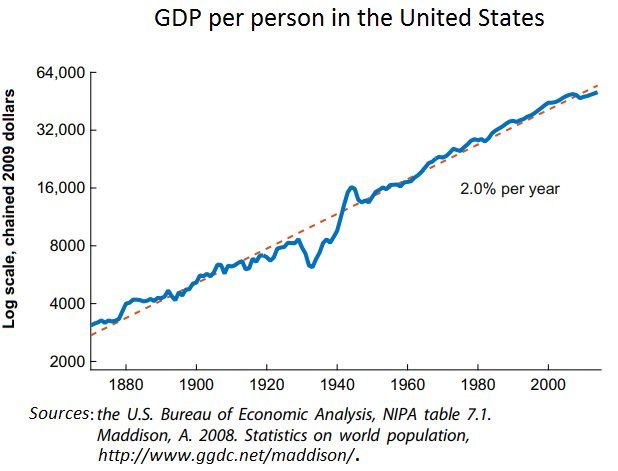
The US economy depends on the country's position of world hegemon - the US dollar is the world's main reserve currency, the US enforces international order and trade rules via its military strength, it dominates technology and culture through 'US defaultism'.
I dont think AI even factors in to this.
The US economy is priced for global reach - if it manages to lose that through a combination of credible competitors, and loss of goodwill - it's going to be in heaps of trouble.
The looming US debt is also a great question - a lot of economists have argued that since most US debt is good. It's mostly in forms of treasuries purchased in USD that pay in USD - this means the indebtedness creates a huge amount of dollars abroad that foreigners have to then spend on US services, driving demand.
Should the US become an unfriendly power to the rest of the western world, it will find the demand for its currency plummeting, which I don't want to outline is a big issue.
All said, I think if the US continues down the political path it currently seems to be pursuing, 'this time it's different' actually will be.
reply