To put in other units: a rise from previous targets of $58/MWh to $89/MWh, more than 50%, not including a $30/MWh subsidy (so the true cost is actually $119/MWh).
To be fair, it says the cost increases are mainly due to the rise in construction material prices as well as financing costs; nothing inherent to nuclear power or the novel technology itself.
To provide more context, wind and solar were both in the low $30's/MWh of LCOE (levelized cost of energy) 3 years ago[0], with that number predicted to continue falling rapidly.
Combined cycle (natural gas) is a bit higher[1] than solar and wind, with that number expected to rise over time, and I'm fairly sure the current numbers don't really reflect the substantial cost of the carbon emissions, which we will all have to pay for sooner or later. Either way, the number utilities see is currently much lower than SMRs.
I'm pretty sure every prediction I've ever seen for how quickly the cost of wind and solar will fall has underestimated the speed in retrospect.
That's the kind of thing these reactors have to compete with.
Grids have also repeatedly been shown to handle more renewables than every previous prediction would make, and we haven't hit the limit. At this point, fossil fuel sources more frequently a source of blackouts than than renewables from everything I've seen, despite certain people blaming renewables at every turn.
What we need is more energy storage, whether that's in the form of traditional batteries or more novel forms of energy storage.
I think nuclear is a fine source of energy if you have it, but evidence over the last several decades shows that it is virtually impossible to build for myriad reasons. The Vogtle nuclear reactors have been one giant boondoggle. New nuclear is not cost competitive, unfortunately.
Sorry but it is very misleading to say that fossil fuels sources are a bigger cause of blackouts than renewables. Without dispatchable generation, like nat gas plants but also hydroelectric, the grid would black out every single night.
Yes dispatchable generation may fail to materialize at times, but renewables “fail” to provide consistent power every single day, when the sun stops shining at night or wind stops blowing. Future battery deployments may be able to smooth these out over long enough timescales, but we are nowhere near that point right now.
>> Grids have also repeatedly been shown to handle more renewables than every previous prediction would make, and we haven't hit the limit.
> Yes dispatchable generation may fail to materialize at times, but renewables “fail” to provide consistent power every single day, when the sun stops shining at night or wind stops blowing.
As I said. You're just repeating the old arguments. People thought that small percentages of renewables would destabilize the grid, then that didn't happen, so then they said a slightly larger percentages would do it, and it didn't. This tired theme has been repeated ad nauseam for the last decade or two.
I agree that you need some amount of Base Load, but renewables haven't been the problem yet, and energy storage is the solution, long term, along with Demand Response. Small amounts of grid energy storage have been shown[0] to have disproportionately high effects on improving grid stability. We might need less than you predict.
As it is, since we are still successfully adding more and more renewables to the grid, and renewables aren't being the source of blackouts, SMRs have to compete with renewables on cost, and they simply don't. SMRs also don't compete with Combined Cycle plants in terms of cost either, so which one are utilities going to choose?
Peak demand for the grid is in the late afternoon / early evening, so the amount of battery storage needed to "shift" solar production by a few hours is not as much as you would think.
Wind power produces more power at night than during the day, and it produces more in winter than summer, which is quite convenient given how solar produces more in the summer and during the day.[1] They make quite a complementary pair of power sources.
There are seasonal concerns, which is where some combined cycle plants come into play, even if they don't operate for most of the year, but that's also not SMRs. Combined Cycle is way cheaper than these nuclear SMRs. If you over-build on wind and solar, you can go a long way even in times of year with "less" wind and less sunshine, and with the low cost of wind and solar... lots of people are looking to overbuild as a partial solution that doesn't require batteries.
The overwhelming majority of electricity demand is base load. Usually on the order of 70-80% [1]. We don't need "some" base load, almost all our demand is base load.
Electricity storage is nowhere near the scale required to make a dent in the electricity grid. To put this in perspective, the US alone uses about 500 GWh of electricity every hour. Worldwide this figure is about 2,500 GWh per hour. The storage facility you linked to was the biggest facility in the world when it was first constructed, and it stored only 129 MWh of electricity.
At our current rate of battery production it'd take us a century of dedicating 100% of our battery output to grid storage to reach 1 day's worth of storage. Battery production is expected to increase, but it's unclear whether raw material inputs can keep up with manufacturing demands [2].
Hornsdale Power Reserve was nowhere even close to being the biggest energy storage facility, even when it was constructed. At that time, the biggest facility was the Bath County Pumped Storage Station at 24,000 MWh, which has since been surpassed again.
Dams are geographically limited. You can't just build more of them. A fully decarbonized grid's ability to build renewables is largely determined by the availability of hydroelectricity for dispatchable power. Sweden gets ~40% of its electricity from hydro, another 40 from nuclear, and 20 from intermittent sources.
A fully decarbonized grid's ability to build renewables is, in fact, not at all determined by the availability of (watershed) hydroelectricity.
In particular, hydro storage can be built in hundreds of times as many places as watershed hydro generation. And, there are numerous other practical storage methods.
Ready combined-cycle gas generation capacity is more important, most places. Those will be incrementally converted to consume imported synthetic ammonia.
> Ready combined-cycle gas generation capacity is more important, most places. Those will be incrementally converted to consume imported synthetic ammonia.
Synthetic ammonia that comes from where? Ammonia is currently produced by steam reformation, which emits CO2. You're talking about electrolyzing water to produce hydrogen, and using renewable energy to carry out the Haber process. Nobody is using this strategy of energy storage, so it's priceless in a very literal sense: there is no way to estimate how much such a system would cost. I'd take an expensive solution over a priceless solution any day.
Synthetic ammonia will come from electric synthetic ammonia production plants. A few production-scale plants are already under construction, but of course hundreds more will be needed. Ammonia will not be, primarily, a storage medium, but a transportation medium and fuel, although it stores well under light pressure. Any tropical country can put up a solar farm and begin exporting ammonia to places less blessed with reliable sunshine -- for fertilizer, at first.
Insisting technologies that people are already spending billions of dollars on building out were not first shown to be viable is a peculiar position to take.
> This demand can be met by unvarying power plants,[2] dispatchable generation,[3] or by a collection of smaller intermittent energy sources,[4] depending on which approach has the best mix of cost, availability and reliability in any particular market.
Renewables are baseload. They mainly compete with other traditional "base load" power plants, i.e. coal and nuclear, all of which rely on dispatch able generation for evening out the peaks and trowths. Your calculation also doesn't make sense, you never need storage to cover the whole electricity generation in all of the US. It's like saying in an all nuclear scenario we need to build plants to cover twice the peak demand because all plants could be under maintenance at the same time. You don't build with 100% redundancy.
Yes, but in practice Watts are almost always an average over some sample period. Generation capacities for power plants are given in Watts, not Wh/h. Wh/h gives you a hint that the sample period was an hour, but that isn't necessarily the case. I don't think Wh/h is the correct way to describe the sample period.
This is highly geographically dependent, but water displacement “batteries” that pump water to an elevated basin when power is on and then let it run through turbines back down to a lowered basin seem like a really simple, effective solution that can work at scale.
I’ll back out then/leave the debate to those who have the time to sort through all of this. The gist about the enormous amount of space needed in that article seemed accurate/more than I thought.
It says exactly one right thing: you can put a reservoir on a hilltop, and the "head" is the height of the hill, not the depth of the reservoir.
You do not need a mountain. You do not need a high valley. It is cheap to build an earthen dike around the top of a hill, leveling off the hilltop peak for material.
The hill does not need to be steep; a shallow slope just means a longer penstock, which costs more.
A 300-meter hill is high enough for practical use. In most cases only a few hours' storage is plenty; you only need enough to make firing up a gas generator an occasional event.
Luckily the author took every opportunity to err on the side of underestimating the amount of water storage needed, to head off such pedantry that wouldn't significantly change the math.
By “at scale” I mean building enough pumped storage facilities to meet current energy demands when the wind isn’t blowing and the sun isn’t shining. It seems much more likely that we could build sufficient pumped storage facilities than the kind of battery farms the poster I was replying to rightly points out are not likely to meet required needs for the foreseeable future, if ever.
My personal pet idea: a big ‘tower’ on the seafloor.
Yes, costs are immense, but scaling would really work well. (Making the ‘well’ or tower twice as big would not make the cost double).
In ascii art:
   ———|  |——

      |  |

      |++|
With ‘| |’ the walls of the well or tower, —- the sealevel, and ++ the water inside the well. Energy would be gained through letting seawater go ‘into’ the well/water tower.
(Edit: attempt to make ascii art work)
Limited by the displaced water weight. Prone to storm damage. But the general idea could work and you could even do it entirely under water, saving you from having to dig out a mineshaft, just sink a bunch of caissons to create an underwater tower. As long as they stack and can be re-inforced so they don't end up shearing under the pressure of flowing water. Maybe even open up the sides to a lattice to reduce that resistance.
Existing supertankers can displace in the hundreds of thousands of tons. New, they cost under $100M. Scrap, much less.
They are not bothered much by weather, in normal operation. With that much weight hanging well below the surface, they would be very stable. (Racked together side by side, moreso.) Think of it as a very long oil platform. Those endure any weather with no difficulty.
No need for anything attached to the bottom except anchor chains.
When planning ocean operation, make sure almost everything is at or well above the surface, and everything complicated (motor/generator, winch, power conversion) is well protected from exposure. Ocean deployments that expose expensive stuff to wave action or put it underwater fail, reliably. (Expect tidal generation that puts generators underwater to fail spectacularly.)
Offshore wind has the nacelle well encapsulated and everything that moves far above the waves. Nothing is underwater except the pilings, the end of the support post, and a wire.
Yep, I tried to acknowledge that in the original comment when I said it’s geographically dependent.
It still seems like the only solution that currently exists and actually works on the scale required. I’m not sure what realistic solutions are for regions where hydro pumped storage is not a viable option.
A handful of hours storage, 60% curtailment (with most of the surplus used to create hydrogen and such for chemical feedstock) and a small amount of HVDC leaves a remainder small enough that meeting it with biogas and existing hydro is possible, meeting it with hudrogen is not costly, or meeting it with LNG is not a huge problem.
The world produces about 3TW of electricity, 2022's battery production was 760GWh and it's growing 30-50% yoy.
Ideally degrowth happens, but while we negotiate that, the |bhattery industry is at the scale required and is rapidly shedding critical mineral requirements (sodium ion is at GWh scale now, and much larger supply chains with all abundant materials come online in june).
True, yes. It just seems to me like conventional battery farms are not going to make much sense in a lot of places, and hydro pumped storage will. Another user pointed out that the size inefficiency is severe enough with hydro pumped storage that it is less grid scale suitable than I thought, so that difference between hydro pumped storage and conventional battery farms is less than I thought. Regardless, energy storage is a huge problem that’s going to require lots of deference to practicality and as many simple solutions as possible. Frankly I’m not sure it is possible, which is why I’m a big advocate for nuclear.
We can't use much of it yet because we haven't the renewable generating capacity to charge it from. (Charging it from fossil fuels would be beyond stupid.) Several varieties are getting cheaper very fast, and new, cheaper ones are being invented, so when the time comes it will cost a lot less. Likewise, carbon capture: building that out now would be stupid if it diverted money that could be spent building renewables that displace carbon emission.
It is also why building nukes is stupid: they displace way less carbon emissions, per dollar, than renewables, and first spend a decade displacing none at all. For the price of the coal burned waiting for the nuke to come on line, you could build that much solar, never mind what you are wasting on building the nuke, and it would start displacing carbon emissions almost immediately.
Batteries and pumped hydro are very far from the only practical storage media. But the assertion you read that pumped hydro does not scale is deliberately deceptive.
I would read Tom Murphy's posts from a different light. His message has consistently been 'unbounded exponentials aren't real, why are you pretending they are?'.
In that light 'pumped hydro can't scale' means 'stop trying to use this for Petawatt hours of energy storage you idiot, you'll destroy everything'.
Some of his more recent posts have been worryingly easy to coopt by the 'maek moar fossil fuels and nuclear' crowd, which his previous posts indicate he should be even more strongly opposed to.
The general message of degrowth and steady state economy is positive even if 'pumped hydro can't scale indefinitely' sounds a bit like 'pumped hydro can't decarbonize the current scale of the economy', and he gets the scale required to maintain status quo consumption a bit wrong.
I do wish he'd make this distinction clearer though.
OK if by "highly geographically dependent" you mean "not highly geographically dependent".
You need a hill, but there are a very, very large number of hills. Most usually you need to build an earthen dike around the top of the hill, although often a natural feature allows it to be shorter.
The reservoir does not need to be deep because the "head" is from it to the bottom of the hill, or even to the water table well below that.
The reservoir or reservoirs are good places to float solar farms.
I forget what country was trying to build a bunch of these but an article popped up on here about this a while back and they cited lack of suitable locations as one of the main barriers for building more.
The most ideal locations are natural that require minimal land reshaping. Some places in the world have a lot of suitable locations like that. Others don’t.
But despite that it still seems much more feasible to build lots of hydro pump stations like that than it does to build other forms of battery farms.
Places with not many hills will of course prefer other storage media.
Places with lots of hills will also prefer other storage media if they turn out to be cheaper. It is far from clear yet how costs will settle out. It is anyway not time yet to build more than just enough storage to shift the few hours from peak generation to peak use.
So it's supposed to be impossible to get the 3 hours or 9TWh (12 years of 2022 production) of battery needed to shift the grid to >99% renewables (including biogas from waste plant matter, planned HVDC, and existing hydro for dispatch) with the much larger than current lithium production that is already pipelined, but scaling Uranium production and the entire reactor and enrichment supply chain 10x with no significant pipelined expansion is trivial?
What happens when the known Uranium resources run out 12 years after that?
1) not that it would happen, but if it did, they won’t just run out.
2) There are vast Uranium deposits in the Southwest and Canada that were identified and either mined a little, or left untouched after WW2 - because we had so much, we didn’t need them.
Early lithium was ‘hard to find’ until it wasn’t, and now there are vast reserves.
Lithium is harder to extract per power unit though, as Uranium is incredibly power dense.
> Lithium is harder to extract per power unit though, as Uranium is incredibly power dense.
Y'all just love making up lies out of whole cloth. This is incredibly wrong and you didn't even consider the idea of checking before deciding it was true. Stanning for nuclear does involve incredible density but it's not power or energy density.
Weight for weight, the amount of lithium you need for a 1kW renewable system with diurnal storage (80-160g/kWh for 8-12kWh to provide for 1kW) and the amount of Uranium you need for 1kW of nuclear reactor (45-60MWd/kg @ 32% thermal efficiency with a 7.4:1 tails/fuel ratio with a 3-6 year fuel cycle) are about the same: Roughly 1kg.
The lithium battery will last 2-4x as long as the Uranium fuel (12-20 years vs 3-6).
At 1-7% the lithium ore is 1-2 orders of magnitude more concentrated than the 0.01-0.7% of most Uranium deposits (Canada's untapped high yield deposits are about the same as good lithium ore but they are deep underground, unique, and only a tiny fraction of what would be needed). The typical ore mined in a mass expansion scenario (0.01-0.03%) would have an energy density between that of coal and crude oil.
Mining for the uranium would involve around 100-1000x the quantity of mined or leached ore and tens to hundreds of times as much leaching chemical.
The Uranium extraction process doesn't end at the mill. Enrichment is just as involved as brine extraction. The end product of the Uranium fuel costs twice as much as an LFP grid battery and has about the same embodied energy per joule delivered (or double if from an underground or deep open pit mine).
Diurnal lithium battery storage is irrelevant where good pumped hydro is available, and is far more than is needed to reach 85-90% VRE (which can be done with 3 hours).
Early uranium was also hard to find, then tens of billions were spent trying to find more. There are fairly reliable methods of estimating how much hasn't been found based on the rate of finding it vs. the effort spent and the answer is there's not a lot undiscovered at concentrations that make fuel affordable. It's also largely irrelevant because any you find after you open your 3-8TW of nuclear plants (which are somehow built in 12 years) is not going to be developed before they all run out.
Thank you for the detailed responce, am I correct in understanding this is for once-through fuel cycle? I was not able to find figures for total burnup once fuel reprocessing is taken into account. I think analysing large-scale transition to nuclear only makes sence with reprosessing.
> The typical ore mined in a mass expansion scenario (0.01-0.03%) would have an energy density between that of coal and crude oil.
This is really interesting, because I have seen a lot of hand-wringing about lithium mining, describing it as physically impossible.
We seem to be mining 8.5 billion tons of coal a year, and 100k tons of lithium a year. Assuming 2% for lithium, that puts us at 4 million tons of ore.
So we need 2000 times less earthmoving equipment to achieve the quantity of lithium we currently consume?
I am assuming here that 'Coal' is the name for stuff that's dug out of the ground, so comparing 'coal' and 'ore' is correct for estimating earthmoving required.
> Diurnal lithium battery storage is irrelevant where good pumped hydro is available
To me the entire point of this scenario is, what do I do if my country doesn't have it. That's going to be the dilemma facing half the world.
> I have seen a lot of hand-wringing about lithium mining, describing it as physically impossible. While cost remains to be seen, it is clear the amount we need to mine is much lower than that of coal.
Very little mining or extraction is actually physically impossible, just as safes are rated not as "impossible to crack" but "takes an expert with best tools 16 hours to open", known measured resources are ranked by economic feasibility .. how much effort will it take to produce the end product (and is that cost worth it).
Lithium | Uranium | Copper | etc .. there are pros, cons, issues and problems all the way through any mineral extraction process - the one solution not proposed nearly enough is for populations to just consume less.
Re: Lithium specifically:
> Let us consider, for example, electric cars. To give an idea of this effect, producing a battery weighing 1,100 pounds emits over 70% more carbon dioxide than producing a conventional car in Germany, according to research by the automotive consultancy Berylls Strategy Advisors.
> Furthermore, lithium mining requires a lot of water. To extract one ton of lithium requires about 500,000 liters of water, and can result in the poisoning of reservoirs and related health problems.
Also thank you for maintaining civility and expressing genuine curiosity. It's easy to forget that not everyone who is a fan of nuclear is just using it as a tool to attack anything that threatens fossil fuels just hecause those ones are the loudest my distaste towards some of the other commenters caught you in the crossfire and I apologise.
> So we need 2000 times less earthmoving equipment to achieve the quantity of lithium we currently consume?
Both metals have a variety of mining methods including extraction in liquid form, and both need a leaching step in large amounts of chemicals if dug up whole (with the exception of canadian ore which is high purity) but that's the general gist of it. The Lithium requires between 1 and 3 orders of magnitude less space/industry/chemicals and a bit less energy for the same target use. Nickel, manganese, copper and phosphorus also have significant impact but still about the same total impact as the Uranium for a 90-95% grid decarbonization use case up front (but longer lived and recyclable for the battery ingredients). Building a mix of solar and onshore wind to cycle the battery requires a subset of the ingredients of a reactor like an EPR (with maybe a bit more concrete, zinc and steel depending on wind capacity factor, but much less chromium and a number of other higher impact materials).
Offshore wind is about the only renewable technology with significantly larger mining impact. It is better than fossil fuels or delay but does need to come down (Iron Nitride should help here, but there is still a lot of steel and copper -- although an order of magnitude less than the nuclear and fossil fuel interests will tell you).
> Thank you for the detailed responce, am I correct in understanding this is for once-through fuel cycle? I was not able to find figures for total burnup once fuel reprocessing is taken into account. I think analysing large-scale transition to nuclear only makes sence with reprosessing.
Reprocessing does very little without a positive breeding ratio. Unless you create more Pu239 than you consume U235 it's just a small boost in U235 efficiency. You can verify this by looking at the isotope mix of waste for your reactor of choice and the isotope mix and burnup of MOX. An APR has a breeding ratio around 0.6 and consumes 60% of the bred Pu without reprocessing. A PHWR has the advantage of (in principle) being able to extract the last 5-15% of energy without plutonium extraction (which is incredibly polluting and expensive), but it doesn't result in much of an increase in net output, nor does it reduce the amount of Pu240, Pu241, Am242 and Am241 (the very bad high level long lived alpha emitters) that must be dealt with by more than 20%.
Breeders have a host of technical barriers, and a breeder-heavy strategy is actually impaired by spending money and the fairly finite easily accessed startup fissile material on PWRs. The net result of most proposals is about 10x the burnup (as fertile material is notnplannednto be recovered and multiple roundsnof breeding and reprocessing result in problems that don't have proposed solutions), but there is no plutonium separation process that is either affordable or environmentally sustainable if scaled to the TW level.
> To me the entire point of this scenario is, what do I do if my country doesn't have it. That's going to be the dilemma facing half the world.
Sodium ion batteries are a commercial technology now at the 1-5GWh level with a massive scale up being completed in June (100s of GWh/yr), and use all abundant materials (Iron, sodium, carbon, water, aluminium). Pumped hydro is also far less limited. Other chemistries that are in scale up include Zinc Bromide (there is a process that can retrofit existing lead acid production being scaled among others), Iron, and Vanadium (often available as a side product of Uranium in greater quantities at about 1-3hrs of storage per year of uranium fuel), but generally not valuable enough to extract). The main geopolitical danger is access to silver, and building a local industry.
Also buying lithium on the open market has far fewer opportunities for geopolitical domination than systems dependent on fossil fuels or U235 as there are many low quality deposits and the bottleneck is largely extraction. Your country could spend $3-10k per US-citizen-of-primary-energy on imported batteries or $300-1k on imported lithium once then develop domestic recycling and manufacturing and then you are done for decades (maybe replacing 5% of it per year once the kWh per kg of Li stops improving).
Bwaha, 1kg of uranium produces 8.64 x 10^13 joules of energy when fissioned. That's ~ 24 MWH per gram, not per KG. You're off by ~ 3 orders of magnitude.
So what are you talking about? Because your math at the start is so far off, it’s pretty hard to tell here.
You haven't understood his post, he is correct under worst-case scenario for nuclear -> once through fuel cycle achieves 5% burnup, that's 4 million MJ/KG, or roughly 60MWd/kg
Enrichment requires that we throw away most of uranium as depleted uranium, that's what he means by "7.4:1 tails/fuel ratio"
That's gives us ~20 years of power at 1KW, but we have are converting to electricity, so it really only gives us 6 years or so.
The main flaw with his argument is, in my understanding, he assumes a once-through fuel cycle, whereas France and others reprocess nuclear fuel. It also discards reactors that work on un-encirched uranium like CANDU.
I am not sure about the ores, but I am greatfull for the detailed writeup
Reprocessing doesn't turn fertile material into fissile. It mostly just costs money and pours more fission products into the nearest body of water than Fukushim released. It also extracts the dregs of Pu239 and U235 to get another 5-15% of final energy out. CANDU + reprocessing is a bit better than a PWR, but still significantly under 2x the energy in the original U235.
Closed fuel cycles are a myth so there is no need to specify 'once through'.
Just gonna double down on the 'it's so dense' myth huh?
Do it with a real fuel cycle, real turbine efficiencies and stop trying to conflate the fertile content with the fissile.
Here's a hint to get you started: the reactor fleet uses about 67500 tonnes of raw Uranium and produces about 2650TWh each year. New reactors are about 1.8x the average and most SMR proposals are worse. The world produced 760GWh of batteries from around 75,000 tonnes of Lithium.
Also note that 2650TWh / 760GWh is 3500 which is less than the number of cycles an LFP battery will last.
If you’re going to throw out bullshit numbers, don’t be surprised when you get called on it.
If de-rating, show your math. Which you didn’t.
This whole thing is hilarious anyway, as I’m far from a nuclear advocate. Just pointing out you’re not actually telling the truth while going on your rant.
And it’s all clearly apples to oranges with no sense.
Lithium is not destroyed when used in these battery systems, it can be recycled indefinitely if we cared. It also doesn’t produce any actual power, it’s storage.
Uranium is burned/fissioned, and actually is gone. And actually produces power.
Wow. You got triggered hard by that. My comment was in response to the pearl clutching over the imagined requirement of Lithium mining as a component of a system that generates electricity from wind and solar.
If we take diurnal storage being provided by lithium batteries as a given, then a VRE system producing 1kW >95% of the time using existing commercial technology requires roughly 1kg of lithium in 6-12kWh of batteries which needs to be recycled or replaced every 12-20 years.
A system producing 1kW of electricity from fission 85% of the time using existing commercial technology requires fuel made from 1kg of mined Uranium. The Uranium needs replacing at least every 6 years. You can calculate this easily from burnup (25-60MWd/kg thermal), thermal efficiency (30-38%), and the Uranium required to make a unit of fuel (~8kg per kg of fuel).
Hence the pearl clutching is revealed as disingenuous nonsense and the proposed alternative to the terrors of Lithium mining is revealed to be worse, and why you are triggered.
> So it's supposed to be impossible to get the 3 hours or 9TWh (12 years of 2022 production) of battery.. but scaling Uranium production and the entire reactor and enrichment supply chain 10x with no significant pipelined expansion is trivial
Yes, that is exactly right!
Energy density of natural, raw, unenriched uranium is 1,000,000 MJ/KG, and energy density of a lithium battery is 0.46 MJ/KG.
1 kilo of uranium gives you 1,000 times more energy than a kilo of lithium will be able to 'process' over the entire 10-year life expectancy of the battery.
You will need 1,000 fewer excavators, dump trucks and people involved in mining if you choose uranium.
If price of uranium increases 3x nobody cares, fuel is like 5% of cost for nuclear.
If price of lithium increases 3x it's a disaster, the entire transition to electric vehicles will fail.
We don't even have enough batteries for vehicles, the grid needs another solution, either hydro + hydrogen storage or nuclear.
Now do it again with the electricity output of fuel cycles that actually exist and the amount of lithium in a new battery.
The only density here is that required to mindlessly parrot factoids about the theoretical thermal energy content fertile material as if they were relevant to electricity output of fissile content.
> If price of uranium increases 3x nobody cares, fuel is like 5% of cost for nuclear. If price of lithium increases 3x it's a disaster, the entire transition to electric vehicles will fail.
If the price of Uranium triples, the raw Uranium becomes as expensive as renewables' LCOE in one year rather than 5. If the price of lithium triples, it's still irrelevant because PHES still exists and so do Sodium Ion, Zinc Bromide and Iron batteries.
> We don't even have enough batteries for vehicles, the grid needs another solution, either hydro + hydrogen storage or nuclear.
The amount of batteries required for >90% renewables is tiny compare to the amount needed for overly large EVs everywhere. If you're going to change one of these variables to stop climate change faster, far better to unban light electric vehicles in countries with mandatory monster trucks and spend a few percent of that nuclear reactor money on transit, low speed roads and pedestrianisation.
This model projects that a 98% solar/wind/hydro grid is possible for Australia by building an additional 450GWh of storage. 1.3x snowy 2 (which is 350GWh).
Unfortunately, Snow 2's storage figures are rather misleading. That 350 GWh cannot be used daily, that's its total storage capacity which takes a month and a half to refill. The cyclic capacity of Snowy 2 - as in, the storage capacity that I can pump back into the facility using excess renewable power - is only ~40 GWh.
And again, this is geographically limited storage system: pumped hydro requires just the right geography of an upper and lower reservoir spaced not too far apart. Not too bad if you're a sparsely populated country with huge amounts of land per capita. But it isn't a solution for most countries.
"If based on the active storage volume of the ‘lesser reservoir’, Talbingo, the theoretical energy storage capacity is about 240 GWh"
Once again this is just JUST ONE project, already under construction and it already will cover somewhere between 30-40% of the energy storage requirements to get the entire country to reach a 98% solar/wind powered grid.
Dismissing the possibility of this order of magnitude of storage as simply impossible as the OP did when it is already under construction is asinine.
>And again, this is geographically limited storage system: pumped hydro requires just the right geography of an upper and lower reservoir spaced not too far apart.
There have been multiple studies on this. Unlike hydro, the geography for pumped storage is not rare throughout most of the world.
This is the most perplexing talking point against pumped storage, and frankly, reminds me of when people used to pick up on pro nuclear/carbon lobbies sneering at solar/wind for being infeasible because it was < 1% of the grid back in 2014.
It will be used where it is a good solution. Where it is not, others will be used. Use of other methods elsewhere does not detract from its usefulness in places suited to it.
Australia is 1 - Huge, low density, lots of choice where to place renewables, 3 - has some of the best places for solar in the world, 4 - good solar production in winter.
Try Austria, and find that solar production falls 5-10x in winter, there is almost no good location for wind, and the problem is much harder.
Indeed, central and eastern Europe are some of the worst places on Earth for renewable energy. They are "nuclear's last stand". What this means, though, is that in a post-fossil world energy intensive industries will simply move elsewhere. Why build your aluminum smelter in an energy ghetto?
> The overwhelming majority of electricity demand is base load. Usually on the order of 70-80% [1]. We don't need "some" base load, almost all our demand is base load.
The article you linked doesn't really back this up, at least in the way this discussion means it. It shows that with flexible production, you can drastically scale back on "traditional" base load power sources, and that is representing a real power grid in Germany. Nothing about the graph actually says "this is as much renewables as you can pack into this power grid".
If you look at the graph closely, you'll notice that solar is big during the day, and wind is big during the night. With greater installed wind production capacity, the fossil fuel lines would drop drastically in the graph. It's that simple. We would still need to have "peaker plants" available until there is enough grid energy storage capacity, but combined cycle natural plants work fine for that. We can keep pushing down the time they need to on by building more renewables even without batteries.
> The storage facility you linked to was the biggest facility in the world when it was first constructed, and it stored only 129 MWh of electricity.
I specifically linked that one because it talks about how ridiculously profitable it has been, and how much of an impact it has had on the local grid. If it can save money for a traditional grid, then it is a no-brainer for utilities to install bigger and bigger grid batteries. More demand for batteries means more battery production facilities, increasing global production capacity over time.
However, the world is also transitioning to Electric Vehicles, and most EV manufacturers are offering V2G (vehicle to grid) solutions, so millions of EVs can contribute a portion of their battery capacity to the grid in the future, and the grid can compensate them for their contribution.
> Battery production is expected to increase, but it's unclear whether raw material inputs can keep up with manufacturing demands [2].
Lithium is not exactly rare or hard to extract, you can even extract lithium from saltwater, so this argument seems specious. But, various alternative chemistries are being explored which could help in different ways.
> At our current rate of battery production it'd take us a century of dedicating 100% of our battery output to grid storage to reach 1 day's worth of storage.
How did you determine that we need a full day's worth of energy storage? We can drastically decarbonize the grid (and lower electric costs for consumers) with a lot less than that, based on what I've seen, but this is a highly speculative part of the discussion so it's interesting to hear how that number came to be.
We can get a handle on how much storage needed by optimization based on real weather data, minimizing costs based on various assumptions on cost of wind, solar, batteries, and long term storage. This web site lets you do that to obtain "synthetic baseload", the equivalent of what a nuclear plant could provide:
If we do this for Germany with 2030 cost assumptions and 2011 weather data, 6 hours of batteries are needed and 289 hours of hydrogen storage. Hydrogen storage is quite cheap, if nowhere near as efficient. It's very useful here, reducing the optimal cost by nearly a factor of 2.
For the US as a whole, the optimum solution uses 6 hours of batteries again, but 106 hours of hydrogen. For just Texas, 2 hours of batteries and 254 hours of hydrogen. California alone is 16 hours of batteries and 70 hours of hydrogen (likely due to wind optimizing to zero under those assumptions.)
I plugged this in with existing storage technologies and existing energy demand for just the USA (500 GW). It turns out we'll only need... 6,000 GWH of battery storage!
By comparison, the entire world only produces ~400 GWh of batteries each year. So it'd only take a decade and a half of global battery production to satisfy the storage demands of just the USA. The rest of the world would be left with zero EV or electronics production for a decade and a half and no grid storage to show for it.
Thanks for the site: it's a good tool to demonstrate just how unfeasible energy storage really is.
It doesn’t matter if battery prices increase some, as you have made that the cornerstone of your argument. Many many comments ago, I linked to the Hornsdale battery. Based on the revenue, you can do the math: the batteries could cost a lot more, and it would still have been profitable. Batteries also don’t make up the entire cost of grid scale storage: the inverters, the transformers, even the cabinets and control computers cost money.
As it is, mining is a lagging indicator. Once mining scales up, the cost of the commodities will naturally go back down. While there is profit to be made, too many people will open mines, which will bring the profitability back down to earth. It’s a tale as old as supply chains.
This same inability to imagine how quickly solar and wind would drop in price led to numerous “experts” making absurd claims about solar and wind being economically infeasible at any scale. The battery supply chain is scaling. There will be price volatility, but the volume is growing by leaps and bounds.
It will take years for the world to transition, but it also takes years to build and install the necessary wind and solar. Battery production won’t remain constant, and it won’t even increase slightly. It has and will increase drastically.
Predictions and actual capability are two vastly different things. Outside the realm of predictions, back here in reality, battery costs are actually increasing rather than declining [1].
"Just scale up mining" is easier said than done. Steel is a widely used commodity. If we could "just scale up mining" and exponentially decrease the cost of materials, why haven't we been able to do this with steel? Care you explain why "just scale up mining" will work for lithium when it hasn't for plenty of other commodities?
That’s an irrelevant question. I hate that I’m still bothering to respond when you don’t seem interested in changing your position.
There is a fixed cost to extract a kilogram of lithium using a given method. When demand spikes, lithium suppliers will charge more and reinvest those profits into increasing mining capacity. If they had their way, they’d keep prices high, but anyone can open a lithium mine. Lithium is not hard to find. Those people will undercut the previous miner in order to attract buyers, which will force all miners to lower prices back to reality.
As long as prices are high, more and more mines will open as it is suddenly an attractive resource to mine. This will happen until prices start to drop to some percentage-over-cost where things stop being attractive, and the market reaches equilibrium again.
If lithium was profitable to mine for $X/kg for many years, then that is the price it will naturally return to. It is a commodity. There is no special value for getting your lithium from Corporation X or Corporation Y. The only value is the material.
That’s how commodities work. The price is determined by how hard it is to extract, and whether demand has recently spiked (or subsided). Gold is expensive because it
If this were some rare substance, extraction difficulty would increase noticeably with time, but we’re a long way from a shortage of ways to mine lithium. Some ways might be more expensive, so those mines will only open if the prices stay high, but the prices won’t rise indefinitely this century. That is such an illogical assumption. Perhaps the natural price of high volume lithium production is higher than we have today because those more expensive methods are convenient, but it won’t be enough of a price increase to matter in the grand scheme of things, and this assumption of a higher price is a pretty flimsy one to base predictions on even then.
Eventually, as batteries age, they will be recycled, and the need for lithium mining will likely drop sharply, bankrupting some of these mines until production and (profitable) demand are matched again.
Higher prices would indeed incentivize increased demand. But again, this requires higher prices. Understand that renewable activists are predicting that lithium battery production will not only increase exponentially, it will also exponentially drop in cost per KWh as this happens.
This is not going to happen because, as you point out, lithium mining will only expand if prices climb higher to make otherwise unprofitable reserves profitable. And since raw materials now dominate the cost of batteries, this is going to increase the cost of batteries. There's no having your cake and eating it too: in order to increase lithium mining capacity, battery cost is going to have to grow, not shrink.
You edited your post after I replied, so I'll have to edit in response:
There's no one "difficulty of extraction" factor for each commodity. The reality is that there's a diverse variety of reserves all of which are easier or harder to exploit, even for the same commodity. "The price is determined by how hard it is to extract" is at best a huge simplification.
Higher commodity prices make it viable to extract the more inaccessible reserves, but those reserves will only be profitable so long as prices remain high.
> If lithium was profitable to mine for $X/kg for many years, then that is the price it will naturally return to.
Nope! This is completely wrong. Commodities don't "naturally return" to any price. Prices is a result of supply and demand. It could be we find some other battery chemistry that blows lithium out of the water. In that case the cost of lithium will probably collapse well below $X/kg. Conversely, if countries start to try and provision significant amounts of grid battery storage, the costs will grow even higher as more and more inaccessible reserves need to be exploited to supply market demand.
There is no "natural" price of commodities, whatsoever. If the demand for lithium is going to rise and keep rising, then the cost will rise and keep rising unless some breakthrough makes it way more efficient to mine. Given the fact that we've been mining for centuries and we have huge demand for minerals other than lithium, I'm not optimistic on a 100x improvement in mining efficiency.
It's interesting because coder is very locked into their view on one price.
I don't know lithium at all, but if you follow natural gas / fracking / oil production the question of what reserves are economically recoverable is HIGHLY price dependent (and highly variable). On low end $10-15/barrel cost of production or better. The only reason we have any production in the US is because oil costs more. If you said we would double oil usage prices would spike incredibly.
Same thing with solar net metering, Solar activists demand that soler gen (often during periods with solar curtailments already in effect) be reimbursed based on the same cost as electric rates during the evening (usually peak demand and low solar / wind). Again, depressing how economically nonsensical this all is for a supposedly scientifically grounded effort.
Anyways, rational heads (and economic forces) tend to prevail. I think we will see more TOU rates, and ideally this will at least create some market forces around storage.
The prices have gone up, so mining is expanding. There’s a clear next step to the way commodities work. That next step is not for prices to continue increasing dramatically, things should level off and eventually return to normal, as I explained.
> Understand that renewable activists are predicting that lithium battery production will not only increase exponentially, it will also exponentially drop in cost per KWh as this happens.
Battery prices don’t need to keep dropping for them to take over the world. They’re already cheap. Of course people would love for the prices to drop, and they have historically been dropping slowly, but the basic elements will cost a certain amount, so there is a price floor. I don’t know where that is, but it is lower than we’ve seen, because every step in the battery production chain has been making a profit up to this point, including the miners.
The fact that prices have increased only indicates a mismatch between supply and demand, not that the natural price needs to be this high, or that it needs to continue rising. As I pointed out, everyone was already profitable at a lower battery price than what we have today. If batteries are expensive because of lithium, more lithium mines will open and drop the price. If batteries are expensive because the battery makers are price gouging, someone else will undercut them.
The main concern for something like this is market distortion by patents. If the best way to make batteries is locked behind a patent, that can cause prices to be unnaturally high. This concern does not apply to elemental lithium.
> Higher commodity prices make it viable to extract the more inaccessible reserves, but those reserves will only be profitable so long as prices remain high.
You’re practically quoting my comment to me. I addressed that. It is possible that the price will settle higher than it is today if those methods play a big role, but it won’t matter. You don’t seem to appreciate how insanely cost effective batteries already are today. A modest price increase is fine, but it is still illogical to assume prices will stay high. Lithium is not hard to find. Why would the market settle on expensive extraction methods? It is a strange assumption to start from. We’re not talking about something that’s rare.
Either way, the outcome is unchanged unless batteries increase in price exponentially, as your earlier comments apparently assumed.
For the second time, there is no "natural price". You need to iron this kind of wishful thinking out of your head. Companies want to buy more and more lithium, so unless you've got some breakthrough that makes mining a heck of a lot cheaper the cost will keep going up and up as more and more inaccessible reserves need to be exploited. If I have a reserve that costs $4/kg to operate when the price is $5/kg and another reserve that costs $7/kg, I may open the latter if the price rises to $8/kg. But if the price drops back down to $5/kg it's unprofitable to operate.
Here's a way to articulate this that might better mesh with your mental model. The "natural price" of a commodity isn't static. If demand increases and the only way to meet demand is to use more and more expensive mining operations, then this raises the "natural price". As per the above example, the "natural price" rose to $8. It won't drop back below $8/kg unless either we find a way to make mining cheaper, or demand drops back to levels that can be satisfied by my cheaper-to-operate reserve.
You have too many assumptions about the availability of lithium, and lack of “easy” reserves. That’s the fundamental disconnect here. Lithium is not inaccesible, and it is super common. The “hard” ways to mine lithium aren’t that hard.
We’re not talking about gold or platinum, where your discussion points would be relevant.
I’m not wishing over here. But anyways, I’ve tried to explain the reason why the market disagrees with you, and why people are rapidly seeking to integrate batteries into the grid and into cars, which would not be possible if you were correct about lithium becoming insanely expensive.
Battery production will keep scaling at a huge rate, and the prices will be fine. A modest price increase is irrelevant to anything discussed here today.
Lithium is far from easy to extract. It also needs to be refined on-site because its raw form is too low-density to economically transport. So most lithium mines require large amounts of water to fill brine pools. The number of sites that are actually viable to produce lithium are not nearly so common.
Again, the market disagrees with you not me. Lithium commodity prices are rising, and so are battery prices. People are indeed seeking to integrate batteries into the grid - I'm not disputing that. I'm pointing out that these batteries are actually becoming more expensive [1], not less and it's unlikely this trend will reverse on a dime.
Commodity prices are rising… causing more mines to open… causing more supply… which will cause prices to drop. Why do you keep pointing to that? Your argument makes no sense. That’s how commodities scale.
I'd check out something like oil which is a large and high dollar market.
The relationship between production and price is well established, and no, production does not move inversely to price. This is because the marginal cost in almost any of these areas is higher per unit of production as production increases. That also of course makes sense logically.
Gold as well, same thing. You start by grabbing gold nuggets of the ground. The effort to mine more gold has not gotten easier, it's gotten harder over time.
I already addressed all of this with the difficulty of extraction. I even called out gold earlier in the thread, possibly more than once.
The abundance of lithium is nothing like the abundance of gold, and oil is a different subject altogether because we have extracted a truly staggering amount of it, and then burned it. We’ve extracted something like 135 billion tons of oil, and a “mere” 250 thousand tons of gold. So, hundreds of thousands of times more oil than gold has been extracted.
Lithium is 20 thousand times more abundant than gold, roughly.
Lithium is reusable, analogous to how we handle aluminum. As demand is ramping up, we will need to ramp up extraction, but we’re not throwing it away, and eventually we will get a lot of our lithium from recycling.
> Commodity prices are rising… causing more mines to open…
Yes.
> causing more supply…
Yes
> which will cause prices to drop.
Nope! Remember, the expanded supply is only profitable to operate at higher prices. So the price will drop if demand drops and then supplier will operate the more efficient extraction sites. But if demand stays high, so will prices.
You should be linking to evidence that prices will rise uncontrollably if you want to support your argument that battery production won't keep increasing.
I will remind you that this is your absurd argument:
> By comparison, the entire world only produces ~400 GWh of batteries each year. So it'd only take a decade and a half of global battery production to satisfy the storage demands of just the USA. The rest of the world would be left with zero EV or electronics production for a decade and a half and no grid storage to show for it.
> Thanks for the site: it's a good tool to demonstrate just how unfeasible energy storage really is.
Which is totally different from "battery prices might increase a little", which I have repeatedly indicated is not a problem, and I even pointed out that it is a possibility a long time upthread from here.
Again we're talking about 6,000 GWh of grid storage for just one country. And that's also competing with batteries for EVs, and batteries for electronics. That site estimate's for storage necessity are also pretty optimistic. Most estimates for a completely decarbonized grid - not using peaker gas plants - call for weeks of storage not days: https://pv-magazine-usa.com/2018/03/01/12-hours-energy-stora...
Obviously production would have to be scaled up. It's dishonest to present this as some sort of insurmountable barrier, for all potential battery chemistries or other storage modes.
Batteries are not transistors. Their input costs are skyrocketing, and sure enough the end costs of batteries are now starting to rise, too [1]. It's dishonest to pretend that continued exponential growth is guaranteed.
The cost of an automobile shrank from a million dollars inflation adjusted to a hundred thousand over the course of the 1900s. Assembly line manufacturing continued to shrink this down to $10,000 by 1920. Would it be safe to assume that a car would cost $1 by the end of the century given the past rate of a 10x drop in price every two decades?
The reality is that most products are not transistors. They don't get better when you make them smaller. A car will always contain a certain mass of metal, and will not cheaper than the cost of that input. Manufacturing already accounts for under a quarter of a battery's cost. The rest is dominated by cathode and anode material [2]. Battery manufacturing had already become a resource extraction problem.
You could not be more wrong about batteries. You made a huge error about the cost percentage that lithium makes up. It’s possible — just possible — that other people have researched batteries too, and maybe they have a better sense of where the industry is going.
It makes no sense to assume that we’ve reached “peak battery”, at all.
Continuing this argument is pointless, and really does seem like you’re choosing to ignore reality. I’m done with this conversation.
And for those nickel-free battery chemistries, what inputs are the main cost drivers? And as per my response, nickel is also experiencing shortages and cost spikes.
My core assertion remains true regardless of the fact that different chemistries require different inputs: battery production has become a resource extraction problem, rather than a manufacturing problem. Unless we find a way to somehow make mining exponentially more efficient, we're not going to be seeing exponential growth in battery production.
Your core assertion remains false because (1) lithium is not the only battery chemistry, and (2) batteries are not the only, or even cheapest, storage technology.
CAT-L, the biggest battery maker in the world, is today ramping up sodium battery production capacity. Will you now insist on a sodium supply bottleneck?
Lithium is the only viable battery chemistry we have presently. Lead acid decays after 100-200 cycles. Who knows if sodium will be viable, it'd be a lot better to argue for its efficacy when it's actually on the market.
The other forms of storage have other shortcomings: hydroelectric storage is geographically dependent. Most of the other form of storage people are mentioning in this tread have never been operated outside of prototypes: like hydrogen electrolysis or compressed air. Again, technological feasibility and market viability are two vastly different things. If compressed air storage works, but it's more expensive than nuclear power what's the point?
Lithium is not, in fact, the only viable battery chemistry. CAT-L, the world's largest maker of batteries, is today ramping up production of sodium batteries. Numerous other chemistries are also being fielded, at $billions scale.
Pumped hydro storage is not, in fact, geographically dependent: there are a lot of hills (which you knew). Compressed air is used in production (which you knew). Hydrogen electrolysis is operated in the millions of tons (which you knew).
Relying on falsehoods is a strange way to argue. It depends on your audience remaining ignorant.
I don't care about company hype and marketing. Get back to me when I can actually buy a sodium battery and throw it on a test load to see if it's living up to the promises. It's not available yet, that's the reality. Tech that's 5 years away has a nasty habit of staying 5 years a way for a lot longer than that.
I got a real kick when you insisted hydroelectricity storage is not geographically dependent and immediate followed by saying it needs hills. And it requires more than just hills. It needs a hill, with a reservoir on top, and another reservoir at the base of the hill to collect the water, and another body of water to fill said reservoirs. The conditions for hydroelectric storage are way more specific than "it needs a hill".
I agree, relying on falsehoods are a bad way to argue. That's why it's bad to insist that storage is an easy problem to solve to try and make the case for intermittent sources.
> Get back to me when I can actually buy a sodium battery and throw it on a test load to see if it's living up to the promises.
Sure, right after you get back to to inform us about the approved and operating permanent nuclear waste storage facility in the US with all the waste waiting in temporary holding facilities having been placed there.
And a nuke plant needs an unused containment vessel.
Betting that the biggest battery manufacturer in the world will default on billions of dollars in orders for sodium batteries, next quarter, would be a courageous position to take. But I doubt you are shorting CAT-L.
And then there are various thermal storage schemes. Pumped thermal (reversible thermal cycle with hot and cold storage) could have up to a 75% round trip efficiency with cheap materials and no geographical restrictions.
And has anyone actually built an electrical thermal storage system - not district heating - with 75% round trip efficiency? Or is this just more marketing hype?
> Thanks for the site: it's a good tool to demonstrate just how unfeasible energy storage really is.
Turns out even good tools can give bad results if intentionally used in bad faith.
If you include a small amount of dispatch to represent long distance transmission, biogas or hydro things change dramatically. Prices are for real finished projects, and are going down for wind, solar, and storage very rapidly.
At 2.5% even using gas for dispatch would only add 10g of CO2 per kWh to the total. Well within the error margins of estimates from various low carbon sources and significantly less than taking a year longer to build out low carbon generation.
Restricting scope to subsets of the country:
PNW with no offshore wind because it has the worse renewable resources:
A little off-topic, but has anyone ever developed residential hydrogen production / storage solution? What's the smallest scale hydrogen storage avaliable?
> However, the world is also transitioning to Electric Vehicles, and most EV manufacturers are offering V2G (vehicle to grid) solutions, so millions of EVs can contribute
V2G is idiotic. It cost £10 for full-charge of Tesla in UK pre-ukraine. Half of that money is distribution cost, not energy cost. What will you earn from buying low, selling high in V2G? Let's be generous, say it's £5.
So the battery lasts 1500 cycles, you are going to make £7500. And the battery costs £17,000 to replace?
No-one will be damaging their expensive car battery to earn fraction of a dollar to earn pennies. For anyone to do this, it has to be 2x above break even.
> Lithium is not exactly rare or hard to extract, you can even extract lithium from saltwater, so this argument seems specious.
You can extract anything from seawater, even gold.
"Using electrochemical methods, comparable to those used in electroplating, gold has actually been extracted from the ocean, but unfortunately the cost of the process is five times the value of the gold obtained."
“It's technically possible to extract lithium from seawater,” Cui says. “But it's all about cost. And currently it's too high.”
According to one website that I found, the average residential electricity cost in the UK is $0.482/kWh. Simple math: 1500 cycles * 75kWh * $0.482/kWh = $54,225 in offset electric costs, which would more than cover the hypothetical battery replacement cost. It is well above the 2x break even that you requested.
However, I expect most people do not have electric bills that high, so those people would not allow that much of their battery to be used by the program, unless they were participating in this program for a very long time. They would be more than fairly compensated for whatever cycle life was used by the net metering program. Yes, I recognize that the electricity would have come from the grid at some previous point in time in most cases, so some adjustments would have to be made to the concept of Net Metering to make this a sensible proposal, but there are ways to make it work if you don't just declare that everyone is a bunch of idiots. Electricity is much more valuable to the grid at certain moments in time than others. ""Transmission costs"" are irrelevant when the grid needs more power. Any kind of V2G system would involve exporting power when the grid desperately requests it, not just at a random hours of the day when the grid doesn't even want it. Virtual distributed grid batteries are already being proven.[0] This solution can definitely be scaled up.
Also, that estimate of battery replacement cost is based on the battery magically having zero marginal value at the end of its lifecycle in your car, which is not at all how things work. A battery that people are unwilling to keep using in an EV will still have significant value if it is directly transplanted into a stationary storage application, but oftentimes, it is just a handful of cells that are causing balancing issues, so replacing those for a few dollars can restore a lot of missing capacity. Even after the battery is done in stationary storage, it will still have value in the highly concentrated resources which can easily be recycled into a new battery pack.
So, no, it would not cost that much to replace the battery. Even today, you could throw a used battery pack on eBay as a worst case scenario and get thousands of bucks for it, but in the future as more of these batteries are being cycled through the market, it will be more economically viable to have businesses built around making this as painless as possible.
If you consider V2G idiotic, then you're effectively asserting that any form of grid battery is idiotic because those have to work on very similar economics, and that is a strange position to hold when we have real world examples of grid batteries being profitable even today.
> Half of that money is distribution cost, not energy cost.
I also have no idea where you got the notion that UK electricity costs are 50% transmission fees. It is 3%.[1]
> You can extract anything from seawater, even gold.
I'm not saying seawater is absolutely the best available source of lithium, but some people claim to have proven real success with it.
"The researchers estimate that their system can extract 1 kg of lithium from seawater at a cost of $5 (Energy Environ. Sci. 2021, DOI: 10.1039/d1ee00354b). “Our process is quick, energy efficient, and scalable,” Lai says. “And the system runs continuously and is compact and easy to operate.”" https://cen.acs.org/materials/inorganic-chemistry/Can-seawat...
Using gold in your response the way you did seems intended to be an insult, which is completely unnecessary. I'm not proposing alchemy.
Maybe you know more than these researchers whose literal job is to know about lithium and seawater, and that's fine, but I have never claimed you can extract meaningful amounts of gold from seawater. It is infeasible. Lithium is far more common than gold, though, which makes a huge difference in the feasibility.
> I also have no idea where you got the notion that UK electricity costs are 50% transmission fees. It is 3%.[1]
I expressed myself incorrectly - I meant that the various non-generation costs, like transmission, various middlemen and fees, etc. roughly double the cost of energy between powerplant selling it and it reaching my house.
> Maybe you know more than these researchers whose literal job is to know about lithium and seawater
I am just slightly jaded from seeing many research breakthroughs, especially in batteries, never make it to market, and only really consider something once there has been at least one commercial facility operating. My understanding is that I can't buy lithium from seawater at the moment.
> If you consider V2G idiotic, then you're effectively asserting that any form of grid battery is idiotic
On the contrary, I think if you are buying a used car battery on the cheap, cycling it optimally and you don't need an overpriced Tesla-authorised mechanic to fix it, the results should be much better. Safety is less of a concern too. Or you can buy Lithium iron phosphate.
I think people are very precious about their cars and have many worries about damaging the battery, some of them irrational. There are also logistical challenges, repair is harder, etc.
I think the economics you outlined are the very best-case scenario, with war in Ukraine causing energy crisis and assuming nearly free electricity avaliable to charge.
"Lithium is not exactly rare or hard to extract, you can even extract lithium from saltwater, so this argument seems specious. But, various alternative chemistries are being explored which could help in different ways."
Lithium is abundant as far as its total share in the Earth's crust goes, but it is my impression that mineable concentrations are rather rare, unless you are willing to spend obscene amounts of energy on purification. That is why only a few countries in the world actually produce lithium commercially.
We have some reserves of lithium in Czechia, but they would only be economically mineable if the bulk price rose significantly (as in, ten times or so), plus the mining methods would introduce a lot of poisons into the environment. Mining is usually seriously dirty.
Until recently, there wasn’t much demand for lithium. That’s the main reason for limited mining, in my opinion.
The cost of lithium was 9% of the cost of a lithium ion battery cell according to one analyst last year. Battery packs cost more than just the sum of the cells.
If lithium rises in price, it will affect battery prices, but a 10x increase would “only” double the cost of the battery cells, and the packs would be slightly less affected than that.
Realistically, there should be plenty of lithium for less than that, but it takes time to ramp, and lithium mining does not have to be destructive. The mining can be as simple as evaporation ponds in the desert[0]. (You’ll need refining either way.)
> The mining can be as simple as evaporation ponds in the desert[0]. (You’ll need refining either way.
The OP you are replying to lives in Czechia, they are not blessed with optimal location. Most of the world isn't.
The optimal location is a paradox, it is a desert, At the same time it has to have abundance of water for extraction and evaporative pools. Very few locations have that. Extracting from non-optimal locations costs more.
like 4 people are trying to explain this to you, but you keep repeating the same thing
I'm pretty sure it has almost exclusively been one person that has been explaining, and they have received numerous rebuttals from other people, but okay.
And no, I did not suggest the person I was replying to should do this in Czechia. Every country doesn't need to mine every resource. Thanks for throwing in a strawman.
In reality it's 50% of the cost, so a 10X increase in input price would amount to a 5x increase in cost. Battery production has become a resource extraction problem.
> In 2021, lithium comprised 9 percent of the cost of a battery cell. Nickel represented 12 percent of the cost. But for 2022, those numbers have risen to 13 percent and 21 percent, respectively.
I had just glanced at the Google summary, so I only saw the first part. Call it 13%, then.
It is not anywhere close to 50%. The cathode is made of more than just lithium. 50% is an incorrect interpretation of the graphic in the article you linked.
My point remains: battery production has become a resource extraction problem. Even completely optimizing manufacturing to the point that it costs nothing would only reduce the cost of batteries by a quarter.
What don't I understand? Ultimately price is determined by supply and demand. Gold's supply relative to its demand sets its price. If some massive load of goal was dumped on the market, we'd expect a downswing with increased supply and no commensurate increase in demand (although gold being bought by speculators might distort this).
We're seeing a big upswing in lithium demand, mostly for EVs. And supply isn't catching up leading to higher costs, which will in turn lead to higher prices and consequently lower demand. Unless greater supply is secured or demand is reduced, this increase in price is going to persist.
If the predicate is that mining of a commodity cannot ever expand, the how is building new nuclear supposed to work? Where does the Uranium and Gadolinium for fuel rods come from?
And tautologies will persist in being tautologies.
Higher prices will result in investment in increased production, shift of demand to lower-priced alternatives, and investment in alternatives. Increased investment results in cheaper and larger production of everything.
Unobtainable lithium is a strange choice of hill to die on.
Increased investment does indeed incentivize the exploitation of less accessible reserves that would not otherwise be profitable. But those higher prices have to be sustained to keep those additional operations profitable. If prices goes down, those mines close and diminished supply pushes prices back up to equilibrium.
It's not unobtainable lithium I'm worried of. It's difficult supplying 50x as much lithium over the next couple decades with no significantly increase prices.
> But those higher prices have to be sustained to keep those additional operations profitable.
That is not, in fact, the case. A higher price need persist only long enough to pay the capital cost of developing the resource. The millionth ton is routinely much cheaper to extract than the first ton.
And, of course, we don't need 50x lithium production in any case. That is your private fantasy. No, thank you, not buying.
Look at the the lowest point of energy demand. That's base load. How big is it relative to the peak of energy demand? Depends on the season, but it's usually 70-80% of peak demand. So, the vast majority of energy demand is in fact base load. I'm really confused about why renewable proponents talk about base load all the time - it's really not relevant to decarbonization of the grid.
Intermittency of wind and solar aren't just daily: you also have longer-term periods of cloud weather blocking solar and lower wind speed hampering wind power. Actually running a majority renewable grid requires either hydroelectricity, or fossil fuels.
The majority of Germany's electricity comes from fossil fuels [1]. It's not a mostly renewable grid, occasionally supplemented by peaker plants. It's a majority fossil fuel grid supplemented by renewables. By comparison, here's France's electricity production [2]. One of these is a mostly decarbonized grid. The other is a primarily fossil fuel grid, supplemented by renewables here and there.
> However, the world is also transitioning to Electric Vehicles, and most EV manufacturers are offering V2G (vehicle to grid) solutions, so millions of EVs can contribute a portion of their battery capacity to the grid in the future, and the grid can compensate them for their contribution.
This is an idea that no sane grid operator would ever accept. First of all, most of these vehicles actually lose energy in cold weather [3]. And if people leave to go on vacation, then we have blackouts because our energy storage solution drove away for a week? No to mention, plenty of people drive their cars around during the day doing chores or work and charge them at night. Those people are going to be a net drain on the grid.
> Lithium is not exactly rare or hard to extract, you can even extract lithium from saltwater, so this argument seems specious. But, various chemistries are being explored.
The market demonstrates otherwise. At the end of the day, if there's a shortage of lithium and the price goes it up it doesn't really matter what people are writing on tech forums.
> Look at the the lowest point of energy demand. That's base load. How big is it relative to the peak of energy demand? Depends on the season, but it's usually 70-80% of peak demand. So, the vast majority of energy demand is in fact base load. I'm really confused about why renewable proponents talk about base load all the time - it's really not relevant to decarbonization of the grid.
I think this is just a confusion of terminology. What "renewable proponents" are talking about is baseload power plants. To quote the Wikipedia article that you linked to:
"Power plants that do not change their power output quickly, such as large coal or nuclear plants, are generally called baseload power plants."
If you've been missing that key piece of terminology, I can see the source of the confusion. People just call this "base load" to be short, for various reasons. You can criticize this if you want to, but that is what is happening.
> The majority of Germany's electricity comes from fossil fuels [1]. It's not a mostly renewable grid, occasionally supplemented by peaker plants. It's a majority fossil fuel grid supplemented by renewables. By comparison, here's France's electricity production [2]. One of these is a mostly decarbonized grid. The other is a primarily fossil fuel grid, supplemented by renewables here and there.
This has nothing to do with my previous comment. I have no idea what point you're trying to get at.
> This is an idea that no sane grid operator would ever accept. First of all, most of these vehicles actually lose energy in cold weather [3].
You're really confused about a lot of things in this part of the discussion. EVs have less range in winter because more of the energy is being used to heat the cabin, and that was done with resisitive heating until recently (more vehicles are starting to use heat pumps). The grid operator would not be insane, except from the point of view of a very traditionalist grid operator. The future is dynamic.
> The market demonstrates otherwise.
It really doesn't? The market demonstrates that demand has risen sharply, and it will take time for production to catch up. Every demand spike results in a "shortage".
"base load power plant" is a meaningless term. Base load is a feature of energy demand. Power plants produce energy, the same power plant might serve peak load, base load, or both.
EVs are not a solution to energy storage. Even ignoring the challenge of getting people to hook their cars up to the grid, the battery production figures aren't remotely close to what we need.
People have been assuming that battery cost will continue to decline exponentially. We'll need a century to provision just 18 hours of battery storage at current rates. Renewable activists hand wave this saying that battery production will increase a hundred fold. In reality, prices are rising: https://about.bnef.com/blog/lithium-ion-battery-pack-prices-....
> We'll need a century to provision just 18 hours of battery storage at current rates.
That's a weird way of spelling enough batteries were produced in 2022 alone (about 760GWh) to replace the entire world's nuclear fleet with a renewable mix with minimal overprovision, more flexibility to meet peak demand and a lower forced outage rate.
And this has nothing to do with reserves and everything to do with extraction. The price spike of lithium was a combination of unpredicted demand and the supply dip from covid (because brine ponds take about 3 years to process).
Lithium will be irrelevant to grid storage anyway. There are already two GW scale sodium ion factories running and the supply chain CATL is building will completely dwarf them as it is much larger and compatable with the TWh/yr of existing lithium cell production and packaging facilities.
> People have been assuming that battery cost will continue to decline exponentially.
I think the incredible success of the transistor industry has created some very unrealistic expectations about the pace of technological advance more generally. I know this is a fallacy I used to fall for. If a pocket sized computer today can beat out a supercomputer the size of a small building from when I was a kid, anything seems possible. But in reality, the rapid miniaturization of transistors is an extraordinary outlier.
> EVs have less range in winter because more of the energy is being used to heat the cabin, and that was done with resisitive heating until recently (more vehicles are starting to use heat pumps).
I thought it was this PLUS the fact that lithium batteries degrade quicker in freezing temps?
I agree cold has some effects on batteries, but the main impact on EV range is related to heating, so linking an article on EVs is not very useful when talking about stationary storage.
Batteries generate heat when charging and discharging, so grid batteries should naturally keep themselves warm, but maybe in extreme climates it would be worth adding some heat pumps to keep them in the optimal temperature range for longevity. It all depends on how the cost calculations work out, but it is not some major obstacle.
> Batteries generate heat when charging and discharging
/scratches head.
Huh? How do you explain why my iPhone drains so much quicker in the cold then, if it's able to heat itself from the discharge?
> but it is not some major obstacle.
Ignoring efficiency of battery consumption is a hilarious oversight. If it costs you energy ("lets just pump heat pumps on them") to keep an energy source from depleting faster, then you're still depleting energy faster because of said energy required to heat the thing. That's not trivial.
A tiny battery generates a very tiny amount of heat. Batteries have internal resistance, so charging and discharging is not perfectly efficient. Larger batteries generate much more heat by moving larger amounts of energy. Secondly, consider the relationship between volume and surface area. Volume grows to the power of 3, and area grows to the power of 2. A small battery naturally has a much lower ratio of volume to surface area than a big battery. With a higher ratio, it takes a lot longer for the heat to be lost to the cold because of how heat transfer works, and that's in addition to the larger batteries generating much more total heat energy. Thirdly, consider that the goal of an iPhone is to use as little power as possible so that your battery lasts as long as possible, which also means generating as little heat as possible. A grid battery does not have that same goal.
It is not a "hilarious oversight". Heat pumps are incredibly efficient these days even in very cold weather and there are ways to mitigate the heat loss, such as insulation. Grid scale battery deployments up to this point are typically already done in small structures, so the batteries aren't just sitting out directly in the elements. Obviously it's better if you don't have to do anything at all, but it is a very legitimate option. Every system will have some losses, no matter what. A very efficient heat pump could result in less losses than relying on the batteries to resistively heat themselves in extreme cold.
Just because it wouldn't work for a phone has nothing to do with how it would work for a grid battery, since scaling things up has a dramatic impact on efficiency for what we're discussing.
For how condescending your comment seemed to be, you seem to be missing a lot of basic points. Please give people the benefit of the doubt. I didn't come here to be a jerk to anyone, I was trying to help people understand things they seemed to be missing, but HN got super toxic over this topic. Some of this stuff is very nuanced and difficult to explain, which means that some people have no patience for it. If I'm wrong about things, or make a mistake in my explanation, I'm always happy to learn, but your comment was not attempting to teach anything.
"Base load" is just a description of how demand is behaving currently, its now high as we are using fossils unsustainably and keeping intra day price variations artificially low. It can dip much lower and hourly pricing and spot market means the usage adapts to production without blackouts. (this also makes storage profitable to build where needed)
Every fact you are saying may be true, but “fossil fuels are a bigger cause of blackouts than renewables” doesn’t follow from the facts your gave, you’re just assuming it is true. That is the last thing I will say on this.
I'm not assuming it. I'm referring to the very real, major blackouts that have occurred in the US over the past couple of years. These events have plenty of reliable sources that tell exactly what happened.
In the Texas blackouts, the problems were coal and gas plants going offline due to the cold that they weren't winterized against. It had nothing to do with Wind or Solar failing unexpectedly, despite the governor's claims early in the blackouts.
In the recent rolling blackouts in the Southeast, TVA and Duke Energy reported that the cause was their coal and gas plants freezing up. Nothing to do with renewables again.
I cannot recall any major blackouts caused by the fossil fuel plants operating normally while renewables failed to produce on schedule. I would love to see some examples, if they exist.
The Cleantechnica article that I linked to earlier (which you surely didn't read) also provided quotes on this exact topic, and that analysis agrees with my own, FWIW.
I could dig into the specifics of these events and provide more sources, but you don't seem likely to care.
Perhaps unintentionally, you changed your argument from “fossil fuels are responsible for blackouts” to “ I cannot recall any major blackouts caused by the fossil fuel plants operating normally while renewables failed to produce on schedule”. These are different arguments.
I am very much on team renewable, but the only reason those fossil fuel plants are needed in the first place is because of the very nature of renewables. So it’s disingenuous to say that fossil fuels are responsible for blackouts when it’s the dispatchability of renewables that required fossil fuel burning in the first place.
I don’t think the GP meant anything other than this.
> So it’s disingenuous to say that fossil fuels are responsible for blackouts when it’s the dispatchability of renewables that required fossil fuel burning in the first place.
No... as I recall, in the Texas blackouts, the renewables actually generated more power than originally forecasted. If the natural gas and coal plants go offline completely, that has nothing to do with the dispatchability of renewables. The fossil fuel plants would be part of the grid regardless, because it takes decades for those plants to reach the end of their lifecycle and be decommissioned.
The grid relies on every type of power doing what it says it will do. It is possible to predict when solar and wind will deliver power, and how much they will deliver. The stability of the grid relies on that. The fossil fuel plants were the ones that had problems. If they had produced power as they normally do, there would have been no blackout.
> These are different arguments.
Do you still think I changed my argument? I'm fairly sure I didn't, but I can see how you reached that conclusion without the clarifications above.
> the renewables actually generated more power than originally forecasted.
They were forecasted to produce 6% and actually made 8%, vs 41% from the prior week. You can’t blame renewables in this case, but you aren’t presenting facts in an unbiased way.
My primary point is that renewables are working the way that they say they will work. Certain people refuse to admit that fossil fuel plants struggle in adverse conditions, but then rant about renewables being somehow unreliable.
Renewable integration into the grid is heavily dependent on forecasting. You may think it is biased, but I see that statistic as things going better than forecasted. With proper forecasting, you can overbuild and make up for lower production. With proper forecasting, you can employ demand response.
When the fossil fuel plants turn off completely and unexpectedly, there’s nothing you can do, because no one planned for that. The grid was relying on the power plants, and they weren’t there. If the grid had planned for the unreliability of those plants, the grid might’ve had more renewables to make up for it, who knows.
People building renewables plan for the variability. As I’ve mentioned, energy storage is essential for the long term.
> there’s nothing you can do, because no one planned for that
You're comparing a future of renewables to a present of non-renewables. You could also add in additional generation to cover the gap you mentioned in the future as well.
You may not have intended to change your argument, but I think you were assuming evancox100 was arguing against renewables where I thought they were just making a point about your language. I can’t speak for them or you, but I think their comment was fair in the absence of the clarity you’ve now provided.
Energy is fungible, so if both fossil and renewables are both online and producing energy how can you blame one over the other? My understanding is that neither source of energy was winterized to transmit the energy to the grid, not that they were unable to produce. So blaming one or the other is a red herring.
> But unlike utilities under traditional models, they don’t ensure that the resources can deliver power under adverse conditions, they don’t require that generators have secured firm fuel supplies, and they don’t make sure the resources will be ready and available to operate.[0]
The question should squarely be "can renewables create the same base load and peak load required to run the entire demand of the grid"? From there than we can talk about the other topics such as what is required to deliver the energy, which is cheaper to operate, etc.
> My understanding is that neither source of energy was winterized to transmit the energy to the grid, not that they were unable to produce.
Transmission was not the problem in any of these blackouts that I’m referring to. Powerlines failing affects extremely localized parts of the distribution network, but the coal and gas plants literally stopped producing. It was a production failure.
> "It is possible to “winterize” natural gas power plants, natural gas production and wind turbines, experts said, which prevents such major interruptions in other states with more regular extreme winter weather."
This is really my point. The production sources (and how the elemental source of that energy is acquired) and transmission of energy to residents can be winterized regardless of what they are (wind, gas, etc.). So the point isn't whether wind or gas is better.
> that goes back to how we desperately need energy storage and demand response.
Don't disagree (because this would create a much larger buffer), however if you have fully winterized energy production and transmission, then this point is moot.
I agree with most of what you say, but renewables can’t be counted on, so they can never be blamed. This is tautologically true and yet a meaningless point.
If a hospital loses power to lifesaving equipment, 100% of the time it is due to a failure of backup generators.
> I agree with most of what you say, but renewables can’t be counted on, so they can never be blamed.
Renewables are fairly predictable, so they can be counted on. The production is variable, but not unreliable or unpredictable. It's an important distinction, and it gives more time for the grid to coordinate with Demand Response (or peaker plants) to match load and production.
Obviously the weather models involved are still improving, but for solar especially, it's easy to predict when the sun will go down. Cloud coverage and wind forecasting are active areas of development to make things easier and more predictable for everyone.
> Renewables are fairly predictable, so they can be counted on. The production is variable, but not unreliable or unpredictable. It's an important distinction, and it gives more time for the grid to coordinate with Demand Response (or peaker plants) to match load and production.
Was Germany's months-long period of low wind in 2022 predictable in this sense? Was Germany supposed to stop using electricity for months as Demand Reduction? I buy that you can maybe store enough power for overnight demand if solar generates enough during the day (at some potentially large cost), but wind can just stop blowing for weeks. Storage cannot solve that without outrageous cost, or blackouts.
I can't find any actual accounts of the wind stopping entirely for "weeks" in Germany. It is a theoretical possibility. Periods of "low wind" are fully expected in summer, since there is usually more wind power generated in winter, although I'm not sure when you're referring to specifically. Similarly, solar produces more power in summer and less in winter.
Critically, we have the ability to transmit power over distance. That's the whole point of having a grid, instead of just having each person operating off-grid and only having access to the resources that are within arm's reach of their house. Individual solar panels may be under a cloud or individual wind turbines may experience no wind, but it is tremendously less likely for entire regions to experience this for an extended period of time.
The US has encountered several winter storms that brought a number of our fossil fuel plants to a halt for days at a time, causing blackouts. That's not theoretical.
We do have transmission, but it is lossy and expensive, and the places it is cheaper to transmit from are geographically adjacent and are going to have similar solar and wind conditions.
If you're talking about Texas' gas plants, yeah, that was not good. But gas plants are an essential part of preventing blackouts in a wind/solar grid, so I'm not sure this is a point in wind/solar's favor.
Rare "dark calm" backup can be done with gas plants. The gas can be hydrogen. Hydrogen is not cheap, compared to what natural gas typically costs, but for rare event backup it doesn't have to be cheap.
95% of stored energy in the US is hydro-electric pump storage. People really have no understanding of how the grid works. We don't just run gas plants all night.
Gas plants aren't "stored energy", you're comparing apples to oranges. 95% of stored energy amounts to little more than bupkis, the US grid doesn't run off stored energy at night.
Comparing renewables without storage with a non-intermittent source is comparing apples to oranges. Until said storage system is developed, renewables have to be paired with a dispatchable source - usually fossil fuels. Existing batteries are nowhere near the scale required to capture and re-release intermittent energy production.
Nuclear power is cheaper when built at scale [1]. When dozens of plants were being built of the same few designs, costs were less than a quarter of what they are now. Most nuclear plant construction is first-of-a-kind in the country it's being built. These have always cost more.
> Most nuclear plant construction is first-of-a-kind in the country it's being built. These have always cost more.
I don't see how this is relevant. The Vogtle reactors are here in the US. The US has plenty of experience building nuclear reactors, no? I would love it if nuclear were cost effective to build, but I would like to see any recent examples of that, anywhere in the world. Even NuScale is predicting that they won't be cost competitive with Combined Cycle gas plants.
Vogtle 3 and 4 are the first AP1000 reactors built in the US. That means most of the parts and components used in this plant are the first attempt at building and integrating such components. It's a lot cheaper to retain all this knowledge and churn out a run of, say, 2 dozen steam generators [1] instead of building them as a one-off every time. There's many such components where there's no market outside of nuclear power plants, and so there's no economy of scale to be had if we're only building 1 or 2 nuclear plants at a time.
> I would love it if nuclear were cost effective to build, but I would like to see any recent examples of that, anywhere in the world
Of course it's probably not as cost competitive with fossil fuels. The whole point is to get off of fossil fuels. This is where wind and solar really struggle: they're great at reducing fossil fuel use by ~40% by shutting down gas plants when wind and sun are available. But it's ultimately still fossil fuels forming the backbone of the grid. Nuclear provides a path towards actually removing fossil fuel generation entirely, instead of just opportunistically supplementing it with intermittent renewables.
Only one model of US reactor has ever gone down in price after repeated builds (and then not by much), South Korea's 'cheap' reactors are suddenly $10/W net when they built one somewhere else and couldn't get creative with the accounting. And the Messmer plan reactors turned out just great (in addition to going up in price with each reactor and having many hidden costs that make them not comparable to a privately funded project).
> This is where wind and solar really struggle: they're great at reducing fossil fuel use by ~40% by shutting down gas plants when wind and sun are available
I love how this number that renewables can't possibly go beyond keeps going up every month but is said with the same level of ridiculous overconfidence every time (you've got to update it to 60% now for NE Brazil, South Australia and a few other generation grids, and much of Europe has also crossed your 40% threshold too). Any realistic analysis puts the limit in the mid 70% range with no storage or overprovision and well above the threshold where biogas and existing hydro can cover the rest once you add diurnal storage and 3 day dispatchable loads like EV charging and electrolysis.
> You've got to update it to 60% now for NE Brazil, South Australia and a few other generation grids
Most of that is hydroelectricity, not wind and solar. Why stop at 60%? Norway produces 100% (or very close to it) of its electricity from hydro.
Of course, the answer is that geographically dependent energy sources aren't very useful outside places that have the right geography. Most places with hydroelectric potential are already making use of it. The question is, how do we decarbonize the rest of the grid?
I was specifically citing the wind and solar share delivered to loads on those grids over the last year and you know this, this attempt to derail is hilariously transparent and pathetic. Additionally South Australia has almost zero storage or hydro and is at 69% for the year. Their link to the rest of NEM suffered storm damage throughout the year so there has been very little interconnect, but unlike last time when they relied on imported coal, gas and hydro this has not resulted in anything remotely like a shortage. This also puts the lies about transmission being more precarious with renewables to bed.
And why stop at 60 indeed. Feed a little surplus into dispatchable loads like EV charging, district heat storage and electrolysis, and 80-90% is pretty trivial.
It's very easy to see this as you can just scale up the current mix in many grids until curtailment hits 30% or so (plus whatever portion can be peak shaved by plugging your car in at work, plus the extra during low generation for new generation including less-correlated offshore wind or vertical solar) and see how much of an obvious lie the 40% claim is, and how incapable of critical thinking someone would have to be to believe they could pass the lie off as anything related to reality.
You already know the answer to that, as it has been explained to you dozens of times.
Once again: renewables+storage, backed by combined-cycle turbines. They will powered by NG until synthetic fuel becomes plentiful.
Right now, most storage is at hydroelectric plants built in past decades, with small amounts of battery. In the future, it will still be small amounts of battery, along with plenty of other storage, much of it underground hydrogen and hilltop hydro.
There is no hint of any shortage of hills, most places. Flat places will use other methods.
Yes it's been explained repeatedly - but almost always in vague terms referring to "storage" but carefully avoiding any nuanced discussion of what form of storage. When they do mention storage, they mention infeasible forms of storage. I'm happy to explain the shortcomings of the ones you listed:
"Small amounts of battery" are still amounts that would take centuries to provision. Again, I don't think people realize that 1 day's worth of storage is well over a hundred times annual battery production.
Hydroelectric storage requires more than just a hill. It requires a reservoir on top of the hill, another reservoir on the base of the hill, and access to a lake or river to fill these reservoirs. This is a much more specific set of geographic features than just "a hill".
And lastly, nobody has successfully operated a hydrogen electrolysis storage facility. This is totally unproven technology.
It has been explained repeatedly in very specific terms.
3 hours of cyclable storage (primarily in the form of pumped hydro because the exaggerations about geographic limits are another lie, but also in batteries) and a few tens to a few hundred of hours per year of high power dispatchable generation (again, existing hydro and biogas covers the overwhelming majority of this). With a list of technologies and insignificant behavior changes that assist which make it even easier thas is too long to state.
As has been explained to you numerous times, reservoirs are normally constructed, not found, and no lake or river is needed. So, you really do just need a hill with unused top. (Penstocks and turbines are also constructed.)
There will be no need for "one day's" worth of batteries, but in any case battery production is ramping up fast, and that will continue as long as demand increases.
Numerous storage technologies will be used. It is not clear yet which will be cheapest. Hydrogen might not be among them.
You need a lake to fill the artificial reservoir. Pumping water over long distances is prohibitively expensive. You also need a lower reservoir, otherwise how do you refill the upper reservoir once it's been drained? Its more than just a hill.
Numerous storage technologies are proposed. And you're just assuming that one of the proposed solutions will work.
China's reactors are cheap in China Bux. But we just got to see how 'cheap' South Korea's $2.50/W reactors are when they exported one and let slip the 'service' contract that put the final price at $10/W (net)
The most reliable output of the nuke industry is shown, again, to be dishonesty. Never trust a figure delivered by the nuke industry, or by someone who believes the nuke industry.
Just pick a claim and examine it yourself. They're all lies and half truths.
Claim: The price will come down with repeat builds
Reality: All but one model of reactor in US went up with repeat builds, that went down very modestly. Every program except Japan had costs that increased with time, and Japan's costs only went down modestly during a period where money was extremely cheap and the prices of other projects decreased far more.
Claim: It was TMI and chernobyl
Reality: Prices went up 20% yoy from the time the first non turnkey reactor went online until 1979
Claim: If there had just been more funding
Reality: Billions to tens of billions are spent on fission research every year. All reactors have substantial public support and most have government backed loans.
Claim: It's soooo dense
Reality: The majority of Uranium ore has similar energy density to fossil fuels. Uranium mines overlap in average area power density with solar farms.
Claim: Reprocessing turns waste into energy
Reality: It only uses the Pu239 and dregs of U235 which a boost of 15% from not reprocessing and works once. Separation dumps large quantities of fission products into the environment. It creates more Pu240and Pu241 which are the worst isotopes and just as much fission products as not using MOX.
Claim: Breeeeders have a closed fuel cycle
Reality: No closed fuel cycle has ever been demonstrated start to finish. On top of breeders generally having horrible reliability when run in breeding mode. Every program fails at the refuelling part because it's so dirty and expensive.
Claim: Coal makes more radiation
Reality: Coal is way worse in general, but this is a lie carefully crafted by comparing one specific reactor a long time away from refuelling to an ols coal plant. One reprocessing facility releases more radiation in a year than 90% of the coal ash that ever made it into the air. Dust from poorly remediated mines is also much worse.
Claim: It's available 24/7/365
Reality: EAF averages under 77% and there are now wind farms that have higher capacity factor than the EAF of many UK and french reactors (except they don't pretend to be available all the time). Nameplate capacities are often lower than output or left when expensive upgrades are made to make load factor look artificially high.
Claim: It's dispatchable
Reality: Being able to pay a little more in maintenance to throw away energy you already paid for isn't dispatch.
Thanks. I understand your position now, which is interesting, but is there anything more verifiable than HN comments out there that is the source of your claims?
Your link literally shows reactor costs going up in price over 20% per year for reactors finished before TMI, many of which were NOAK. Prices only went down before reactors had been operated commercially, and that's only because the fixes to stop them catching fire or being offline the vast majority of time hadn't been invented (and retrofitting them to existing reactors cost just as much as adding them to new ones).
> Comparing renewables without storage with a non-intermittent source is comparing apples to oranges.
Absolutely correct. There are a lot of magical hand-wavy arguments and false stats used when comparing solar to nuclear.
My 13kW array went down to 600 W (yes, six hundred Watts) peak, not constant, during the last few weeks of rains in Los Angeles. I cannot possibly imagine an entire city relying on this for energy.
At some point we have to get real. Solar isn’t the solution. Nuclear is. Solar can help, yet it is very far from being a reliable solution.
I’ll post power output graphs when I get a moment.
You can back up solar with hydrogen at $1/W of generating capacity for those rare prolonged outages. Because they are rare, the fuel cost is inconsiderable. At the same time, the backup generators are 1/10th (or, if you use simple cycle instead of combined cycle, 1/20th) the cost of building a new nuclear power plant, per unit of output.
No, you can't, because nobody is offering hydrogen electricity storage. If you're okay with energy plans involving heretofore unused technology, then I've got a fusion plant to sell you.
Ah yes, your old "if no one is offering it, it cannot ever exist" argument.
Yes, I am perfectly comfortable imagining the future will be using technologies that we are not currently using. Hydrogen is not much of a stretch, as it involves integrating technologies that already exist.
Fusion doesn't need non-existent technologies either. It's just electromagnets and plasma. We just need to integrate these existing technologies to make the fusion process more efficient.
His argument is apparently "if there is some technology that it is not reasonable to expect will happen, then there is no technology that it is reasonable to expect will happen."
(Except maybe whatever advances are needed for nuclear fission to power the world, I'd guess.)
> Yes, I am perfectly comfortable imagining the future will be using technologies that we are not currently using.
Sure. OK. The problem is that this is science fiction, not reality.
I hear these kinds of arguments from people who have never done any construction project of non-trivial scale in their lives. Sure, from that perspective anything is possible.
Let me tell you about reality in the US.
If you want to build, say, a new instant-on hydrogen-based gigawatt-scale power generation plant, you need at least four things:
  - A design
  - A site
  - Environmental studies
  - Permits
The design is tightly coupled to the site. The site is tightly coupled to the environmental studies and, of course, the permits.
It could take 5 to 10 years to find a site and get it approved for a specific design.
The permits could take another 5 to 10 years in the aggregate. This means you'll get some permits in a few years and others will be a battle you will have to fight for probably a decade as things are built.
Finally, the construction project will likely take somewhere around 20 to 25 years.
You are looking at 20 to 30 years. Just for one power plant. And I could be 100% off. It could take double that time.
Here's the key:
The clock starts NOW. Which means you have to design it with the technology you have NOW. Not dilithium crystals or magical hydrogen generators that do not exist. If you want the 25 year clock to start ticking today, the only way is to design with what you have, not what you wish you could have or what you think you might have.
That's the problem with all of these hand-wavy arguments. They are fantasy.
If we got our heads out of our collective asses we could start building modern nuclear power plants very quickly. They are not fantasy. They work. And they are far better than most, if not all, of the alternatives.
We do not, in fact, need to build storage now. What we need now is renewable generating capacity to displace fossil fuel burning.
At a time in the (not very distant) future, when we have enough of that above immediate needs to spare enough to charge storage, then we will start to need storage.
There is no point in even talking about building nukes. Nukes are dead, dead, dead. Not because of regulation, or hippies, but because no one with the money would waste it building one.
No, we do. Well, perhaps saying storage isn't quite accurate. What we need is reliable power, because solar is not.
Perhaps you have not seen the charts I posted from my 13 kW array showing what we produced in the last three months compared to the same period last year?
This was caused by rain and weather. The very direct implication of this is that solar power requires an external reliable power source. Without it you could have entire cities go dark.
And so, the question is: If solar cannot work without an additional power source capable of delivering 100% of the required power for prolonged periods of time, why are we insisting on building two power systems, one solar and one using a different technology?
> There is no point in even talking about building nukes. Nukes are dead, dead, dead. Not because of regulation, or hippies, but because no one with the money would waste it building one.
Forget I said nuclear then. Solar at scale cannot happen without having a reliable power source available to support it. If we want to stick with clean sources, the only real options are wind and hydro. Nuclear, I would highlight, is cleaner than burning stuff to make energy. Yet, again, let's not discuss nuclear for the moment.
Because of the characteristics of solar you have to two at least two things:
  - You have to grossly over-build by ten times or more

  - You have to have a backup power source that can
    deliver 100% of the required peak power for minutes,
    hours, days and even weeks.
The grossly overbuild part is very easy math to understand. Let's take the simplest of them all: No sun at night. This means --in very rough strokes-- that if you want to store the equivalent amount of energy for night-time use, you have to double the system. One half of the array supports daytime use while the other half charges 100% efficient storage (not a reality) for use at night.
That's not the end though. In a practical reality (feeding a neighborhood, town, city) you need constant power. In a perfect day (no clouds, rain, etc.) the output of a solar array looks like an inverted parabola. Here's a chart from my system.
In order to deliver the same amount of energy as a constant-power system of the same peak power output, you need to build a solar array 1.5 larger than this. That's because the integral of the area under the inverted parabola is 2/3 the area of the enclosing rectangle. Simple math.
Now we are to having to build a system of 2 x 1.5 = 3 times larger.
This happens more often than most people might imagine. The cause, in this case, clouds. Not ugly dark clouds, beautiful white clouds during an beautiful blue-sky day. When it comes to solar, clouds are evil.
I won't continue with the math. I'll just say that, when you consider all the issues with solar (including seasonal output, negative power coefficient and dirt) you can easily see that if you want 1 GW of output you better consider building a 10 GW array, or more. And this requires massive amounts of storage, otherwise you have no power at night or during some of the issues I presented above. As the other charts show, the last few months taught me a lot about what can happen.
Going back to having to build a 100% reliable power system that can supply 100% of the power needs to support unreliable solar. At some point you have to ask yourself. If you are going to build a full duplicate power system, just to have solar, does it really make sense?
This is where reality smacks you in the face again. Sure, there are places in the world where one could use hydro and wind. That isn't going to solve the problem though. You can't use these technologies everywhere. Wind also has its problems.
This is why I tend to reach for nuclear. I can't think of any other technology that can provide 100% power availability at nearly 100% of the time. The other requirement is that we have to be able to start building it now, not in ten years (see above). In the US, it could take well over 25 years to build any type of reliable-power generation plant. We just don't have the ability to move quickly any more. Which means that there's a practical limit function to how far we could take solar, because it isn't reliable and it requires 100% backup.
Not a simple topic. I obviously believer in solar enough to have spent my own money and built a nice 13 kW system. I will be expanding it to 20 kW this year. I might consider going to 30 kW next year. Why? I can't charge enough batteries for the system to deliver power reliable enough to support electric vehicles. This is another reality. Most of my neighbors have small 3 to 5 kW systems. They are all screwed. I talk to them all the time. Some regret having solar because it is costing them more per month (due to leasing and the rising cost of power) than when they put these inadequate systems in. Some were told they could charge electric cars with solar, which was 100% false.
I love solar. I believe in it. I simply prefer to talk about it in real terms and not in a fantasy world where the technology is perfect, reliable and has no issues.
None of what you have posted is surprising. None of it changes the equation dictating build schedule. None of it favors nukes in any role.
There is no need for "ten times" overbuild. Instead, you just need a backup generator you can fuel at need.
Any tropical country can put up a solar farm and start exporting synthetic fuel. Until those are built, we can burn NG in shortfalls, at radically reduced average total carbon output.
Building storage after you have enough renewable overbuild to charge it from, in normal conditions, incrementally reduces duty cycle on the generator. So, for a utility, a 1.5x overbuild and a few hours' 1x storage means they hardly ever run it. A transmission line to a neighboring utility cuts the fuel bill more, and makes selling excess easier.
At home, with a grid tie-in, you need the generator only when a tree takes out the lines, and you can sell excess most days. A low duty-cycle backup generator should be, above other considerations, cheap. Don't you have one? They are cheap.
In the future, 10x overbuild will be much cheaper than today, and would reduce your residual backup fuel bill if you care enough, and you can sell more power, most days.
The correct course for a public utility is to focus on exceeding 1x average renewable generating capacity, and then add a bit of very dispatchable and quickly built storage--batteries. After that, incrementally overbuild, and add cheapest usable storage--not batteries--still using the combined-cycle gas turbine at need. The more overbuild and storage they add, the better things get. Maybe add some fuel synthesis equipment and tankage, and sell excess beyond local tankage.
For home, keep your generator and/or grid tie-in ready. At 13 kW nameplate, you can usefully add some battery to carry you past peak evening price and, with a bit more, through most nights.
Your neighbors with 4 kW are substantially reducing their power bill. There was no expectation of anything else.
You can sell excess when you have excess. Some places (sadly, not all places), adding battery lets you sell excess at a higher price during peak times and maybe buy back off-peak.
Ah, sorry to hear that. I opted not to build the array on the roof. Too complex. Too many issues I did not want to deal with, including damage to roofs reported by neighbors. This is what it looks like from space:
40 x 325 W panels feeding two SMA 6000W inverters. That's enough because you'll never make peak label power. The most I've seen is 11 kW peak. Lots of reasons for this. One of them being the permit authorities limiting the tilt angle of the array to 15° due to zoning/planning/whatever code. No big deal. I am adding a third inverter and more panels this year.
Not sure how things are done in New York. Here in SoCal it isn't as simple as selling excess energy back. The accounting is like going to the casino, it's heavily tilted in favor of the house. They are paying a useless amount of money per excess kWh. With NEM-3 coming-up, the incentive to install solar are mostly gone (which is a serious problem).
I have been looking at shifting into the tiered power metering plan. I can't do it until I take the time to fully model it and understand what will happen. A quick top-level analysis says it should actually be better than NEM TOU plans because you never go into high tiers at all, particularly with a decent system.
To make things worse, the true-up calculation is just killing people these days. We have great relationships with a dozen of our immediate neighbors. We talk about stuff like this all the time. I can't think of one who is currently happy with solar. Please understand that none of them bought their system. They were sold a small leased system that was barely adequate. So, they end-up with something like a $150 to $200 per month lease payment, another $150 to $300 per month in energy bills (because they can't make enough with solar) and, on top of that, they get hit with hundreds of dollars every 12 month when the true-up calculation is done. It's crazy and NEM-3 isn't going to help at all.
Going back to what you were saying...
> There is no need for "ten times" overbuild. Instead, you just need a backup generator you can fuel at need.
I hope you are not proposing that every solar owner should have a backup generator. For one, those things are horrible polluters.
Please note that the 10x overbuild is based on simple mathematical realities. One of the examples I gave was the need to double the system to store energy for night use and a multiplier of 1.5 (a total of 3.0) as a result of energy being the integral of the ideal-case parabolic generation profile. In other words, these numbers are not a matter of my opinion, this is physics. If you want constant power 24/7 you have to start there. Once you calculate all other factors the number very easily goes above 10x.
Another example, here's a basic derating calculation:
This math requires increasing the array size by 1.5x again. We go form 3.0 to 4.5.
Etc.
If you do the math, 10x is an understatement.
> Building storage after you have enough renewable overbuild to charge it from
I understand what you are saying. However, there's an intersection of curves where things just do not line-up. It's already happening. Utility companies are raising prices and consumers are going to get hurt (NEM-3, again). I forget the exact numbers. When I installed my system 1 kWh was about $0.15 off-peak. Today, depending on the plan, you are in the $0.28 to $0.35 range.
As more solar is installed the balance will cause serious side-effects. I don't think we fully understand what will happen.
> A low duty-cycle backup generator should be, above other considerations, cheap. Don't you have one? They are cheap.
I don't need one. My system allows me to generate power (up to 4 kW) if the grid goes down. That's why I chose the SMA inverters. When I add a third inverter this will increase to 6 kW. Yes, of course, the sun has to be up and no clouds, etc.
I will eventually add batteries. I just doesn't make any sense right now. The ROI is horrible. Also, if you do the math, the amount of energy you have to store to literally weather the storm (if you want to be 100% off-grid) is insane. Looking at what happened in December/January, we are talking something in the order of 500 kWh. And, of course, this would require an equally massive array to keep the batteries charged.
My conclusion is that going 100% off grid with 24/7/365 reliable power and no compromises is pretty close to a fantasy. Before concluding this is crazy, take a look at this calculation from a battery manufacturer:
Their conclusion is you need 56 kWh to survive just FOUR days if your home requires 10 kWh per day. My air conditioning system alone burns approximately 5 kW and, in the heat of summer, it is on some 12 to 16 hours per day. That alone blows-up the 10 kWh/day budget. Still, if we stick with that and decide we need to be 100% reliably off-grid for 30 days, not 4, the number is 420 kWh.
In other words, my estimate isn't crazy at all and the idea of homes existing 100% off-grid is a fantasy for most.
Which brings me full circle to having to have 100% reliable external power sources that can deliver 100% of the power a town or city might require at any given moment for short or long periods of time. That's the part I can't reconcile. I can play with solar. I can throw money at it. However, at scale, not sure. That's why I talk about nuclear. Pick any other technology. My conclusion is solar alone isn't going to happen. Not at scale.
> Please understand that none of them bought their system. They were sold a small leased system that was barely adequate. So, they end-up with something like a $150 to $200 per month lease payment,
So these neighbors are paying the full cost of their 3kw to 5kw systems every 2 to 3 years? Sounds like they're right to be pissed if they didn't knowingly opt in to being early adopters in 2008, but the problem isn't the solar panels.
Even with that, they're still only paying a little above retail for their electricity. If the bill is causing hardship then maybe the solution is to stop using an order of magnitude more electricity than is necessary on luxuries?
My guess is millions of people were scammed into these ridiculous leases. People here regularly aren’t $500 to $600 per month for air conditioning. It isn’t a luxury. It’s a necessity. Solar companies showed-up and sold people on $200/month leases. In that context it was a deal. Not so if you did the Lon-term math...but people don’t do math...even in conversations here on HN. Rates went up and they got screwed. I bought my system, engineered and installed it myself. Even with that we get true-ups of a few hundred dollars every so often. Some of my neighbors have seen $2,000 true-ups. And it is going to get worse.
There's a world between running a 3.5kW output mini split in the room you spend most of your time in for 2-4 hours a day over the worst 6 weeks (which costs about $50/yr) and running a 20kW output central system 24/7. Only one of them is a necessity and only for people with health issues.
And again, having your society be full of scammers has nothing to do with the viability of solar. Nor is signing a lease whereby you pay full retail cost for the electricity generated actually a step down from not having the system installed.
It will get continually better as prices continue downward at exponential rate, as they have done year after year.
People taken in by hucksters of any stripe suffer. There is nothing unique to or characteristic of solar in that. People who have shopped carefully are doing extremely well with solar, especially for recent installs.
Oh, so your system is shaded for 3 hours a day, has a tree over it, is wedged in a small space where 60% of the diffuse light won't hit it on a cloudy day, has no back face diffuse illumination, and you're still trying to conflate a 100% solar single location off grid system with a wind + solar utility scale mix.
Add the same constraints to a nuclear system and it a) does not exist and b) still needs a month of storage for outages.
There is nothing wrong with running a backup generator when mains power is down.
Solar alone obviously can't happen, most places. Solar + wind + hydro + (sometimes) geo + (even) old nukes + storage + xmission line + backup combined-cycle gas turbines will, instead. Backup gas turbines will burn NG at first, synthetic ammonia or hydrogen later.
Getting 100% off-grid is not a goal worth the extra cost, for most. For anyone without access, or with unreliable mains, a backup generator is just prudent. Batteries, if you have any overbuild, mean you spend on mains or run your generator less often.
At utility scale, with regional-grid tie-in, calculations come out differently. Maybe the gas turbine runs part of most weeks, this decade, rather than once or twice in winter like your backup generator. Wind and transmission line complement solar.
Battery cost is radically less than 2 years ago, and still falling. If you haven't checked lately, prepare for a surprise.
> Solar alone obviously can't happen, most places.
Exactly my point.
Yet, beyond that, the analysis shows you have to have 100% backup rated at 100% the required peak power output.
That's the conundrum. For every deliverable GW of of solar you have have a GW of backup.
And so my question is simple: How does that make any sense at all?
Let's make sure we don't engage in a hand-wavy arguments though.
Wind: Regional, seasonal and varies throughout the day
Hydro: Not available everywhere, highly seasonal. Check out this chart [0]. Hydro is susceptible to water availability. Hoover Dam lost 33% of it's output capacity for this reason --about 600 MW.
Geothermal: Sounds great. Only 0.4% of US utility scale generation
Old Nukes: 20% of US power generation. We have over 80 of them. Only three of them in the west [1] (which is astounding)
Transmission Lines: They are only good for about 300 miles. Power is relatively local. Hoover Dam feeding Los Angeles is about 250 miles straight line.
Combined Cycle Gas turbines: About 20% of US capacity. None west of Texas.
Anyhow, the point is that it is easy to list all of this power generation options and lose sight that they are not available everywhere and adding capacity is nearly impossible. In fact, if you look at the maps showing distribution of the above power sources in the US it isn't too hard to conclude that the west coast is not in good shape at all.
Here's the kicker: I haven't even introduced the reality that 100% conversion to electric powered vehicles will require the US to double it's power generation capacity. This is monumental. Conceptually, it means we have to fully duplicate our existing generation and transmission infrastructure. Frankly, I don't know how we make that happen. Please don't say solar. Once again, nuclear keeps coming back as a source that is impossible to ignore. We need so much power to support electric vehicles that we would need to build 1200 new 1 GW class nuclear power plants. This is impossible. Clearly a hybrid system will be required. Again, no, solar can't do it. It can be a part of it, but it just can't rise up to the occasion.
> Transmission Lines: They are only good for about 300 miles.
Say what now?
Are you trapped in the 1950s or something?
> Most HVDC links use voltages between 100 kV and 800 kV. However, a 1,100 kV link in China was completed in 2019 over a distance of 3,300 km (2,100 mi) with a power capacity of 12 GW [1].
I realise the USofA is stuck with a lot of old infrastructure that they've only recently barely started to upgrade .. but better things are possible.
> Say what now? Are you trapped in the 1950s or something
No. Reality.
Where in the US do we have a power transmission line that goes significantly farther than 300 miles?
Also, if I had to guess, I would not be surprised if the super high voltages required to go farther are so dangerous to people, wildlife and the environment that they will never be build in the US or Europe. China doesn’t care about such things.
Here's a map of HVDC projects in Europe, some of which have been about since the 1930s [1].
Canada has several long distance HVDC lines (eg: [2] "recorded on the list of IEEE Milestones in electrical engineering") while the US to date mainly uses HVDC to interconnect existing AC grids (eg: [3]) although there are significant proposals for long distance HVDC to share renewable energy.
> Here's the kicker: I haven't even introduced the reality that 100% conversion to electric powered vehicles will require the US to double it's power generation capacity. This is monumental. Conceptually, it means we have to fully duplicate our existing generation and transmission infrastructure. Frankly, I don't know how we make that happen. Please don't say solar. Once again, nuclear keeps coming back as a source that is impossible to ignore. We need so much power to support electric vehicles that we would need to build 1200 new 1 GW class nuclear power plants. This is impossible. Clearly a hybrid system will be required. Again, no, solar can't do it. It can be a part of it, but it just can't rise up to the occasion.
This is an unfathomably stupid take.
If every truck including all the small ones were a tesla semi, and every car, pickup or motorbike were a ford lightning, then this is an average load of around 200-300GW. 150-200GW is more realistic. Simply plugging in most cars most of the time and using grid aware charging would solve this, but if that's really unfathomable you can just duplicate whatever portion of the battery is used each day (<10% on average, less on some cars, more on others) and leave some of it at the charger and some at the solar array or wind turbine.
Daily gasoline demand is fairly consistent and quite elastic, it drops about 20% in winter and has minor spikes on holidays. Price signals can and regularly do control for this, but overbuilding 20% or simply taking advantage of many of the air conditioners or heaters being off is more than sufficient.
This will lower transmission strain rather than raise it, as it allows all the energy to be transferred during off peak and allows peak smoothing.
Long haul trucking will likely opt to schedule charging in blocks rather than have two redundant batteries for each truck. This is fairly easy to do as they know where they are going. Running chargers at 3MW per bay without storage wouldn't work anyway and no large multi bay truck chargers are planned without colocated storage or generation.
You're right that 1.2TW of nameplate generation would solve this easily but it is 1.2TW of solar built at <30c/W over the next 10 years, not 1.2TW of nuclear built for an average cost of $20/W (including all the failures that still need to be paid for) and rising. 500GW solar and 300GW wind would probably also be plenty.
> For every deliverable GW of of solar you have have a GW of backup
That is utterly silly. Think.
You need only just enough backup generation capacity to fill a shortfall. In contrast, you overbuild solar and wind so you can charge up your storage while also satisfying peak load even under reduced yield.
You will never, ever charge storage from your backup generator: that would be beyond idiotic. So you need only a very strictly limited backup capacity, no matter how much renewable generation you have overbuilt. You will overbuild, because it is by far the cheapest way to get power, and you can sell the extra.
Wind and solar are variable, but not random: you know well ahead of time what they will produce, and whether and when your storage will run low. So, you can schedule a fuel delivery or a slice of transmission line capacity. You might charge storage from the transmission line if you are not producing enough excess, which will be cheaper than ordering in liquid fuel.
Your figures on transmission lines are badly dated. UK is building a transmission line to a solar farm in Africa, which is rather more than 300km away. (Siting a solar farm in the desert is also idiotic, but people who control money love the idea, so here we are.) China wants to build one to Chile, their antipodes; they figure on 50% loss, which is fine.
We will need a lot of power generation and transmission. Renewable generation is cheap and still getting cheaper fast. So it is obvious what to do: build that. Keep building that.
Diverting capital to nukes (or geo) would radically cut generation capacity. More expensive means, exactly, fewer watts per dollar. Fortunately nobody with money is dumb enough to buy a nuke, even with DoE doing their level best to sucker somebody on board.
If we are very, very lucky, civilization will not collapse before enough is built out.
> Your figures on transmission lines are badly dated. UK is building a transmission line to a solar farm in Africa.
Perhaps I have not made it clear enough that I am dealing in reality rather than things that do not exist? This cable and project are not real yet. They have yet to build the very factory that will manufacture this cable.
Also, I am talking about land-based power. The US infrastructure. Europe is screwed in so many forms that they have to resort to such things.
This cable is horrifically dangerous in so many ways. Talk about boiling the ocean! 10 GW will do that. I wonder how that accident will compare to an oil spill?
From a strategic perspective, bringing in 8% of your nation's power needs from a place like Morocco via an underwater cable does not sound like a great geopolitical strategy. Unless we want to imagine something like a large or regional war can never happen...
Then again, the UK might have few choices. I don't think they can do solar at this scale in-country. I would think they can do a massive amount of offshore wind. This is puzzling to me. I don't understand a strategy that creates such a dependency. Look at what happened to Germany and others with Russia. I don't get it.
An underwater cable pushing that kind of voltage and power for such a long distance is likely an ecological disaster waiting to happen. I'm sure they have safeguards...just like offshore oil rigs.
> Talk about boiling the ocean! 10 GW will do that. I wonder how that accident will compare to an oil spill?
Yet another demonstration of a complete inability to perform basic arithmetic or critical reasoning. If for some reason it were to break and put all the energy into the ocean, and then for some reason the operators decided to put $100k of energy into the ocean each hour rather than turning it off. Then it would be about 20% more than browns ferry dumps into wheeler lake under normal operation.
You want to 'deal in reality'? Do you really doubt UK's transmission line will work? Maybe look into existing HVDC lines already in service, then.
UK's folly in relying on Morocco for power is way off topic. UK certainly is not limited to relying on power from Morocco. They could put up solar fencing in their abundant pasture, sharing with livestock that will keep down weeds. But UK is not known for excellent governance, lately.
>> For every deliverable GW of of solar you have have a GW of backup
> That is utterly silly. Think
Here's a concept: How about we have a conversation without insults?
Explain this to me then:
Let's say you have a 1 MW array in, say, Los Angeles. Let's assume not a cloud in the sky most of the year. Not true. Let's go there anyway.
We then get pounded with rains and have black clouds and dark skies for a couple of months (pretty much the kind of thing that happened in December/January).
Power output goes down from one million Watts peak to 75000 Watts peak for days and days.
How much backup --in any form, any technology-- would you propose to have in order to ensure the town, homes, people, hospitals, traffic lights, etc. relying on this 1 MW of power does not go dark during those two months.
Pick any technology. I don't care what it is. What I want from you is: We need x Watts of power as backup to survive this period. Power, not energy. There's a huge difference.
Since you think my statement is silly, I am assuming you think you can supply this town with a lot less than the 1 MW they lost during this blackout. How?
Nobody is relying on 1000 kW from that array. If it is a 3x overbuild, then they are counting on only 300 kW from it, with any extra going to charge storage or put on a transmission line to sell. Their shortfall under stormclouds is then 300-75=225 kW. After their storage has been depleted, if power from elsewhere is already spoken for, that is how much they will draw from their backup generator. At night, when the array produces zero, demand is lower, but anyway their backup generator can take the whole 300 kW load when necessary.
But it is not often necessary. Often they can fill the shortfall from storage or from a transmission line with power from elsewhere, maybe wind, or maybe even from the next town's storage if they predict they won't need it right away. The town will deliver excess stored energy they have on the same terms.
After developing some experience, and prices for panels have plummeted further, maybe the town builds out another 2x. Then they generate 125 kW under storm conditions, and the shortfall is only 175 kW. The rest of the time they can charge their storage faster and then sell more to the grid.
How much to spend overbuilding generation vs. how much on growing storage capacity is a complicated calculation. Both are capex for equipment that cuts hard-to-predict costs. Building more later gets you lower prices, but only starts saving you money after it's built.
Of course in practice all the solar and wind farms push to the grid at the bid price, and the town draws power from the grid at the asking price. Storage and gas generators push power to the grid when bid price exceeds their profit threshold. Storage draws from the grid to charge when the asking price is low enough, which is never when the gas generator is pushing. Nukes never see the bid price exceed their cost, but must take what is offered or shut down; all not heavily subsidized via tax will shut down.
Anything you write that is not silly, I promise not to call silly.
Very convenient way to reduce the number by 66% so your argument has an opportunity to survive.
If you NEED 1 MW, you also NEED 1 MW for backup from a different source. It can be solar or wind 300 miles away, where, perhaps, the weather is different. Yet, you still need 100% backup.
You are all so focused on having a verbally violent argument that you cannot help but deflect with tangential issues and fail any attempt to try to understand and be understood.
There, I just gave you the perfect refutation to my suggestion of using nuclear for backup. Use solar or wind from a few hundred miles away. Perfectly doable? In principle, yes. It requires analysis but it does sound plausible.
I'll give you another refutation to challenge a claim that nuclear power is the solution: While the technology has gotten better and we can build better reactors, hell will freeze over before we build a few more reactors in the US, much less hundreds. A case of "Yeah, that's great. You just can't build them. Ever".
There, that's how you try to have a conversation with someone if you care to actually have one from a basis of respect and the potential of mutual edification. I am so sick of people who use online conversations as free-for-all confrontational battlegrounds. Nobody learns anything other than who might be the biggest jerk or who subscribes to the same mob.
Quite possibly, but to 100% and for use cases with few charge/discharge cycles? In any case, hydrogen provides an existence proof that renewables can get to 100%, and probably more cheaply than nuclear.
I am showing daily energy generation for the last three months and the same period 12 months ago for comparison.
I have also added day charts for January 14th through the 19th of this year (the period indicated by the red arrow) for readers to get a sense of what solar reality looks like. I've done this because it is too easy to say "On January 17th we generated 42.6 kWh" and fail to understand that between 12:20 and 13:15 the system dropped from 6.672 kW to 1.632 kW (power, not energy).
Intelligent readers will be able to take these charts, play with some very basic numbers and understand the significant issues facing solar.
If I wanted to have a system that delivered a reliable, usable 40 kWh of energy per day it would likely grow from the 13 kWh array I have today to somewhere between 50 kWh and 100kWh (if not more). And, on top of that, I would probably need somewhere in the order of 400 kWh of batteries for storage. In other words, an unrealizable monster.
I know people are going to laugh at these numbers. These are the folks who never bother to fire-up a spreadsheet, run the numbers and reason. Take a look at the daily chart for January and tell me how much energy you would need to store to be able to have a real 40 kWh per day supply and how large the array would have to be. Then tell me how you are going to charge that pack in December, because it has to be fully charged so you can use it in January. That's the reality you need to understand. And the only way you will is to do the math.
And, BTW, this is living in Southern California. Almost anywhere north of this latitude --places with far more weather-- the situation is even worse.
So your system in perfect weather has a performance ratio of around 80% of what an average system optimized for total power would produce on average over the month, it has terrible low light performance (almost as if it's 2010 tech or you picked a bad inverter for your use case or it's badly installed), you're pretending transmission and wind don't exist and that any suggestion of a mix involving solar be exclusively off grid, and that dispatchable backup like biomethane and hydro for a few hundred hours a year is both impossible and is never going to be involved in any nuclear based system?
You're also trying to pretend weather is a 1:1 correlation with latitude and that wind and solar aren't anti-correlated. You know a vertical south facing bifacial panel a bit north of Calgary will produce just as much power in december as a flat one in singapore right?
California already has about 7% hydro and biomass capacity. Include 7% dispatchable generation, then adjust your stats to match or look up the output of a real modern fixed tilt utility (or well designed off grid) system with a decent MPPT, adequate low light performance and bypass diodes, and you'll be able to see you've actually provided fairly strong evidence that 12hr storage, 7% dispatch and 100% overprovision (which you can use with your 3 day dispatchable load called an EV to avoid curtailment if you drive an average amount) on a 93% solar system is more than sufficient. Include transmission to the other side of a range to get less correlated weather and the storage and overprovision drop significantly.
Add onshore wind and the requirement for dispatch, overprovision and storage plummets.
Add offshore wind and HVDC and 3 hours with 30% curtailment into an electrolyser for fertilizer is overkill.
> So your system in perfect weather has a performance ratio of around 80% of what an average system optimized for total power would produce on average over the month
Sorry buddy, the level of ignorance you continue to exhibit about real-life solar is astounding. The fact that you say tuff like this continues to show you are what I call a “google search expert”. Go build something. Learn. Maybe then you’ll understand. You also have to learn to listen to people who know more than you think you know.
Perfect solar only exists in fantasy land. In the real world things are different. Nobody has a system on their roof that Mets your fantasy specifications. Nobody.
You mentioned Singapore. One of our customers has a 300 kW solar array there. Care to guess how much power they actually generate. Hint: Rain. Lots of rain.
> Sorry buddy, the level of ignorance you continue to exhibit about real-life solar is astounding. The fact that you say tuff like this continues to show you are what I call a “google search expert”. Go build something. Learn. Maybe then you’ll understand.
Good thing the industry has specific metrics and models for all of these things and there is plenty of data published for integration studies. GTI on a fictional perfect bifacial system on a good day at that latitude in January would be 70-80kWh not 50. A real utility system in easy transmission range of LA including an 85-90% performance ratio is about 50kWh/day in January. You can see clearly from the posted graphs that the system has poor low light performance, less than ideal tilt and that's where the missing energy is. A utility site or well sited standalone off grid system (or one wherebthe building was designed with solar in mind) would not have this.
3.8kWh/day/kWp in January in california isn't some magical ideal. It's completely normal.
> You mentioned Singapore. One of our customers has a 300 kW solar array there. Care to guess how much power they actually generate. Hint: Rain. Lots of rain.
You completely missed the point here and made it for me. Weather is not latitude. The idea that solar is useless anywhere outside the tropics or that a summer optimised system's winter performance is representative of a winter-optimized system is a myth made up by insane conservatives. Local weather has a larger effect than 50 degrees of latitude during winter. Tilt is also very important -- you do not want to install an off grid system (or a system in a saturated market) at the angle which maximises annual output, you install it at the angle which maximises winter output.
Once Europe saturates summer PV, adding more doesn't become useless, you just slap some on a south facing wall or use it as a fence in a paddock.
Read. Pay some minimal amount of attention to what you're responding to and to new developments. You also have to learn to listen to people who know more than you think you know.
Your google search isn't a substitute for reality. Lots of words. No link whatsoever to practical, realizable reality.
We've had prolonged back-and-forth on this subject a few times. Not interested.
I am more than thrilled to talk to anyone who is actually interested in exploring and learning. Just like me. It is obvious that you have no experience whatsoever with solar. If you did you would not continue to post these platitudes. They simply do not make sense to anyone who actually owns and operates a non-trivial solar array. Zero.
I understand where you are coming from. You don't know much about this yet think you do because google allows you to post great sounding statement.
As the great race car mechanic Smokey Yunick was fond of saying: When all the smoke and bullshit clears out, you have to drive the car and win the race. Smoke and bullshit = Fantasy. Go build a nice solar array. Run if for a few years. Then come back and read some of the stuff you are posting. I know exactly what your reaction will be at that time.
Anyhow, as I have said in the past. Good luck buddy. Live long and prosper.
Care to share which make and model of panels the array is, what the controller is, what angle they're at and what sight lines they have? Or would that prove me right?
Being a condescending twit isn't the same thing as knowledge. And being unable to understand that a utility array designed for maximum uptime might behave differently to a home array doesn't make you right. And not understanding that clouds aren't infinitely large doesn't help your case either.
Even if you insist that all solar must behave exactly like your array, then simply upping the dispatchable power + pumped hydro to 20% of the total power for the year or adding wind still easily covers a constant load with 12 hours storage and <50% curtailment.
I like how you're unable to imagine it being windy when it rains or transmitting between places that don't rain at the same time, but imagining transmission from two states over when there's a correlated outage in the local nuclear generation (which happens just as often) is fine.
If we did live in this fiction where long term storage is impossible rather than simply not being the lowest hanging fruit I'd also far rather spend 5% of the next century building out renewables and then 5% of the time running fossil fuels when the alternative is:
Spend 30% of the next century building reactors whilst running fossil fuels, then 30% of the next century realising the uranium ran out immediately and we have to spend another 30 years building breeders and then finally realising that nuclear needs storage and load shifting too because correlated outages aren't that rare and there's not much demand for energy at 3am.
Nuclear stans assure us the road to success involves standardized reactor designs. Now imagine what happens when a terrible design flaw is discovered in that reactor type and all must be shut down to fix it.
Are you saying that will cause as many power delivery lulls as will happen with lack of wind in wind power or lack of sun in solar? That is the context of this.
The forced outage rate of nuclear is between 1% and 20% depending on how the program is run (abandoning plants that are having problems vs. Maintaining the whole fleet) and last weeks. The scheduled outage rate is 15%. Your backup has to be able to cover several months.
Spending an equal amount on VRE, transmission and storage gives you a much lower shortfall per dollar for a given power target than spending the same money on nuclear. Shortfalls over 1 week are incredibly rare. The curtailed energy also decarbonizes many other things like iron reduction and ammonia production.
> To provide more context, wind and solar were both in the low $30's/MWh of LCOE (levelized cost of energy) 3 years ago[0], with that number predicted to continue falling rapidly.
This is like comparing cost of water during a flood and during a drought.
London water authority can purify rainwater/river water for $0.1 per tonne, or can desalinate seawater for $2 per ton. Why would they go with expensive desalination?
Obviously when there is a drought there is no rainwater to purify, and it has worked out cheaper to install a more expensive, reliable source of water, than it was to create water storage for all of London to last through the worst possible drought.
Water and energy are similar in that, if they really run out, people start dying.
They are different because you can easily store a week's worth of water in your house, but try store a week's worth of energy.
Some countries, like India, Australia and US, can really rely on Solar. But northern countries really cannot. In UK solar panels give 10x less energy in the Winter than in the Summer.
And some countries don't even have good wind sources.
The biggest differences between electricity and water is that water is that water is really hard to transport (cause heavy) and droughts can last for years and effect giant areas. With solar and wind on the other hand, their supply is fairly predictable and variation is mostly local (i.e. it sometimes is cloudy in Germany, but Germany and Britain have almost completely uncorrelated weather). Also it's easy to send electricity 2-4 thousand miles with only minor (10%) losses using high voltage DC. As such you can build a grid with 60-80% renewables with minimal storage. You just make it large to remove local variation in weather and use a mix of wind and solar for your renewables (which are anti-correlated which gives you better reliability). You then can make up any renewable shortages with peaker plants that burn fossil fuels, but if you have a little extra renewable capacity you can keep them from running most of the time.
Edit: Also hydro makes a really good battery for the several week timespan. It can't meet 100% of power needed but (especially if you bank water) can provide a decent percent of total demand for a while.
If you actually look at those northern cloudy countries case by case they all have solutions. You can vaguely handwave at "not everywhere has hydro resource", "some countries don't have neighbors with uncorrelated wind", "offshore windns prohibitive in deep water", "some countries have cloudy winters" and so on, but where about 98% of the world live each negative in one category is met with enough positives in the other categories that it turns out that VRE is the most cost effective strategy and the gaps can he filled with existing known solutions like W2E and turbine upgrades on hydro.
Having 2% of the world needing to source 30% of their electricity from gas isn't a good reason to put the brakes on the 99% of electricity and 80% of other energy that can be decarbonized much more quickly with wind and solar than any other choice.
Even if it were impossible to decarbonise fully with a VRE dominant strategy, pipelining it until it hits around 50% curtailed as the emissions it avoids while nuclear is being built will be more than funding the nuclear 20% sooner and it will remain useful for producing hydrogen/ammonia/etc.
In this case the optimal strategy would be fund both immediately (which china, india, japan, and france are doing), rather than using hypothetical nuclear to attack and slow real VRE buildout.
Solar and wind are great! I’m sure they’ll be a huge part of the future. However, there are places that don’t have good conditions for either and applications that they struggle with like providing large amounts of power for things like refining aluminum or casting steel. Not to mention how useful it would be if you fit one in a Super Galaxy and power a military base with it or quickly connect one and get it pumping power into a grid that’s experiencing blackouts. Wind and solar will probably be cheaper but this kind of tech could still be very useful in quite a few places.
Cost estimates for novel nuclear designs have a track record of being all but worthless. I wish I could dismiss your pessimism but the flip side of the economics, that’s a large part of what makes this so difficult, is that if they do succeed and make SMRs a real thing the cost could go down dramatically.
There's a lot of pressure on the industry to emphasize that the designs are "new" and not like ones that failed. Innovation is good, I think, but the reason nuclear is even in the conversation now is because it already has been done, mostly safely, and could be scaled with existing tech. This makes it a decent player for a transition energy source. High cost shoot-the-moon future designs hopefully will never be necessary.
I say this as an absolutely fervently pro-nuclear person. Comparing France and Germany is really all the information you need for this kind of case.
But I don't understand this push for small reactors outside of niche military applications etc.
Small reactors are being pushed because new big reactors in the US are stone cold dead. This is why I call them HMRs, "Hail Mary Reactors". They're nuclear's last desperate chance in the US.
I think you’re maybe wishcasting. The state and federal governments are spending billions to keep Diablo Canyon open after a rush of blood to the head thinking they could close it.
If those applications benefit from particularly favorable circumstances, then those applications will migrate to the places with those circumstances. We don't grow bananas in the Yukon; we won't put energy-intensive industries in places where energy is more expensive.
When doing calculations on such costs, we need to consider the total cost of operation of the plant, distribution costs, load balancing, etc. In the case of intermittent power sources, many calculations tend to favour them without taking into account the entire operational cycle of the power grid. These intermittent sources tend to require more hands on deck, additional backup sources, or power diversions, stability management, battery storage, and a plethora of other indirect costs that are not considered. I really do appreciate these efforts, since they generate energy, which allows progress and growth. However, we do need to ensure our calculations, and accounting for such infrastructure is able to consider the system as a whole.
Surely if given half a chance, the cost of building SMRs will also fall? Comparing wind and solar pricing to the pricing of SMRs when this is the first one to ever have been approved, never mind built, is pretty unfair.
But, I can only speak to the numbers NuScale is providing. As I have said several times around this discussion, it would be awesome if SMRs were cost effective, and I hope NuScale can prove they’re up to the challenge, but the same people who are trying to sell the technology keep announcing that it’s going to cost more than expected, which does not make me confident. Hopefully things turn out better than expected.
I agree that scaling up production would be helpful for cost, if they avoid getting tangled in a regulatory quagmire. But will it be enough to reduce the cost by more than half?
That question isn’t without consequence. If the cost is too high there will be a populist revolt and return to “roll coal!”
You can’t impoverish people today to prevent a future catastrophe like severe climate change that can only be argued for on the basis of science many people don’t understand… not unless you are in a North Korea level dictatorship and can just shoot people who disagree.
We have combined-cycle gas turbines already, that will not be torn down. They will just be fired up only at need. Eventually they will burn synthetic fuel. At need.
> I think nuclear is a fine source of energy if you have it, but evidence over the last several decades shows that it is virtually impossible to build for myriad reasons.
> What we need is more energy storage
If nuclear is impossible despite existing, storage is Even More Impossible
Sadly LCOE is a very bad metric when looking at intermittent and non dispatchable generation sources in a power grid. Especially so as they approach a meaningful fraction of total generation. The market goal of power generation after all is not to produce as much kWh as possible but to satisfy demand at a specific time. System level LCOE which take dispatch into account are a better way of looking at power generation costs.
Here is a pretty good paper on the topic, albeit a bit older so some parameters might have changed slightly.
System level numbers are dependent on the details of the system. LCOE has the advantage that it's independent of the system. Of course everyone understands that in specific cases one has to look at details local in time and space.
Ah, and from that abstract:
"DOSCOE shows that to cost-effectively remove the last 10-20% of fossil fuels requires a moderate price on carbon and either low-cost nuclear power or carbon capture and sequestration. Alternatively, a hypothetical zero-carbon source needs to have a net present cost less than $2200/kW to displace existing fossil-fuel plants."
A combined cycle power plant burning hydrogen satisfies that last requirement. Studies that purport to show that nuclear is needed for the last 10-20% do so by ignoring hydrogen (and other e-fuels), which slam that door in nuclear's face.
> What we need is more energy storage, whether that's in the form of traditional batteries or more novel forms of energy storage.
Batteries are a nightmare at grid scale from an environmental perspective.
Other forms of storage are needed (pumped hydro for example), or nuclear plus renewable on top of a smart-grid capable of adjusting demand instead.
It's fundamentally far more difficult and costly to adjust supply (or to buffer with storage) than it is to reduce demand during periods of low renewable generation. As more EVs and their chargers come online, instantaneous load reductions become cheap and easy - and possible.
> Batteries are a nightmare at grid scale from an environmental perspective.
Which part[0], exactly? I think most people dramatically overestimate the level of "nightmare", and battery contents are highly recyclable. We don't have a ton of battery recycling right now because there aren't enough failing batteries yet to support the necessary facilities, but several companies are starting to ramp up.
Also worth considering that even after a battery is "too old" to use in an EV, it is perfectly fine to use in stationary storage applications for quite awhile longer ("reuse") even before it is time to recycle and rebuild those components into a new battery.
> It's fundamentally far more difficult and costly to adjust supply (or to buffer with storage) than it is to reduce demand during periods of low renewable generation. As more EVs and their chargers come online, instantaneous load reductions become cheap and easy - and possible.
I completely agree with this, and most people either can't or won't see this point in discussions about renewables. The more predictable load that comes online, the easier it is to justify more production. Even if that production is using so-called "intermittent" renewables, when the need arises, asking people to voluntarily avoid charging for a day would be equivalent to adding a huge amount of production suddenly, just by removing load. (And EVs have enough range for a week of normal commuting for most people, easily. The few people who need to charge desperately would be able to charge without problems.) If you pay people for volunteering to participate in Demand Response, you will get plenty of volunteers.
"Demand response" is a critical part of the grid of the future.
> Which part[0], exactly? I think most people dramatically overestimate the level of "nightmare", and battery contents are highly recyclable. We don't have a ton of battery recycling right now because there aren't enough failing batteries yet to support the necessary facilities, but several companies are starting to ramp up.
Lithium mining is horrible for the environment. [1, 2]
We will keep doing it for as long as it remains cheaper to extract than to recycle, which is why we don't recycle. It's the reason we don't recycle that vast majority of what you put into the recycle bin.
All mining is bad for the environment to some degree or another. Lithium mining allows us to stop doing other harmful forms of mining, and it is infinitely recyclable; it isn't being blasted away into the atmosphere like gasoline. Eventually, we should have enough in the recycling pipeline that mining it becomes relatively uncommon.
The researchers claim it has the potential to be very cost effective, but that remains to be seen. Their process sounds very environmentally neutral, which is always something to strive for.
For it to be an "environmental nightmare", it has to be worse than what we’re already doing. So, no, a couple of articles complaining about lithium mining is not equivalent to evidence that this is worse for the environment than mining coal and oil, or other things you might want to mine instead of lithium.
Nickel and cobalt are more of a problem than lithium according to my understanding, but we have some nickel-free and cobalt-free battery chemistries that are becoming more common, like LFP batteries.
> We will keep doing it for as long as it remains cheaper to extract than to recycle, which is why we don't recycle. It's the reason we don't recycle that vast majority of what you put into the recycle bin.
This is a misunderstanding of the economics, then. The batteries involved are huge, so it is very hard to “lose” these lithium-rich containers. These are not small coke cans which could easily end up in a landfill. But even then, more than 50% of the aluminum in coke cans is made from recycled aluminum. Recycling giant lithium ion batteries should be very profitable for everyone involved compared to mining new lithium.
Plastic recycling is unfortunately a bad joke, of course.
> All mining is bad for the environment to some degree or another. Lithium mining allows us to stop doing other harmful forms of mining, and it is infinitely recyclable; it isn't being blasted away into the atmosphere like gasoline. Eventually, we should have enough in the recycling pipeline that mining it becomes relatively uncommon.
I agree, but the choice isn't mine lithium or burn gasoline. There are other choices. Nuclear, renewables, and a grid that can adjust demand instead of needing to adjust supply. Transit. We don't need electric cars if we have trains, and trains have pantographs or third rails so don't require batteries.
If we're willing to adjust our way of life, then we can have a much smaller impact.
Lithium from seawater is definitely interesting. But yes to your point other metals are equally or more problematic, for instance rare earths, copper, nickel, etc.
This is a very optimistic take and I like that. It’s just my experience that it’s very hard to convince people to make those kinds of changes, but that doesn’t mean we shouldn’t try to do those things.
Plain old combined cycle can handle a lot of the demand peaks. We already have that in place.
If they operate 1% or even 5% of the time, we've still cut vast amounts of carbon. There would be much lower hanging fruit than trying to replace that last fraction with nuclear. We have a solution already in place.
That doesn't mean all research on modular reactors should stop. It would have a niche if it worked. It's just not the thing holding back decarbonization, and not an excuse to hold back as much renewables as possible as fast as possible.
I don't know anything about the electric grid, but I'm surprised we don't have more pumped hydro. Seems like a great way to suck up energy from solar during the day and release it when it's needed. Guess capital costs are high compared to "oh we'll just borrow some power from your electric car if we need it"?
Many of the geographically-convenient spots to do pumped hydro in are already being used, which makes this hard to scale beyond what we currently have.
There is no hint of a shortage of places good for pumped hydro.
What is in short supply is existing hydro-power dams that have not yet been retrofitted with pumps.
Retrofitting an existing hydro plant is cheaper than building a hilltop reservoir, penstock, turbine, and pump. The latter might cost more than other alternatives. Anywhere that is true, expect to see one of the others used.
It's not a question of whether you can, it's a question of whether pumped hydro is cheaper than lithium ion batteries, and that price is heavily influenced by the available geography and water supply. Wherever pumped hydro is cheaper, then by all means, we should build a bunch of it.
It is far from clear which will be the cheapest storage medium, in each place. Count on people to install whatever is cheapest where they are at the time they build. Batteries are expensive right now, but costs are still falling. It is conceivable that a substantial fraction of installed storage will actually end up batteries.
My favorite medium, at the moment, is heavy weights hung from a disused supertanker moored over a sea trench. Each weight would have its own cable reel, with clutch and brake, sharing a shaft with the rest, the shaft driven by a winch and motor/generator kept out of the weather. A net full of ironstone riprap would serve for the weight. The winch would be whatever is the biggest available off the shelf, with the weights chosen to match the winch. Maybe 1000 tons each?
A supertanker is wide enough for multiple shafts, and you can rack together multiple supertankers. A smallish one can hold up 100,000 tons.
Taiwan has an excellent trench right off the SE shore, but there are a lot of near-shore trenches, off SE India, SW Mexico, E Korea, SE Japan, and even Monterey and Monaco. Probably a deep trench is not even needed for viability; 1000 meters is probably plenty.
A supertanker seems to run $50-100M new, probably a small fraction as scrap. There will be a lot of supertankers to scrap; it is already starting.
> Batteries are a nightmare at grid scale from an environmental perspective.
More tired lies.
Diurnal storage provided via LFP requires around a kg of lithium to serve 1kW.
1kg of natural Uranium can provide around 1kW
The battery lasts 12-20 years. The Uranium lasts 3-6.
Mining a kg of lithium has less environmental impact than mining a kg of Uranium.
Meanwhile, in reality, Sodium Ion and Iron batteries are fully abundant and far closer to mass commercialisation than an SMR or even new traditional nuclear.
> cost increases are mainly due to the rise in construction material prices as well as financing costs; nothing inherent to nuclear power or the novel technology itself.
I would argue that construction is inherent to nuclear power, and is in fact the biggest draw back about nuclear power.
SMRs were the attempt to mitigate most of the disadvantages of a constructed product, versus a manufactured product.
There's still significant work needed to convert nuclear into a technology that has a learning curve. I think this work has some of the best insights about which technologies do or do not experience learning curves with price drops:
This is one reason (among many) to prefer Helion. It doesn't use DT, so it doesn't have the problem of closing a tritium cycle. It won't even have a lithium blanket. Tritium does get produced from DD reactions, but it can be just separated from D, stored in metal hydride beds, and allowed to decay to 3He.
> To be fair, it says the cost increases are mainly due to the rise in construction material prices as well as financing costs; nothing inherent to nuclear power or the novel technology itself.
The problem is mostly cost. Now that we're entering a higher interest environment, the situation is unlikely to improve.
Nothing inherent except that nuclear portions of the plan needs needs a higher level of construction to build the (non-nuclear) support infrastructure to operate


.png)
.png)


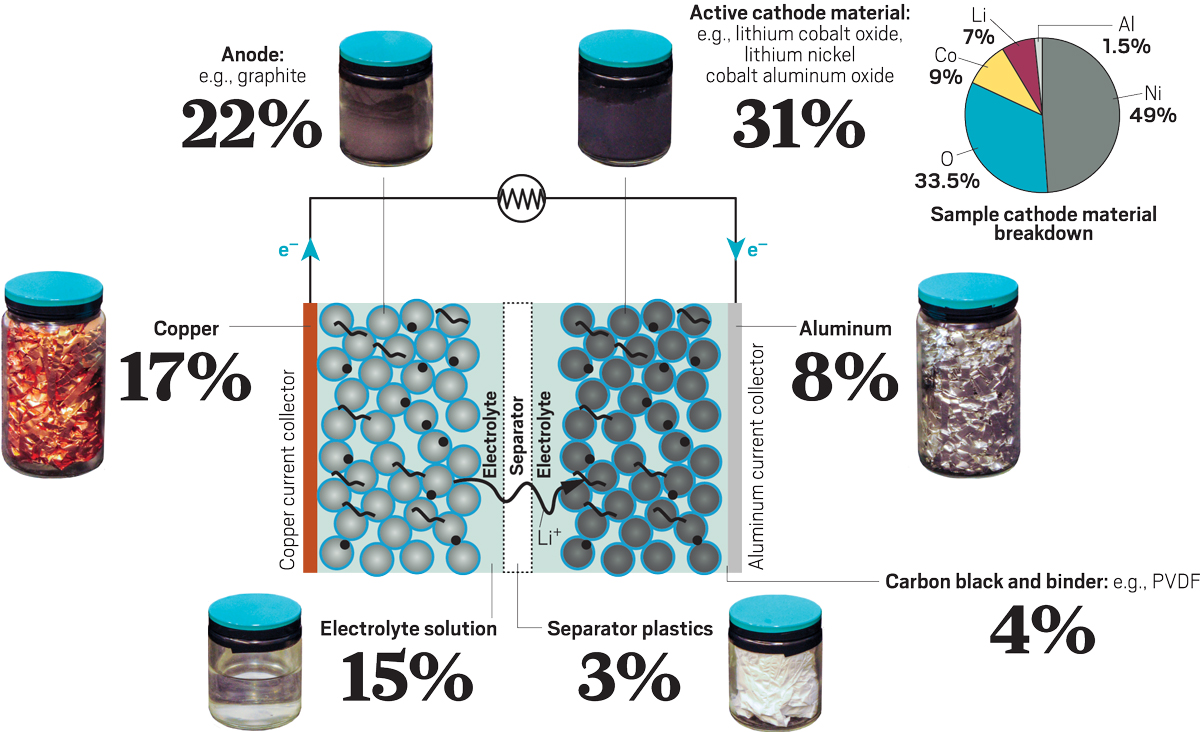
To be fair, it says the cost increases are mainly due to the rise in construction material prices as well as financing costs; nothing inherent to nuclear power or the novel technology itself.