This article both inspires and scares the hell out of me. If you've decided to create a startup, you are in the same boat he was in 1991:
‘Yes. This is my career and I am going to make my career in ___________. That’s all.’
It inspires me because of the happy ending of sorts for him despite the hardships. Instead of being lost into obscurity, those late nights and years of losses will count for something. It scares me because I think this year is my 1991. I have decided on my career. ‘Yes. This is my career and I am going to make my career in communication systems for the mute / disabled.’
The truly scary part is that every single success (for varying definitions of success) story like this that I've read talks about how much the inventor/entrepreneur suffered on the way. "X lost his job, house, savings, significant order, family, friends, health, sanity, credibility..."
The potential for tremendous losses on the way to success is scary because right now I already have everything I could ever want (loving wife, health, family, friends, career, money, house). I can keep everything I have by putting in my 8 hours/day or I can risk it all by saying "Hi world. I'm going to build devices/software that will help cerebral palsy / paralysis patients communicate better/faster with their loved ones."
Right now, I'm preparing for the latter by building my savings.
Just because someone hit a bad patch does not mean they needed to.
The obvious solution to me would be a pico controller connected to the pump with a stopwatch battery backup. Basically it turns on for an hour starting at say 2AM but ignores the time when the power is out. Total cost per unit should run between 1$ and 5$ depending on build quality and interface.
You could even add pressure, flow, and or temperature sensors to notice if something was wrong and or use more water when it's hot etc. But that's probably overkill 90% of the time.
PS: Texting a cell phone is not a bad idea, but it requires someone to be awake at 3am when you want to turn it on and adds several failure modes it also costs more money.
Your points are valid and your solution would work (especially the part about watering for a total of an hour by automatically taking into consideration power cuts, etc).
I wonder if there may have been an 'environmental' reason for his solution (and hence his bad patches).
I lived in a couple of third world countries in the 1980s (in Asia and Africa) and came over to the US in the early 90's for studies. One of the stores that my electronics class prof introduced me to was Radio Shack. I could not believe it - for an electronics tinkerer there was nothing better. Everything you needed to build your (small) dream device seemed to be there (tools like soldering irons, bread boards, capacitors, etc). And they were pretty cheap to boot.
That ease of access to equipment is not available in third world countries.
So the solutions you come up use the accessible 'raw materials' available in your environment. It may not be the most simple, or elegant, but it is something that works. To the farmer the underlying technology is understandable and accessible. And testable with a phone call!
If you've read too many success stories that go through a phase of extreme hardship, you might be self-selecting to only remember such stories.
Not to detract from his achievement, but Ostwal could have come up with the plan to use standard cellphones to communicate sooner than he did. He would have saved the time and money he lost fighting the insane Department of Telecommunication (or whatever other Ministry it was). Now there's no guaranteed method to always think of a shortcut like that, but it is plausible and would probably have gotten him at the same place with less hardship.
Only 3 in 100 people had cellphones in India in 2003 and I suspect that number was even lower for rural, poor farming areas. My family is quite well off, lives in a big city, and I know for sure they didn't have cellphones till 2004 because the cost was too high.
> If you've read too many success stories that go through a phase of extreme hardship, you might be self-selecting to only remember such stories.
Maybe journalists/editors select these stories about fighting against all odds or give the "struggled very hard" angle to every inventor's story. Sounds much more endearing than "he had a cushy job, kickass life, and helped changed the world on the side."
Fair point about the cellphone hack, but there are always other things that might have worked out faster or cheaper in retrospect. My point was that it is plausible that in other universes, the other Ostwals did come across these hacks, by chance, and therefore it does not seem necessary to undergo x units of hardship to obtain y units of success.
And there were a vastly larger number of Ostwals that suffered the same amount, and never succeeded. Successful revolutionaries are statistical outliers, almost by definition.
This is an unfalsifiable platitude unless you have data to back it up.
And do you have to be a revolutionary to be successful? Is it impossible to go about things in a calm and rational manner that minimizes damage to self, and succeed?
I'm not knocking Ostwal because I do not know his circumstances, but surely this is not true for all possible cases. This founder-as-martyr syndrome probably discourages a lot of possible inventors from trying things in cheap, accessible ways that may lead to something big.
"All reform comes from below. No man with four aces howls for a new deal." John F. Parker in "If Elected I Promise"
"The reasonable man adapts himself to the world; the unreasonable one persists in trying to adapt the world to himself. Therefore all progress depends on the unreasonable man." George Bernard Shaw
not sure why the reference to duct-tape. what's up with that? he and his wife are both engineers and they prototyped in the middle of the night -- every night!
I believe the duct-taped reference is an attempt to get Western audiences to think about the article in the same light as Indian ones who understand the term Jugaad (http://en.wikipedia.org/wiki/Jugaad) loosely termed, "innovative fix". Although when I think of duct tape, I immediately conjure the term "cheap hack or fix", not the Jugaad connotation:
Jugaad is a survival tactic, whereas a hack is an intellectual art form; i.e. Jugaad is the wile of the poor, and hack the pastime of the affluent cerebral. Jugaad is a hack to get around or deal with a lack of or limited resources, and has a class component to it - jugaad are things that poor but clever people do to make the most of the resources they have. They do what they need to do, without regard to what is supposed to be possible.
Read the Wikipedia article as there's some cultural background that a non-Indian would fail to get about the richness of the term.
Thanks for the W link, it was an interesting article. The part that you quote caught my eye, too, although I strongly disagree with the idea expressed. This is a very narrow definition of "hack". As far as I understand jugaad, it is pretty much equivalent to what hack is, in its original form.
Edit: Edited the W article and put a note in the Talk page, let's see how people respond.
In local usage, "Jugaad" is used like "Hustle". Both have a class component and imply getting things done in the face of difficulty. The difference is that Jugaad is less likely to involve something illegal.
I was half-expecting an article on outsourced Indian coders (an overdone stereotype, imo), given the title. It was nice to see that it was nothing of the sort.
This Jugaad sounds very similar to what we Kiwis call the "Number 8 wire" approach. (New Zealand is a long way from anywhere, so a tradition developed of making running repairs using whatever was at hand - specifically, farm fencing wire - in lieu of shipping out spare parts.)
I personally find the mythology around this to be both a blessing and a curse at times.
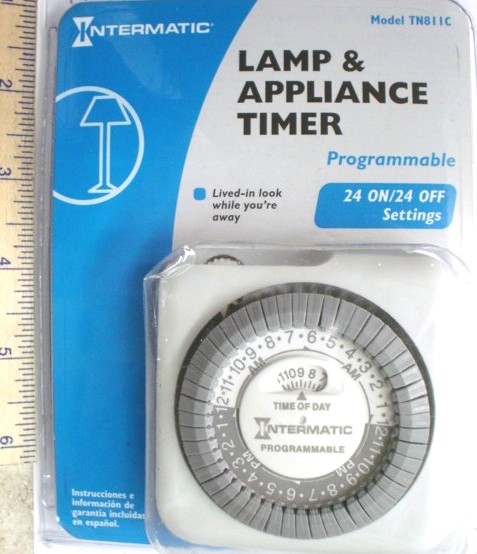
The article did mention a simple timer. I'm going to guess there is some additional complexity in turning on the water that a multi-mode timer cannot handle. Timer comes on at 2am and shuts off at 3am automatically but what happens when there is a power failure between 2.10am and 2.50am? That happens in India ALL the time. Now you missed 40 minutes of watering. A human might be able to take that into account by turning it off at 3.30am instead remotely.
> For that matter, is it so hard to run a mile of wire across a field?
Not hard, just expensive. The Indian farmers he's aiming to help are the ones making $1-$5/day. They might understand the long-term ROI on such an investment but they might not be able to afford it.
If the power fails they'll come on at the wrong time.
Of course the pumps will not be able to run when there is no power but it might be less than ideal to run the pumps at the wrong time.
That said, you could solve that fairly easily by running the timer circuitry off a rechargeable battery and drive the pumps through a relay. When there's power the battery recharges from the grid, when the power has failed for a while the timer hasn't lost track of the time of day.
I wonder how much an SMS message costs an indian farmer (it also requires an extra cell phone), it might very well be a substantial part of the cost of operation. In the end it's a convenience thing (you don't have to walk) which is worth some $ or it would have to save money or create a better yield.
I wonder how much an SMS message costs an indian farmer (it also requires an extra cell phone), it might very well be a substantial part of the cost of operation. In the end it's a convenience thing (you don't have to walk) which is worth some $ or it would have to save money or create a better yield.
Indian mobile networks are fairly well connected.
And sending local SMS messages are, for all practical purposes, free. Cell phones can be had for US$30. Possibly less.
If you want to build technology-related services that are accessible to the largest possible part of the Indian population, using SMS as a protocol is probably the right way to go.
(Edit: But from what I understood, this device involves phoning a number and using a keypad to issue commands. )
> If the power fails they'll come on at the wrong time.
I was assuming the timer was battery-powered and not prone to power failure, while the pumps were. This could cause the timer to turn on the pumps, not detect that the pumps were off for 40 minutes during the cycle because of power failures, and then shut off the pumps after a predetermined duration. So the timer would start/stop a one hour cycle but during those times, the pumps would only work for 20 minutes. That could cause crops to fail because the pumps didn't irrigate sufficient water.
To fix this, you'd need a timer that would also detect the duration the pumps were working and adjust accordingly, increasing the cost of the system. Plus how does the timer deal with the next cycle schedule to start at 4am-5am when it has been pumping 30-40mins extra before the cycle before it took longer? I was just trying to say that setting up a workable schedule on such a device could be a lot more complex/expensive than a human texting "pump 2 on", "pump 2 off".
But a human texting 'pump 2 on' suffers from the exact same problem, compounded by the delays of receiving the SMS (which in my case sometimes only appear hours or days after sending).
So it was meant as being the exact equivalent of what they have now. (I didn't see any evidence of a feedback mechanism in the article but I may have overlooked that).
Cellphones are everywhere in India. Practically everyone already has a cellphone, or is going to get one this week. Text Messages (locally called SMS) are often free, or are dirt cheap. It is common even for low-wage workers (day labourers, porters, gardeners) to have cell-phones in India. This is, in part because the landline infrastructure is very poor and unreliable, and a open economy has meant that cellphone operators have been able to provide good service for really competitive rates.
Because it's at least an order of magnitude more than what you'd pay in Europe for the same thing which is a good indicator that there is price fixing involved.
The key idea for SMS was to use this telephony-optimized system, and to transport messages on the signaling paths needed to control the telephony traffic during time periods when no signaling traffic existed. In this way, unused resources in the system could be used to transport messages at minimal cost.
So, in a sense sending SMS doesn't have to be so costly.
I am making a comment based on the irrigation needs of an Indian farmer in Indian scenario. I think, the mobile based solution is best for the Indian farmers who want to monitor and switch on off their pumpset from wherever they are, maybe in the farms, residence, market or on travel. In the timers, there is no monitoring of whether a pump is on or off, whether a power is available or not at the pump.But, the mobile connectivity makes it is possible to check the status. Plus , in the agriculture, there might be needs of so many times of on/off of the pumps in the irrigation processes depending on the actual physical status in the farms activities. Hence, it needs a perfect engineering solution based on closed loop system rather than an open loop systems like timers.A perfect engineering solves the problems in an emerging market very much effectively, but for that someone must undestand the needs of an emerging market and for which there is only a way - to be among them and to understand their needs. No question of blaming anybody's situation or no question of contraversy about Indian or Non Indian should arise, but a real attitude to help a human being in the problems is a must.
It's hard to keep that mile of wire from being pinched.
I remember how the highway authority here in Punjab had embedded blinking lights into the road's surface, over some stretches of road, to help drivers during our foggy winters. A few days after the lights went in, they were dug out and stolen. So new ones were put in. Gone again. New lights. Gone again. Finally the highway authority gave up and left the citizenry to its fate.
When I was in a small city in China visiting my relatives, they pointed at some of the 50cm by 50cm "drains" on the street gutter filled with shattered stones.
In the beginning, they had metal guards but they kept getting stolen. Then they had concrete guards with a metal wire skeleton. Those covers got smashed and the metal wires taken out of them. Now they just have concrete guards but people smash them anyway.
Wire - sometimes even high voltage cabling - is stolen all over Europe (and probably the world) for the copper. Not a few accidents happen with people trying to steal a live wire.
This may be an overly simplistic approach, but if you're worried about something in a fixed position getting stolen, isn't it easy to stake the location out for a day or two and nab your thief? Even if it's a systemic problem, making an example of a few criminals should discourage others from stealing.
The police and highway patrol have bigger problems and you'd need to stake out long stretches of road indefinitely, pretty much.
Also, making an example of convicted criminals doesn't work. I'd assume thieves risking life and limb to yank LEDs and cable from the middle of a highway in the dark are desperate (and probably poor) enough not to care about precedents.


‘Yes. This is my career and I am going to make my career in ___________. That’s all.’
It inspires me because of the happy ending of sorts for him despite the hardships. Instead of being lost into obscurity, those late nights and years of losses will count for something. It scares me because I think this year is my 1991. I have decided on my career. ‘Yes. This is my career and I am going to make my career in communication systems for the mute / disabled.’
The truly scary part is that every single success (for varying definitions of success) story like this that I've read talks about how much the inventor/entrepreneur suffered on the way. "X lost his job, house, savings, significant order, family, friends, health, sanity, credibility..."
The potential for tremendous losses on the way to success is scary because right now I already have everything I could ever want (loving wife, health, family, friends, career, money, house). I can keep everything I have by putting in my 8 hours/day or I can risk it all by saying "Hi world. I'm going to build devices/software that will help cerebral palsy / paralysis patients communicate better/faster with their loved ones."
Right now, I'm preparing for the latter by building my savings.