Negative press like this probably contributes to the FDA being so conservative. They get none of the benefits when a great new drug is approved, but get scapegoated when they approve something dangerous even to small numbers of people. So they just approve as few drugs and medical devices as they can get away with - it's a massive misalignment of incentives.
One might think drugs would be more dangerous if the FDA were less conservative, but I suspect the opposite. If it takes you ten years and 2 billion dollars to release a new drug, and then you find out it has some terrible side effect in 0.1% of the population, you don't get to fix the problem. You might not withdraw it either, since the drug would still be a net good for society. And if one drug is approved instead of ten, patients are forced to stick to the flawed solution.
The far bigger problem than drugs with side effects is a lack of drugs. Around 1/3 as many drugs get approved today relative to 1970, and the costs of a drug approval have risen 5 times faster than inflation since then. Medicine has been an anti-technological field for the last few decades - it's doing less with more. The most valuable biomedical companies are the ones that have been around since the 1800s - one could imagine what computers would look like today if IBM were still the largest IT company.
For the record, the 2 billion dollars figure is from the notorious tufts centre for the study of drug development, which is heavily pharma-backed.
It's a very, VERY controversial figure in the pharmacoeconomic literature, but has been accepted as gospel due to continuous repetition in shitty reporting.
Your stats are a tad dated - the FDA has far better (in terms of granularity) stats lately that show a pretty steady trend towards 'more approvals' in the past few years - this includes biosimilars and new molecular entities (novel drugs): https://www.fda.gov/downloads/aboutfda/centersoffices/office...
Which is published by the American Enterprise Institute, a conservative think tank, known among other things, for climate change denialism of all sorts: 1) saying it will be minor / non-existent, 2) if it is real, it won't cost much to mitigate 3) bribing scientists as a last resort to get their alternative facts out.
I read books to gain information. Books are convenient collections of facts where ideally the author has gone through the trouble of scholarship and synthesis. Thus, when I read any book, I like starting with a high bayesian prior of being able to trust the information in it, without having to fact check the statements. Indeed, this is the primary value I get from reading a book as opposed to looking stuff up myself.
Now, when the publisher is known for publishing lies and distortions, it reduces my bayesian prior that their publications are any good, particularly given the explicit stated mission of this institution is to push a given political viewpoint. It is not about the flavor politics: I don't read anything by left-wing think tanks either. It is hard to distinguish fact from fiction when one reads propaganda from an organization whose purpose is to produce intellectualized propaganda.
Thus, my criticism of the book is - I am not able to trust the author or the publisher, due to the publisher having broken that trust earlier by lying to me. The author made a bad choice by choosing a publisher who publishes propaganda. Too bad. Trust is a pre-requisite I have for taking someone's writing seriously. So there you go.
This is why we have reviews/ratings etc. We trust our fellow readers too, and try to extend the chain of trust.
AEI operates with so much of an agenda that it would be impossible for me to pick up that book and read it without the filter of AEI published it. I'd constantly be on guard for where the authors tries to inject "Regulation? Booooo, hisss" sentiments.
Yes, he did. It was specific. I have a similar opinion.
Because the publisher also engages in climate change denial and other such thing, it is hard to trust anything in This book - even though it is a different subject. I couldn't read it and trust any factual bits presented to me - the worst case scenario is that I get these "facts" mixed up with things that are from more credible places without having the time or inclination to fact-check everything in the book.
It was specific about the authors, but the question was about specifics of the book. Still not one bit of information about the book in sight in this sub-thread.
I don't care either way, as a bored HN reader going through this and that thread I just noticed the discrepancy, and while I have nothing to say about the subject being discussed I am able to see that the discussion itself does not have much substance but lots of partisan voting in lieu of substance. Come on guys, you do what you routinely accuse the other side of doing.
The book is tained by the publisher. It's a perfectly valid reason in a very complex and delicate debate, such as climate change and pharma innovation regulation.
Even if the book is fine, it might not be the total picture, thus it could mislead you by omission. And it can be totally in good faith, it's just bias.
So, even if the book is a good overview, it's just a voice in a discussion, and without hearing what others think of the book, it's pretty good to go by what one knows of the publisher.
There is the crux of your... argument. How about you read the book and then come back? You sure have a lot to say about something you never looked at.
You can't improve how "the other side" is arguing (or not arguing), but you sure have 100% control over your own behavior and discussion habits. Attacking the people instead of the work is as bad as it gets, especially if you never even set eye on the latter. I won't read it either, but I don't have an opinion about it that I'm trying to share.
Yes, this is why I cancelled my New York Times subscription, and have been recommending everyone else do as well. They are now in the business of publishing climate denial propaganda for profit. Don't support it.
They published an op-ed from Bret Stephens[0] that was largely focused on criticizing the elite's hubristic over-reliance on probabilistic data models as a justification for not dignifying skepticism of less well-informed people. It was construed as a promotion of climate change denialist FUD. That charge was fair to make, but a certain subset of people prone to dramatic gestures figured unsubscribing was the appropriate response, as if the NYTimes had never pushed politically biased interests before.
"The far bigger problem than drugs with side effects is a lack of drugs."
I'm not so sure about that. Arguably the market is actually oversaturated with drugs, and too many people rely on them to an absurd extent rather than changing behaviors and habits to improve overall health.
> too many people rely on [drugs] to an absurd extent rather than changing behaviors and habits
It's not that simple. If I go to school and someone gets me sick, you wouldn't "this is your fault, you shouldn't have such bad habits like going to school." Furthermore, what are these good behaviors and habits? I can find a million articles on the internet telling me that cold showers are a good habit and another million saying hot showers are a good habit - which one is objectively right?
Yes, there are people who decide to use drugs instead of making simple changes (e.g. my friend who drank a large bottle of Jack in a day and needed to get his stomach pumped - he should have just vented to a friend about his girl issues). But there are so many other people out there who don't fit that description, and there isn't any true scottsman with objectively perfect behaviors and habits. So I don't think it's unreasonable to help people out with more options for drugs that may be better for some people than what we already have.
> can find a million articles on the internet telling me that cold showers are a good habit and another million saying hot showers are a good habit - which one is objectively right?
The one that works for you? We are all different, depending on ethnicity, medical history, and a million other factor your diet, life style and life choices will affect your health differently.
How do you define "works for you"? For example, say I take cold showers and decide "this makes me cold; I don't like it" and then start taking hot showers everyday. But then imagine that one day, we find a link between hot showers and cancer.
How was I supposed to know that cold showers would have been better for me? Should my "bad habit" really be blamed?
I'll fully agree with the other replies. To add to the other things posted:
The other thing with drugs is that there are quite a few diseases and afflictions, quite a few of which need special drugs. Some drugs don't work so well for some folks as others. Migraines and seizures are like this. Sometimes, we have new drugs because they generally come with fewer side effects than the old drug it theoretically replaced, yet the old drug is still in production because it still works better than the new on in them.
More like saturated with endless variations of the same drug.
The pharmaceutical industry likes to release a new variants of popular drugs in order to keep them patented. They then advertise to doctors and other involved parties in an attempt to convince them that the "new" drug is better than the old one.
It is possible to have too many and not enough drugs at the same time.
While I understand what you want to say, wording is a bit poor. Quite a few extremely useful new drugs without any good equivalent are/were released too - for example in last 2 years we can actually cure Hepatitis C and get it out of the body for good! Till now it was almost a death sentence with high probability of liver cancer down the road.
(I know it since my fiancee is a doctor and she accidentally stabbed herself with needle from a patient who is extremely contagious with Hep C, so we did our research. luckily she didn't get it, the stab was quite shallow).
Or new drugs that enable HIV patients to lead +- normal life - they were not here 10 years ago. There are some overused and overprescribed medicines (painkillers, antibiotics in 3rd world countries being handed out like skittles).
There's definitely more that can be done behaviorally - the solution to obesity today probably looks more like eating better than taking diet pills. But this is the anti-technological solution that can only be pushed so far, like trying to solve the energy crisis by telling everyone to drive smart cars.
Also, there's often nothing you can do behaviorally. Even people with near perfect behavior will eventually get Cancer or Alzheimer's or Heart Disease. Most of the drugs approved to treat these diseases are something like band-aids that decrease your risk 10% or allow you to live a couple months longer. Maybe too many people are making drugs that work barely well enough for the side effects to be worth it. But almost anything that can get past the FDA will work economically, since there are usually very few alternatives from the buyer's perspective.
Quite all drugs have said effects I have to take BP pills and a couple of Christmas's ago I was doing a full roast dinner for the family, I accidently took a double dose and fainted at the table due to low blood pressure - that's a safety issue but a fairly trivial one compared to the benefits of controlling hyper tension
277 days ago you wrote, "Medical research sucks as it is, and longevity research is inherently time-consuming. There are ways to ease this, like testing treatments on mice first, but I don’t see an easy way around the need to apply the test to humans and wait many years to see the results."
As someone who works in the industry, this shouldn't be much of a surprise. Most drugs have a very low incidence of serious side effects. Even over the counter products do. The reason they are approved is that they are so rare.
A great example of a serious side effect is Toxic epidermal necrolysis (TEN) and Stevens–Johnson syndrome (SJS). There are many everyday drugs (ibuprofen, antibiotics, etc) that can cause this rare disorder. Your skin basically sloughs off and you end in a burn ward. Super rare, but they happen.
Last month, my doctor gave me a shot of toradol (for reasons I don't want to go into). The allergic reaction I got from that shot had me terrified I was experiencing the early symptoms of TEN at first.
I had hives all over my body, plus muscle pains all over my arms and legs (at its worst, I could barely hold a razor and needed a cane in order to shuffle around). You know what comes up when you search for bumps all over your body combined with pain? Yeah, TEN.
Fortunately it was just allergy-induced hives and myalgia, and I understand that the pain I went through functioned like an acute case of rheumatoid arthritis, but that was still nasty. I ended up in the emergency room twice. The first course of steroids they prescribed me wasn't long enough or strong enough: the hives never fully went away, and the myalgia came back as soon as I finished the prednisone. So I had to go back, and then they gave me a shot of decadron and put me on a two-week course of prednisone.
Yeah, that wasn't pleasant. At all. The side effects I suffered from the prednisone were awful and insidious, but at least it killed the allergic reaction.
Oh, and during that time, a friend of mine died, and her death was all over the local news because of how mysterious it was (they still haven't solved it or even released a coroner's report yet). April 2017 was terrible all around.
How much where you on? I have had to take pred (40mg /d) and did not have any major side effects apart from one incidence of mood swings went from stressed to giggling inside of 10 min (I told my boss I think I had better go home and have a lie down).
It did ramp up my appetite "mmm doughnuts" and my aggression a bit.
I do know there are some funkier side effects but I did not get those
Let me guess, you are a MLB pitcher? Toradol was famously used to help pitchers deal with arm pain before starts, starters put a lot of stress on their pitching arms. It helped them get loose to pitch, until people noticed a pattern of severe injuries from pitchers being able to pitch through pain.
My Doc wanted to shoot it into me for a bad back (muscle spasms). I passed.
Not to mention there's a risk-benefit thing going on. Serious side-effects are something to really care about for a drug that treats allergies. But if it's meant to treat terminal cancer, then you're more likely to let the potential of adverse side-effects slide.
Another example is Brigatinib (AP26113) which I'm familiar with. It's only approved recently because ~1% patients may get a severe side effect. But desperate patients who heard the news and cannot get it have managed to make their own based on the formula and the powder they made has saved hundreds of people's lives with metastatic lung cancer in the past a few years.
Stevens–Johnson syndrome seems to occur as a response to several different drugs, but apparently only to people with a specific HLA genotype. Part of the solution here is that currently we only approve a drug if it is safe for nearly 100% of the population, even if it is useful for far fewer (see statins) and the path forward needs to give more consideration of the differences in people, and having suitable genotyping a prerequisite for some medications.
Agreed on the general principle, but note that the incidence of SJS varies by drug. For example, lamotrigine causes SJS in 10-30% of people taking it, depending on how fast the dosage is increased.
There they don't address it by trying to predict who will show SJS symptoms and who won't; they just put people in it slowly (which reduces incidence) and take people off the drug (or hold at a given dose until the body accepts the drug) if they show symptoms.
But rare is relative to usage, yes. It's also a function of the side effects. I mean, if 1M ppl use X and 1% get a rash, that's not the same as .5% of 10M having some sort of major organ reaction.
That said, America loves drugs. Patients expect them. Doctors prescribe them. Big Pharma counts the money. Everyone is happy.
Of course, I've noted that pharmacists often have a better idea about interactions than doctors do; i've been stopped taking medications concurrently because I find dangers when picking up my prescription. Perhaps doctors shouldn't have this privilege! I shouldn't have to double check my own doctor.
You mean like opiods? Or nexium? with a 50% addiction rate once proscribed for longer then 2 weeks???
I think u will find that most of the top selling drugs approved by the FDA have a host of side-effects that are VERY common, and then they themselves have a host of other drugs specifically to counter those side-effects.
Essentially the FDA is no different to how russia is run. If u have enough money for the approval process, u have enough money to rig all the trial data in your favour and surpress anything else, including research into competing drugs.
The industry itself is the keeper to all drugs, they decide what the most profit will be made off and then research that, get a patent, then do everything int here power protect that patent including not researching better drugs. Only in the worse cases of drug company fraud will the FDA step in to stop a drug.
On the flip side, many drugs approved by governments in the rest of the Western world languish in the FDA's queue for years. I contracted a common illness while living in Germany as an exchange student, and was prescribed medication by a doctor there which I had to fight over with my insurance (then my parents' family plan) for reimbursement because the drug had not yet been approved by the FDA. We got the reimbursement eventually, and the price was eminently reasonable anyway: something like 70-ish Euro. But drug prices in the United States are another can of worms entirely...
I recall the incident well because the computer the doctor used to enter information in the late 2000s was a Commodore 64 with that distinctive lighter band around the display edge.
The US market is so lucrative that drug companies will go through FDA certification, but it is definitely more costly. It is arguable that disasters such as prescribing Thalidomide to pregnant women for morning sickness, and even selling it over the counter, is less likely with a more rigorous agency.
> Thalidomide was first marketed in 1957 in West Germany under the trade-name Contergan. [...] Primarily prescribed as a sedative or hypnotic, [...] Afterwards, it was used against nausea and to alleviate morning sickness in pregnant women. Thalidomide became an over-the-counter drug in West Germany on October 1, 1957. Shortly after the drug was sold in West Germany, between 5,000 and 7,000 infants were born with phocomelia (malformation of the limbs). Only 40% of these children survived. Throughout the world, about 10,000 cases were reported of infants with phocomelia due to thalidomide; only 50% of the 10,000 survived. Those subjected to thalidomide while in the womb experienced limb deficiencies in a way that the long limbs either were not developed or presented themselves as stumps. Other effects included deformed eyes and hearts... [1]
In practice, there are a lot of problems that prevent it from only being a more rigorous quality control, but it also isn't entirely bad.
I deliberately didn't specify the illness for privacy reasons, though it was an airborne contagious disease. I did not ask him why he was using such an old machine, but it seemed to work and he was rather old also. The detail only sticks out because it was so odd.
A more interesting question would be how many would have a significant safety issue without FDA approval.
Given the complexity of the drugs, the body and the interaction with other medication I'm impressed it's only 1 in 3 particulary since as mentioned down thread only 1.3% get taken off the market (1 in 77).
Or harder still, how many drugs never get to the public because of the expensive process of FDA approval that skyrocket costs and kill people without getting reasonably priced low-risk medicine.
There are two sides to that. People die because they can't get effective medicines that are kept out of the market by FDA approval. People would also die if they took ineffective drugs instead of effective ones because the FDA was too lax about letting things into the market.
It's really hard to tell what works and what doesn't. Drug companies spend tens or hundreds of millions on a drug even before it gets to FDA testing, and most still fail final clinical trials. Most drugs just don't do what the developers think they will do.
People say this, but the evidence from the UK Cancer Drugs Fund (a pot of money used to pay for expensive, new, not yet approved by NICE meds) tells us that the drugs "had no meaningful benefit" and are fantastically expensive.
None. FDA approval isn't required to manufacture, sell, or purchase drugs. It's only required for companies that want to make marketing claims about the ability of drugs to treat various illnesses and conditions. As long as the drug you want isn't scheduled by the DEA, you're free to go online and order however much you want.
I dont know the details of the us health system and correct me if im wrong, but lacking FDA approval probably restricts a lot of things you can do, aside from doing unprovable claims, though the last one is also allowed for many things that are health and non-health related.
I can be swayed , but i do subscribe to the concept that there is an availability bias in FDA approval: the fda has the incentive to be overly cautions, because punishment hurts fda, but banning potentially good medicine does not cause FDA any problems.
That, and the potential of regulatory capture make me dubious of any positive claim about the existence of the FDA.
If it's not a controlled substance, you can buy all you want, but it's illegal to sell it unless it's been approved by the FDA.
Sure, if you want to order your meds from online pharmacies based in India and Vanuatu, you can (and I personally know people who order cyproterone acetate from these pharmacies because it's the best oral anti-androgen in existence but hasn't been approved by the FDA mostly out of laziness/cheapness), but you can expect to pay a lot of money. Oh, and you run the very small risk of having your meds confiscated by customs (they legally can't take action against you, because buying isn't illegal, but they can confiscate it because selling is illegal), but thankfully the government only has the resources to actively confiscate meds from online pharmacies one week per year (look up "Operation Pangea").
Even for a drug that's approved by the FDA, you'll be paying more to order the meds online than you will to go to a doctor, pay for the visit out of pocket, and have the prescription filled at Walmart (I have personal experience with this: because it's a pain in the ass to find doctors who will treat trans people, a lot of us start off ordering our meds from online pharmacies before we find a doctor, and it's not a huge deal because dosages are standardized, you can order private blood tests from certain labs, and official clinical guidelines are freely available for download -- but it's always cheaper to go through a doctor even if you're self-paying, the problem is finding a doctor in the first place).
> it's illegal to sell it unless it's been approved by the FDA.
Source? I'm pretty sure this is only true if you advertise the product as being for human consumption. The U.S. has basically zero restrictions on selling random chemicals. C.f.:
You and the grandparent are correct. That's why you have the DEA doing "emergency scheduling" of various analogues of controlled substances. Otherwise, they have no legal recourse to stop the sale of the chemical.
That said, if you start claiming your "chemical" has health benefits, then the FDA will get all over you for making unproven health claims.
The one exception is the supplement market in the US. If you can trace the chemical back to a natural source, then you are allowed to sell it, and I believe make claims based on what data is available, but you still can't make unproven claims.
My understanding is, if you possess a prescription drug without a script then that is, at that point, relative to you, an illegal drug. Sure, no one is going to do time for, say, thyroid meds, but opoids is a whole other story.
This is why is cracks me up when people want to tie public services (e.g., food stamps) to drug testing. Imagine how many (white) middle class kids would be denied school is their parents' blood/piss tested positive for drugs they had no script for. Lol
That depends. AFAIK, if its prescribed to you and you give it to someone else, that's illegal whether or not its scheduled. Otherwise, if it isn't scheduled, there's no real legal issue there.
Yes. If it's OTC and you possess it but have no script (for you) then that's "illegal drugs." I'd like to see a study/figure for illegal drug use using that proper definition.
P.s. Script and illegal use of prescription opioids are the gateway to street opiods (e.g., heroin).
You would also have to consider whether the drug companies would choose an alternate route for validating safety. I think they would care at least some amount about their reputation for safe products.
Or, perhaps they might find it cheaper to instead launch massive PR and discrediting campaigns, deny there is any issue, settle lawsuits to silence complaints from individuals who don't have money and time to legally fight a billion dollar business. I'm not saying this'll definitely happen, but it has happened many times in the past, right?
The free market has made this work in the realm of electronics and electrical devices (UL), as well as the automobile industry (TS16949). The risks posed by bad products in the healthcare sector are perceived as far more dangerous but the sheer ubiquity of theoretically dangerous, yet completely trusted products produced with nothing but private party testing lends credence to the argument that we wouldn't be worse off without the FDA.
The safety of US made nutraceuticals is also a testament to that fact although they have become increasingly regulated by the FDA and FTC despite a lack of prominent examples to back the need for further regulation.
The difference between UL and a automobiles and drugs is that it's obvious if an electronic product or automobile works. It's very hard to tell if a drug works--and most don't.
Nutraceuticals are a great example of the problem: they're safe because they're bogus and don't do anything. But because they're not regulated people waste tons of money (and suffer because they don't take drugs that do actually work). The
It's a cost of doing business. They know there will be "error" and they accept that.
That said, most are not in health business. They are in the manufacturing, distribution, and sales business. That is what they do. And they will act in ways that fulfill that model. That's just human (business) nature.
Yes. Good point. It's also that all the easy diseases have been solved. Now we're into that hard stuff. And of course some are just by accident. Viagra, for example, didn't start as a solution to ED. So often it's a solution in search of a problem. Gotta keep the shareholders happy, eh.
And we wonder why healthcare is so expensive, obesity aside.
I hope no one minds if I copy some choice quotes from his comments here:
> Only three of the events were withdrawals, meaning that only 1.3% of approved drugs were recalled off the market.
> In 2006, the FDA added a boxed warning to warfarin, a blood thinner which at that time had been out 52 years, saying that if you took too much of it, it could make your blood too thin.
> Another example: antipsychotics are not FDA-approved for dementia. I don’t even know if any company has ever tried to get antipsychotics FDA-approved for dementia. Giving demented people antipsychotics is a bad idea if there’s any other option. But people do it anyway, and then the demented people get heart problems and die. The FDA eventually figured that out and put a boxed warning on antipsychotics not to give them to demented people if possible. This didn’t show up before approval because nobody wanted them to be given to demented people so there was no study about whether it was a good idea.
I didn't like his comments about the warning against combining opioids and benzos, because the US has seen a large increase (admittedly of small numbers) of deaths from this combination since 2000.
I was recently reading "American Sickness" by Elisabeth Rosenthal. She was talking about how an anti-nausea medication was taken off the market for safety issues because it caused heart issues at 50 times the dose usually taken. After doctors were forced to use Zofran instead, which costs at least 20 times more.
Residents are in a pretty good spot to write things like this. Fresh enough to have their fingers on the pulse. But, just becoming seasoned enough to pick out WTFs.
In one of my favorite books, Antifragile, Nassim Taleb argues that health is largely subtractive - if you want to be healthy, remove unnatural things from your body (sugar, medicines, sitting too much, etc), and only undergo surgery, go to the hospital, or take medicine in very serious cases where the harm of not doing something outweighs the potential complications. Especially since hearing more about more about how the American health system is not exactly incentivized to always look out for the best interest of the patient, I'm inclined to agree with him.
>if you want to be healthy, remove unnatural things from your body (sugar, medicines, sitting too much, etc),
?? What is "natural"? How do you define "natural"? Is there a single point in human evolution that you call "done" and emulating that discrete point is natural, and anything before or after is 'unnatural'?
I always struggle to understand "natural" woo because it is, at its core, an undefined and meaningless word with absolutely no scientific or medical relevance.
>and only undergo surgery, go to the hospital, or take medicine in very serious cases where the harm of not doing something outweighs the potential complications.
So, basic modern medicine? If your general doctor is recommending unnecessary medications or not doing cost/benefit for you, then medicine isn't broken, your doctor is.
>Especially since hearing more about more about how the American health system is not exactly incentivized to always look out for the best interest of the patient, I'm inclined to agree with him.
Why on earth would you conflate the profit motives of healthcare middlemen to imply that the science behind medicine isn't credible?
This is a shockingly ignorant statement openly peddling ludditeism and implicitly denouncing science in favor of the pitiful naturalism fallacy.
Really surprised to see such irrationalism on this forum.
> Why on earth would you conflate the profit motives of healthcare middlemen to imply that the science behind medicine isn't credible?
Because marketing often distorts the results or outright lies. It's not necessarily the science that is the problem, but the marketing and approach in pharmaceutical sales that will push this. This has been, on occasion, reflected in terms of studies, efficacy and results in terms of manipulation of data.
Personally, I feel that compulsory licensing models as part of a dual-sourcing (at least two manufacturers for any drug) would help resolve or reduce a lot of the issues surrounding this. As well as reverting to some prior legal and cultural issues in terms of how marketing of prescription medications is done. TV/Youtube/Dr.Office advertising has gotten pretty horrible, and does very little to actually help people.
Why on earth would you NOT assume that institutionalized greed affects the results of medical science?
Who is funding the science? What are their financial motives? Who conducts the research? What are their financial motives? Are incentives aligned to produce quality medical research with the patient's best interests in mind, or the bottom lines of medical companies (pharma, medtech, even hospitals, etc.)?
I'm shocked and surprised at your shock and surprise. I don't think your arguments are irrational. I simply think they are naïve.
>Why on earth would you NOT assume that institutionalized greed affects the results of medical science?
Because I studied medical science and research for many years, have family in the medical field, and write medical software for a living.
Or rather, I understand very clearly how greed and the capitalist motivation affects health care, as it's literally my life. But with a realistic understanding comes the end of emotional histrionics and petty exaggeration.
AKA: I'm basically informed on this subject, unlike most of the commenters here.
>Who is funding the science? What are their financial motives? Who conducts the research? What are their financial motives? Are incentives aligned to produce quality medical research with the patient's best interests in mind, or the bottom lines of medical companies (pharma, medtech, even hospitals, etc.)?
What is GLP?
What is GMP?
What is a NME?
How many NME's does the FDA approve per year?
>I'm shocked and surprised at your shock and surprise. I don't think your arguments are irrational. I simply think they are naïve.
I'm not shocked or surprised at your response, it's a classic case of Dunning Kruger where you are so ignorant regarding medical science, the intense science based regulation of the FDA, and the business of creating drugs, biologics, devices etc, that you are inherently incapable of evaluating your or mine competency here. If you think I am naive, that is a real testament to the depth of your ignorance on this subject.
If you'd like me to answer your questions honestly, I'd be more than happy to take some time to source and answer your question from the perspective of someone who has studied this subject academically and participates in it professionally. But the book linked will discuss I believe every one of your ethical concerns.
I'm sure you're well read and educated. I won't ever be as knowledgeable on the subject as you.
I have the benefit, though, of not having my entire livelihood and career dependent on my faith in the systemic health of mainstream medicine.
Maybe you're right. Honestly based on the tone of your initial comment, I have written off your impartiality, and so have little desire to learn from you. I'm sure you feel the same towards me. So here's to coming to a stalemate while putting other people down on the Internet. Maybe that's the important learning point, for me.
>Then you should be familiar with how generations were lied to and told that Fat caused heart disease and low-fat/high carb was the best way to eat.
I'm familiar enough with the FDA to know the difference of the Office of Food and Vet and the Office of Med Product and Tobacco.
Why don't you go research what CDER is, and try to determine whether or not diet guidance has anything at all to do with CDER and the actual topic of this thread.
Taleb expounds on his definition of the natural - anything that man has done for 100s of years without observing downside.
There is reasonable cause to believe that people are very interventionist in a lot of cases where all that is needed is letting the system sort itself out. Diabetes medication for instance (again - not in all cases): https://www.youtube.com/watch?v=da1vvigy5tQ
A lot of openness to low quality scientific work done in a lot of domains and our eagerness to think that anything with numbers slapped on it is better has given us wonderful gifts like high-fructose corn syrup, trans-fat, thalidomide (all within the last century).
The Taleb metric is just that a lot of systems don't respond in a linear fashion to random input. High levels of consumption of a substance only materialize with a delay of a few decades in horrible ways and the negative result can undo all the positives over the duration of the use of said substance. Thus is it important to err on the side of those things that have been (i) well tested over centuries and (ii) strong evidence doesn't exist that said substance is actually dangerous (tobacco for instance).
Note that thalidomide is still used as a medicine; it is a very effective drug when other drugs don't work. The issue was that it was given to pregnant women, when it was known that it shouldn't have been.
I think some nuance here is needed. My understanding of "natural" primarily comes from an understanding of evolutionary history. If humans have been doing something for millions of years, it is likely to be more "natural" and therefore not cause harm compared to recently invented things. But it is not a black and white thing, but rather a spectrum.
Some examples:
Trans fats were invented because they thought saturated fat, which was consumed by humans for a long time, were not healthy, and this new thing was supposed to be better. Then it was found to cause all kinds of problems and are now banned in many places. Here I think it was pretty cut and dry.
An anecdote I've found others corroborate: I used to have foot pain. Some people suggested orthotic insoles, but I also found the barefoot shoe proponents saying that shoes without any padding at all (more "natural") work better. Five years later I never have any foot pain. The Vivobarefoot or Vibram Fivefingers shoes are definitely not something that was around a million years ago, but the principle is the same.
In healthcare, an example in the book is how many people are prescribed statin drugs if their cholesterol is too high, even if there is no other visibly problematic symptoms. Taleb would argue the far better solution is to improve the person's diet, or just wait and see if something happens, than to start taking a drug that isn't.
The author once strained his back lifting weights. The doctor suggested an expensive and invasive surgery. Instead he just rested for a while and the problem went away. On the other hand, my mom recently had neck surgery to replace several vertebrae. She'd been in pain for years and nothing could fix it. So in this case I think Taleb would agree that the risk of a dangerous surgery might be worth it in that case.
An extreme example from the book: in the early 20th century children were given doses of radiation to treat acne. We obviously look at this and scoff, but it is the same idea.
> Why on earth would you conflate the profit motives of healthcare middlemen to imply that the science behind medicine isn't credible?
I'm looking at the profit motives to see where I should be cautious. I feel like this very site is where I've read many articles about how scientific studies had bias because of funding from the companies invested in a certain answer. From what I can see, if you follow the money, you can explain a great deal of the behavior of large institutions.
So I'm not at all advocating ludditeism or against science. Rather I'm against scientism (I think the word he uses in the book) - the belief that science has all the answers and that newer things are inherently better than older things just because they are. They may in fact be better, but not always. Sometimes atheists I meet are just as close-minded as the religious.
A good hypothesis can be used to make predictions. I'm just saying with my foot issues that the heuristic of "subtractive medicine is better than additive medicine" was able to predict that removing padding from my shoes would make my problem go away. And it did. That does not prove anything but it worked here.
Say that the padding had worked, you might have rationalised it to to be that it's unnatural to walk on hard surfaces ("our ancestors never walked on concrete").
There are also probably many instances in your life where this hasn't worked, but you've cherry picked the example that does.
It's very likely that your body healed itself regardless of the padding. You might have just needed time. You've figured that it's removing the padding but it might not be a factor. It's why studies need decent sample sizes to make strong conclusions.
That's fair enough, but also why I looked for other people who had similar experiences. I'm definitely not always right, that is true. I am not a doctor, lawyer, or accountant.
I'm pretty sure the early hydrogenated oils were created (Crisco, 1911) because they had similar and in some cases superior properties to animal fats and butter, but were cheaper and had a longer shelf life. The idea they were healthier came later.
Infant mortality and life expectancy are improving with modern medicine and diet. Most of our problems today stem from the over consumption of food and lack of physical activity. Cancer rates are at an all time low even though media makes it seem like everything(non caloric sweeteners, plastics, herbicides) around us causes cancer.
Except that the US, a major proponent of modern medicine, ranks very poorly compared to other nations in the infant mortality charts -- especially against countries that prefer natural non-western medicine, and life expectancy is clearly linked to financial status -- those that can afford health care. IE: where I used to live in Arkansas, the average life expectancy is 67, whereas in a rich state like Virginia, it's 87. What's the difference? Ability to afford health care.
Everything is correlated to obesity. Arkansas has the highest obesity rate in the nation. When you look into our infant mortality rate it is linked in preterm births. Preterm birth is highly linked to obesity and is trending up.
I would argue that yes, sugar is natural, but the degree that people tend to eat sugar these days is unnatural. I'd argue that is the root problem. And to respond to the first image of the comic, that nobody lives past 30, some things I've read suggest that was more due to infant mortality skewing the average, deaths from war, and deaths from what today would be preventable diseases. If an ancient person avoided those three things, they lived quite a long time, and didn't get cancer or heart disease.
I have no exact sources for those last few assertions, it's just what I remember reading (I think also in the Antifragile book).
While sugar (a really generic term usually referring to sucrose) is natural, it occurs in the highly fibrous stalks of sugar cane. Most sugars naturally occur within fiber, while modern food practices extract and/or refine leaving the fiber behind.
My grandfather used to tell me about a Chinese king who paid his doctors only when he was well, not the other way around.
I used to really dislike private insurance companies but after teaching about Charles Babbage using math for "Comparative View of the Various Institutions for the Assurance of Lives" I realized something:
Insurance companies are the most aligned with your wellness financially. They want as many healthy people to pay in as possible.
And thus a government health insurance system with universal coverage would be even more financially aligned with increasing health.
I think one of the greatest things you can do as a startup is to improve health for people, through diet and exercise apps and preventative checkups etc. and the insurance companies will PAY YOU to do it!
What do you think happens when insurance is provided through your employer and you develop a health problem that interferes with your ability to do that job?
The short answer is you can get a continuation of your same health plan for a certain period of time, but you have to pay more because your employer isn't subsidizing your premiums. Generally this extension lasts for 18 months, though if you qualify for disability it can go for 29 months. And you do have to pay the full price for the plan because your employer is no longer providing it for you, though you may get government assistance.
I've gone through this; you should be aware that COBRA is a retroactive continuation of your coverage, from the day you leave your job, but it's not actually continuous. It can take weeks for the paperwork to go through, and during that time you effectively have no coverage. I found this out because I was scheduled for a surgery the week after leaving my job, and while checking in the hospital told me they couldn't verify my insurance. I was delayed about an hour while trying to convince them that I'd applied for (and paid for) COBRA already, and that I was, or would be, covered for the surgery that day. Eventually the department head allowed me to be checked in, but I'd gotten lucky.
You likely lose your job and your healthcare insurance, at least after some period of time, I'm assuming.
(Fortunately I can't speak from experience.)
So you did not, in fact, have insurance against a very bad situation. All the more reason to eliminate employer-based health insurance tax incentives. I don't buy anything else through my employer. Why should I be insuring against my future medical bills through them?
It obscures my effective insurance premia (via a lower salary), on top of the already obscured price of healthcare, since most insurance policies cover so many incidental, non-catastrophic medical costs.
Therein lies the difference of opinion between the Democratic and Republican points of view on US healthcare. Democrats want a system where insurance companies have to cover everyone regardless of their health, and (most) Republicans want (or have voted for) a system where the unhealthy are off in one pool with insurance they can't afford, while the healthy are in another pool with insurance that's cheap but doesn't cover any actual healthcare.
While I love that and the related books, I think this is somewhat silly. At a base level where you are depriving your body of everything, food is medicinal in nature. Without it, you die.
Now, I get that being cognizant of what you add to your body seems beneficial. And, to a large extent, adding extra burden to your liver and other organs is not a good idea. However, to think that you should avoid all medicine unless acutely sick seems disingenuous. And to modify that for allowing chronically sick people opens a wide door to a ton of chronic states.
> only undergo surgery, go to the hospital, or take medicine in very serious cases where the harm of not doing something outweighs the potential complications
Is there anyone, in the world, advocating for getting surgery or taking medicine when the harm of not doing so is less than the potential complications? I'm pretty sure if a doctor did that it would be malpractice.
> if you want to be healthy, remove unnatural things from your body (sugar, medicines, sitting too much, etc)
You should not stop using medicine without discussing this with your MD. I said medicine; you should do the same with drugs. Some drugs should not be quit cold turkey. To name one, alcohol.
Furthermore, the reason you should try to not use too many medicine, is because medicine (and drugs, and herbs) have side effects. So you (and your MD) need to think critical if the good outweighs the bad, and this should be reflected throughout the lifetime of the usage of the medicine. Because before you know it, you end up using medicine B, C, and D all because of side effects related to medicine A.
As for 'unnatural', criley2 touched upon that subject; how do you define that? Is synthetic counterpart always worse than natural counterpart? I find such advice downright dangerous. Following that logic, St John's Wort is always better than a synthetic anti depressant. St John's Wort has its place (if standardised!), but it has a lot of contra indications. It doesn't work well with a LOT of other medicines and drugs. For example, it is dangerous if used together with an SSRI or with MDMA. Yet, if people follow the advice by this writer, they'd prefer to resort to a herb like this (perhaps not even standardised) because "its natural".
I knew people who ate raw meat regularly, and had to be administered to hospital because of food poisoning. Yet refused, because the hospital wasn't 'raw food' enough. Don't tell me this "it has to be natural" bullshit. It stems from a fear of the unknown, technology or science. It claims to argue that only Earth and nature are good. I'm not buying that (I'm not buying the 'natural is bad' either though). What is good or bad for you has to stand on its own merit. Drawing the line between 'natural' and 'unnatural' (whatever that indeed might be) is a silly oversimplification. Don't buy into it! People who use it are trying to grab your money out of your pocket to make a run for it.
What is the difference between medicine and drugs?
It seems highly relevant since there seems to be some quibbling about using the word natural and that it has no meaning (I agree, but another comment mentioned exactly what Taleb meant by natural).
I could not agree with you more! Today is my last day clutching a frothy latte, ever! I gave up on chocolate recently due to Cadbury's being bought by Kraft and since then I have moved to the equally sugary fruits for my treats.
So now I am going to eat what I eat when I am not well - fruit, salads, fruit and more salads. No beige foods and not necessarily cooked meals. So no chips either.
I also happen to be vegetarian so I really just want to fine tune what I eat rather than go on a diet, which rarely works for people who do such things.
I also think there is something cool about being 'powered by fruit, nuts and vegetables' with only a bicycle for transport.
I am not convinced about any medicines, particularly pain killers, I will save those and the antibiotics until I get past 8 on the A+E pain scale.
vaccines, antibiotics etc. are pretty big improvements upon the natural order. Brings the famous New Yorker cartoon about cavemen observing their life spans to mind.
Not directly related to the OP's story, but can be useful for someone reading these comments.
We've scraped the Drugs@FDA data as part of OpenTrialsFDA [1], a project aimed to make it easier to search their documents. It contains data from about Oct/2016, because they changed their website's layout just after we finished the scraper (if you'd like to contribute, it shouldn't be difficult to update the scraper [2]). All the data is available in a Postgres database at https://explorer.opentrials.net/data, or via https://fda.opentrials.net.
I fear this is one of those subjects where querying any 5 people will yield 10 opinions, and in the end the issues remain poorly illuminated.
FWIW I've been prescribing medications for a number of decades and pretty well understand the general benefits and limitations of pharmocotherapy as a treatment method.
To save you a lot of time and trouble studying this very complex field, let me boil it down to these few words: any medication can cause any side-effect at any time.
All drugs cause side multiple effects. The ones we like we call "benefits" or therapeutic effects, those we don't like are "adverse effects" (AEs). Useful drugs will have few troublesome AEs vs. good benefits, but it's a relative matter, a judgement call about what's good, bad or ugly.
It partly depends on the condition the drug is used for. In life-threatening situations we'll accept bad AEs, for example, cancer chemotherapy agents. For merely annoying, self-limiting problems, like a common cold, we wouldn't take big risks.
However, no drug is absolutely safe. All are capable of causing serious problems in at least a few people. Therefore we must use all drugs carefully and with thorough knowledge of the risk/benefit trade-offs, but there are never any guarantees of outcomes.
Another aspect is that often severe AEs are quite uncommon. Think of a side-effect that occurs in 1/100000 recipients. What are the odds this will be detected in drug registration trials? Most drugs are tested on a perhaps a few thousand people before approval, and often fewer subjects than that. The chances of encountering these outcomes is remote until drugs have been around for years, even decades before the harmful effects can be gleaned.
One drug that became notorious for incidents of fatality in the late 90's was nefazodone (Serzone), an antidepressant. I was peripherally involved with research on the matter. Basically what came to light was that in people with rare (like 1 in a million) mutations in certain liver enzymes, the drug was metabolized along a pathway that produced compounds causing fatal liver necrosis. After 18 deaths around the world became known, the association was made and the drug was withdrawn from the market. There was no way to predict this would be an effect of the drug when it was approved.
Of course AEs are very seldom fatal. The point here is that AEs (serious or not) are quirky, inevitable and randomly distributed. The benefits are always intertwined with finite risks. It's not surprising in the least that a high proportion of drugs are associated with troublesome AEs (with varying definitions of "troublesome").
Only three of the events were withdrawals, meaning that only 1.3% of approved drugs were recalled off the market. Consider that this is a really impressive error rate. Scientific studies are allowed to be wrong 5% of the time; the FDA is wrong 1%.
The others were “boxed warnings” and “safety communications”. These are often pretty minor. I can’t read the full study you linked, so I don’t have their examples, but some of the most recent FDA boxed warnings are:
Last year, the FDA added a new boxed warning to all opiates and benzodiazepines (drugs which have been around for the better part of a century) telling doctors that really, no, seriously, don’t prescribe these together. People have known not to prescribe them together for the better part of a century, but the FDA decided they should be louder about it so they added a new boxed warning. Also, I’ve prescribed opiates and benzodiazepines together several times when it’s been clinically necessary, and as long as you’re not an idiot about it it’s fine (but please don’t try mixing opiates and benzodiazepines at home without your doctor’s permission!).
There’s a boxed warning on Ritalin that it might cause heart problems in kids. Later research has shown this is probably false, but the FDA worried about it one time ten years ago and decided to add a boxed warning, which nobody ever got rid of. Ritalin remains as popular as ever.
In 2006, the FDA added a boxed warning to warfarin, a blood thinner which at that time had been out 52 years, saying that if you took too much of it, it could make your blood too thin.
This year, the FDA released a safety communication, discussing a very common antiseptic used by millions of people yearly, that, over the last fifty years of use, about one person per year has had a serious allergic reaction to it, and if you have a serious allergic reaction to it, you should call 911.
Maybe another way of making this point is to list the psychiatric drugs that have gotten boxed warnings sometime after they were released: every antidepressant, every typical antipsychotic, every atypical antipsychotic, every benzodiazepine, lithium, Depakote, Lamictal, etc. You may recognize this as every single psychiatric drug (except BuSpar, which doesn’t work).
What I’m saying is that an FDA boxed warning isn’t “Oh god, how did this poison ever make it through the approval process?!”. It’s an incremental update to existing safety regulations on a generally good drug as more evidence comes in and people’s priorities shift.
The study says on average these drugs were out for four years before the FDA added the warning. That’s probably because these are rare side effects that only appear after many people have been taking the drugs for several years. For example, if one in every million people who uses antiseptic soap has an allergic reaction, we can’t very well ban antiseptic soap until we try it on a million different people. That’s why post-marketing surveillance is a natural and important part of the regulatory process.
Another example: antipsychotics are not FDA-approved for dementia. I don’t even know if any company has ever tried to get antipsychotics FDA-approved for dementia. Giving demented people antipsychotics is a bad idea if there’s any other option. But people do it anyway, and then the demented people get heart problems and die. The FDA eventually figured that out and put a boxed warning on antipsychotics not to give them to demented people if possible. This didn’t show up before approval because nobody wanted them to be given to demented people so there was no study about whether it was a good idea.
My point is that boxed warnings are a natural part of pharmacology, that some new side effects being found post-approval means the system works, and that the FDA continues to have a 98.7% accuracy in approving drugs that don’t need to be withdrawn later.
That is, at least, the tumblr of a psychiatrist resident who writes a lot on the subject of FDA regulations. I really recommend his blog posts on the subject, like this one about how different countries (Russia and US particularly) use different drugs and for the most part don't even seem to be so interested in trying the drugs available elsewhere: http://slatestarcodex.com/2014/08/16/an-iron-curtain-has-des...
I wonder if this will impact Donald Trump's campaign promise to get the FDA to sign off on all of those drugs awaiting approval.
Reforms will also include cutting the red tape at the FDA: there are over 4,000 drugs awaiting approval, and we especially want to speed the approval of life-saving medications.
Naively, I feel like the same could be said about appliances, or kitchen items, or software, or food, or vehicles, or ...
"Significant safety issue" seems both poorly defined, and doesn't address the rate of incidence or the conditions necessary to create that issue. Many drugs have safety concerns when not used correctly, for example. Or in small populations.
That's a very industry-friendly number with a very industry-friendly calculation;
> CSDD’s finding, a bellwether figure in the drug industry, is based on an average out-of-pocket cost of $1.4 billion and an estimate of $1.2 billion in returns that investors forego on that money during the 10-plus years a drug candidate spends in development.
Backing some figures out then, the actual cash cost is $1.4 billion to develop a drug. They rely on a 11.8% clinical success rate for that figure, so if you back out the drugs that were abandoned along the way (since they won't need late-stage human safety studies), it's more like $165M to develop a self-originated drug if you believe the self-supplied pharma figures.
It's even more suspect when their $2.6 billion headline figure for increased from $800M in 2003 when the cost of capital has decreased since then and average approval times have been halved:
http://www.raps.org/uploadedImages/Site_Setup/Regulatory_Foc...
> Backing some figures out then, the actual cash cost is $1.4 billion to develop a drug. They rely on a 11.8% clinical success rate for that figure, so if you back out the drugs that were abandoned along the way (since they won't need late-stage human safety studies), it's more like $165M to develop a self-originated drug if you believe the self-supplied pharma figures.
The actual cost to develop a single successful drug, if you pass all the clinical trials, is in the ballpark of $500M or so. Dividing the total cost by success rate isn't an accurate number since the cost varies based on where you fail: the expensive bits are the clinical trials at the end, so finding out that the drug is a failure sooner cuts your costs considerably. The Phase III clinical trial by itself is well over $100M, much more if you're doing a large, long-term clinical study for a difficult problem (say, Alzheimer's or cancer). Something like 50% of all drugs fail in phase III.
> The actual cost to develop a single successful drug, if you pass all the clinical trials, is in the ballpark of $500M or so.
I'd love to see a source for that.. Not even Pharma claims figures that high. Take Sofosbuvir for example; It was discovered in 2007, was developed through 2011 and then the company was acquired by Gilead while they had multiple Phase III trials running. In that time period, they spent a total of $230 million on R&D -- for all of their candidates. They also had two other compounds that were undergoing Phase II trials.
> The Phase III clinical trial by itself is well over $100M, much more if you're doing a large, long-term clinical study for a difficult problem (say, Alzheimer's or cancer).
Nah. Not even close. HHS's most recent look placed Phase III at $19.9M, with very few classes of drugs costing more than $50M total for all phases (Ignoring IV since those are often more marketing than R&D)[1]:
> Something like 50% of all drugs fail in phase III.
The average is closer to 60% success rate, with some areas up to 75% success.[2] And it's not like if you fail the Phase III, the compound is scrapped and all of that work is wasted. There's an entire industry behind drug "repurposing, repositioning and rescue" to purchase and retarget promising compounds.
That number includes : "and an estimate of $1.2 billion in returns that investors forego on that money during the 10-plus years a drug candidate spends in development."
The math on that seems wacky as 1.4 billion assuming it's close to valid is spent over 10+ years and is not a 100% up front investment for 10 years. So, they are saying if you invest ~140 million / year after 10 years you will have ~2.5 billion from your expected 13% annual ROI which is crazy talk. Even 70m/year over 20 years is only 2.5b if you assume 6% ROI which is hardly 'safe'.
Given that, I suspect the other numbers are also inflated such as including 'failed' drugs which is classic Hollywood accounting.
PS: One of the classic ways Drug companies mislead is what they bundle under the Research part of R&D vs the Development part of R&D.
Every so many years there is a push by the industry for tort reform. They want to be legally protected from any damages as long as the FDA has approved the drug.
Bookmark this article to remind yourself next time they make this push.
You want to introduce drugs/foreign molecule in a body? and hope everybody will respond perfectly to this ? Better change the body and not the drug ;)
So imo the most important thing for the FDA: 1) Does it actually do what it's intended to do ? 2) Determine conditions before you can take the drug. Drugs that have very rare side-effect -> over the counter. Dangerous drugs -> pretesting/screening of the patient before even considering given the drugs.
(In the U.S.,) It's government funding and research that turns up most novel drugs (as opposed to tweaking existing formulae and mechanisms).
And, there needs to be government funding (e.g. to an independent academia) and research that follows and studies the commercial as well as research lives and implementations of these drugs.
The idea that we should all simply trust one entity to "approve" drugs is pretty farfetched.
I think there should be multiple "stamps" of approval from a variety of entities that consumers can use to determine whether they want a particular drug...
Why not have stamps from the FDA, insurer groups, physicians groups, etc.
It's not farfetched in the least to have one entity approve the drugs based on roughly $1 billion dollars over 10 years[1] worth of research.
What's more farfetched to me is allowing private, profit-motivated corporations the unfettered ability to produce this expensive research.
Fortunately the all-but-oppressive regulation of the FDA from GLP and GMP to insanely rigorous science-based four phase system of testing is IMO the greatest achievement in science-based regulation in human history.
People simple do not understand or respect the awesome power of the scientific method being the basis of government regulation.
or go to https://www.amazon.com/Drugs-Discovery-Approval-Rick-Ng/dp/0... and use the "look inside" feature to see page 4: "It is estimated that, on average, a drug takes 10-12 years from initial research to reach the commercialization stage. The cost of this process is estimated to be over $1 billion USD" (2005)
Another fun tidbit you'll find in the book: On average, for every 10,000 NME's that begin research, 1 NME will receive FDA approval. (where NME is a new molecular entity, a novel new drug).
So you've got a market where you have to begin development on 10,000 products to get 1 product into the market, on a 10 year runway. Could you imagine that in tech? 9,999 pivots per product!
An idea that I've had, for an approach to reduce the cost of drug development, would be to give the FDA the job and resources of carrying out the entire clinical trial process. They would be responsible for choosing which drugs to trial, running the trials, evaluating the results, and publishing the results. The pharmas would do the basic research, but they'd have to come up with a convincing argument that their new drug was worthwhile before the clinical trials could start.
I'd hope that this would reduce costs because it eliminates all of the oversight that the FDA needs to do now to make sure the trials are being run properly, and that bad results aren't being hidden from view. It lets the FDA scientists control the whole process, and it would let the FDA short-circuit the process in cases where the scientists are satisfied by their counterparts in other countries approval of a drug. By giving adequate funding to the FDA, this approach would also allow the FDA to run trials on non-patentable drugs, nutrients, and remedies, which rarely happens today and could lead to much lower-cost treatments overall.
The other big aspect of this idea is that the FDA publishes results. I'd have them publish a journal for medical professionals which includes notices of new drugs being considered for trials, the current trial schedule, reports on on-going trials, overviews of completed trials, and announcements for drugs that have been approved that includes usage guidelines for doctors. I'd also have them maintain a website targeted towards patients that includes handouts and detailed information for patients, similar to what's on Wikipedia, drugs.com, webmd, etc, but all centralized, searchable, and from a well-trusted official source. If the FDA takes care of all of that, then we can ban drug advertising. Doctors won't need it because they'd get the journal (which would be free), and patients don't need it because they'd have the website. So that eliminates a huge cost that the pharmas are incurring, and will no longer need to recover from sales.
I don't know how feasible this is; I'm not an insider in the system. It would be a major shift in policy and a major budget increase for the FDA, so politically it'd be very difficult to accomplish. But if the end goal can work, then the political fight would be worth it.
I will admit that some of us may be inappropriately dismissive of the usefulness of regulators. However pointing to how long it takes and how much money is spent could just as well imply inefficiency as rigor.
You say that we don't need competing regulation agencies because this one is rigorously scientific. By what mechanism, would you say, does this singular institution maintain quality?
>By what mechanism, would you say, does this singular institution maintain quality?
Interesting question, quality is such a foundationally important and vital subject for the FDA. Hard to answer, it's like asking what does Microsoft do to maintain software quality? The answer has to be long and in depth... And in this case, the FDA is over 100 years old, born out of atrociously horrendous food and chemical accidents in America, so this is a century-old organization founded out of a desire to improve quality in food and drugs (Upton Sinclair's 1906 book The Jungle is considered important reading when understanding the FDA's mission)
So with the FDA (with CDER, the drug/med device/biologic/etc side of the FDA), the basic question they ask (and require all this work to prove is): Is your drug better than existing treatments and placebo treatments?
So, fundamentally, they have an ethos which only grants approval not for equivalence, but scientifically proven, double blind tested superiority to existing approvals. This is an ethos that less is more. That only quality matters. That a business should go bankrupt before 1 bad drug is approved.
But beyond that, to look into the question of quality, that's a great question that is very important to the core of the FDA's mission.
I would point, in recent decades to the emergence of "phase 4" trials -- post-release trials.
Now it is not enough to get approved, now we continue to test the efficacy and safety of the drug after it goes to market, and can and have pulled drugs (that cost billions in losses for companies) which seem to pass initial 3 phase approval but which, in market, demonstrates a lack of safety or efficacy, has side effects that change the calculus against existing treatments, or similar.
Also, another angle of quality is enforcement. What happens if GLP, GMP, safety, efficacy, is violated? You might be happy to learn that the fines that the FDA levies are some of the largest fines against businesses in history. Outside of BP-Gulf and the 2008 mortgage fines, the FDA sweeps the list of billion-dollar-level fines.
So you have a core commitment to quality at every level. An ethos continued from founding seeking scientifically provable superior quality at every judgement. GLP and GMP in the labs and factories which are the most rigorous site regulation you'll find in America. The 4 phase system of trials, including post-market data. And the most aggressive corporate enforcement arm in America, with an impressive list of profit-busting fines that no other regulator can stand next to.
I appreciate the long response, and I kind of feel bad because I meant my question in a rather different way. And (assuming you even notice my response at this point) perhaps I'm going to take us down a road of talking past each other.
My question is about incentives. An unchallenged organization, I would think, would have the tendency to perpetuate itself, and sing its own praises, and deem itself very important.
Let me put it this way: The analogous question isn't what Microsoft does to maintain quality. The question is, how does the world at large maintain Microsoft's quality (and efficiency?). A decade or so of security embarrassments and OSX's and Linux's better reputation got them to step up their security game. Recently, Apple's design got them to step up their design game. If you asked a manager for a canceled project inside the company they might have a great process plan, a great argument for why they need more time and resources, and a great explanation for why they and their team are important. But they may have no sense of the needs of the outside world. This exchange between Steve Jobs and an (apparent) Apple employee highlights this mentality, vs the mentality of an entrepreneur who does respond to the outside world: https://www.youtube.com/watch?v=FF-tKLISfPE
It very well may be that the FDA does a fantastic job of filtering out bad stuff. And, as (I may as well come out and say it) a libertarian, perhaps I am guilty of not appreciating all the work that has gone into setting it up. But it doesn't mean that they have a sense of the correct amount of rigor to apply, money to spend on various aspects of their operation, etc. That's why we like to see competition in the field of certification.
"That a business should go bankrupt before 1 bad drug is approved." and "some of the largest fines against businesses in history" are great examples of perhaps being a bit too rigorous or punitive. You can always apply more and get at least marginally safer drugs. But you may also get fewer drugs through the process, or more expensive drugs, or companies that decide not to even bother starting the process (which you'll never hear about), and (maybe) more people die on net as a result.
I will grant to you, taking your claims at face value, that you make a convincing case that the FDA at least hasn't gotten lax for the lack of outside corrective influence. I guess the mechanism for improvement there is simply human dedication, and I will buy that argument.
Insurance companies all evaluate drugs before putting them on their formulary and doctors do at least a little bit before they start writing a prescription.
Right, so why is the FDA the bottleneck to drugs coming to market? It makes no sense and creates a massive, overly risk-averse bureaucracy.
There are tradeoffs involved for allowing a drug too soon, failing to take it off market fast enough in the face of new evidence, and for needlessly delaying time to market.
These decisions are huge and uncertain tradeoffs between how many will die from a drug being stopped or delayed and how many will die from it being approved.
If no drugs ever were recalled or had significant safety issues after approval, that would be a certain sign the process is erring on the side of non approval.
Yet a safe alternative in many cases (not all) is still illegal federally and in many states... while we continue to allow pharma to roll in money made from products knows to have horrible side effects...
They are used to stop bad things, if lesser bad things happen they are still great. And if greater bad things happen to some people they are also great.


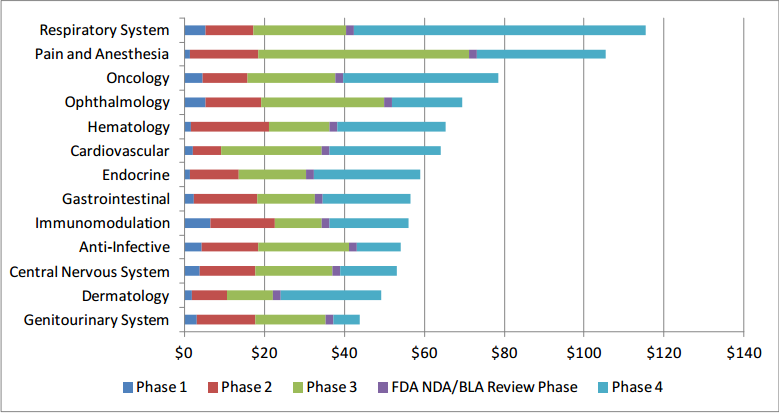
One might think drugs would be more dangerous if the FDA were less conservative, but I suspect the opposite. If it takes you ten years and 2 billion dollars to release a new drug, and then you find out it has some terrible side effect in 0.1% of the population, you don't get to fix the problem. You might not withdraw it either, since the drug would still be a net good for society. And if one drug is approved instead of ten, patients are forced to stick to the flawed solution.
The far bigger problem than drugs with side effects is a lack of drugs. Around 1/3 as many drugs get approved today relative to 1970, and the costs of a drug approval have risen 5 times faster than inflation since then. Medicine has been an anti-technological field for the last few decades - it's doing less with more. The most valuable biomedical companies are the ones that have been around since the 1800s - one could imagine what computers would look like today if IBM were still the largest IT company.