Some number of years ago I wrote an mp3 decoder for a game I was working on. It allowed us to put hours of speech onto our 16Mb N64 cartridge (yep, it was quite a few years ago).
Knowing we had to get a mp3 license I contacted Fraunhofer who decided that a console game required a hardware decoding license which ran at $10,000s (if we had been a PC title it would have been a few $100 as I remember).
Legal got involved and decided they would license Rad Games Tool's Miles audio (since it already had a mp3 license and they could take any heat from Fraunhofer!).
Unfortunately for me legal then made me completely wipe the first implementation, carefully optimized N64 RSP vector code and all, and do a clean re-write of everything. We didn't use a single line of the Miles code, but they got a license fee and we had happy lawyers.
Given that the N64 was released in the North America in September 1996 and that the first stable release of Vorbis wasn't released until May 2000, it's very probable that OP couldn't have considered/used Vorbis.
It was probably 1999 that I wrote the first version. Ogg was still in development at that point. I know I considered a few codecs but mp3 was relatively well supported with 'reference' codecs.
Oh, ok. I thought "few years" was meaning actually few years. Did not know much about N64. After googling, it seems devs were still active in 2003-2005.
Mp3 was the only option that was relatively mature and had good enough compression ratios for what we needed (as I remember). Anything more computationally expensive was completely off the table.


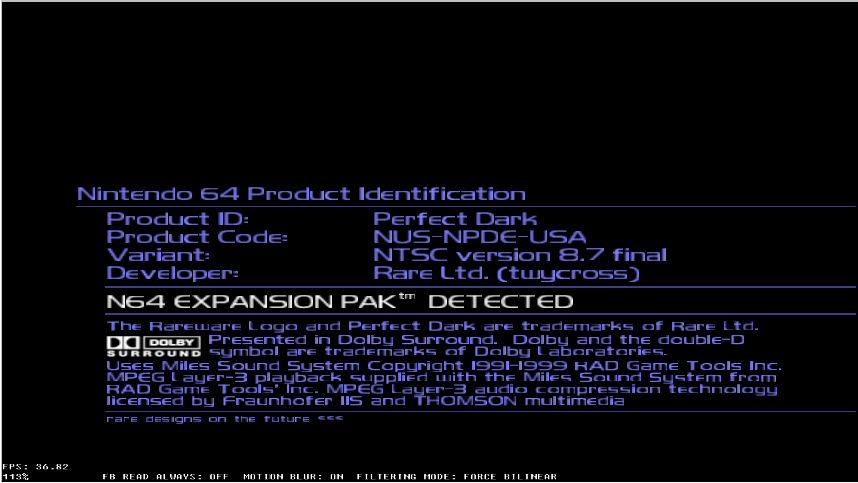
Knowing we had to get a mp3 license I contacted Fraunhofer who decided that a console game required a hardware decoding license which ran at $10,000s (if we had been a PC title it would have been a few $100 as I remember).
Legal got involved and decided they would license Rad Games Tool's Miles audio (since it already had a mp3 license and they could take any heat from Fraunhofer!).
Unfortunately for me legal then made me completely wipe the first implementation, carefully optimized N64 RSP vector code and all, and do a clean re-write of everything. We didn't use a single line of the Miles code, but they got a license fee and we had happy lawyers.